SHAH ALAM, Aug 30 — Having a high level of education, a professional career or being technologically savvy is no guarantee that a person will avoid falling victim to a scam.
Doctors, lecturers, and bank officers are among the highly educated groups who have also fallen victim to scams, dispelling the perception that scams only easily deceive senior citizens or those who are less technologically literate.
Selangor contingent police headquarters Commercial Crime Investigation Department deputy head ACP Izwan Abd Karim said technological developments mean anyone can now potentially become a victim, regardless of age, education, or socioeconomic status.
Young people, professionals, and students are also not exempt from falling victim to various types of scams.
“Scammers no longer discriminate when it comes to their victims. Anyone can fall victim to a scam.
“They do not discriminate based on age, educational background, or socioeconomic status,” he said during the 'Bicara Semasa' programme produced by Media Selangor.
Scammers have a 'script'
Izwan added that one of the reasons victims are easily ensnared is that syndicates do not act randomly, but instead use social engineering techniques to manipulate their victims psychologically.
In fact, syndicates prepare scripts in advance to manipulate their targets' emotions and actions.
One of the main techniques used is creating a sense of urgency, causing victims to panic and act hastily.
For example, scammers may claim that a victim’s account will be frozen within 15 minutes if they fail to follow instructions, or that the police will arrive to make an arrest within 10 minutes.
Such pressure causes victims to panic, preventing them from thinking rationally before taking action.
"Don't Tell Anyone"
The second technique isolates victims from people who might alert them to the scam.
He said that scammers may instruct victims not to tell family members or bank officers about the matter, claiming that they are involved in a “secret investigation”.
The isolation tactic is intended to ensure victims have no opportunity to seek others' views or assistance.
Syndicates also exploit authority bias by using official language, titles, and ranks to increase victims’ confidence in them.
Some impersonate individuals using titles such as Datuk, DSP, or ACP, and use fake warrant numbers and court case numbers to frighten victims.
Ultimately, victims believe that the person contacting them genuinely represents the police, the Inland Revenue Board (LHDN), or another authority.
Small profits before 'luring' victims in
In investment scam cases, syndicates use conditioning techniques to build trust gradually.
Victims may receive small returns at the initial stage until they become convinced the investment genuinely generates profits.
Once trust has been established, they are persuaded to invest larger sums of money.
Non-existent investment schemes are among the common types of scams occurring in Selangor, with syndicates offering lucrative returns through social media or specific applications.
Some promise returns of up to 50 per cent within a week or a month to entice victims to invest.
AI makes impersonation more convincing
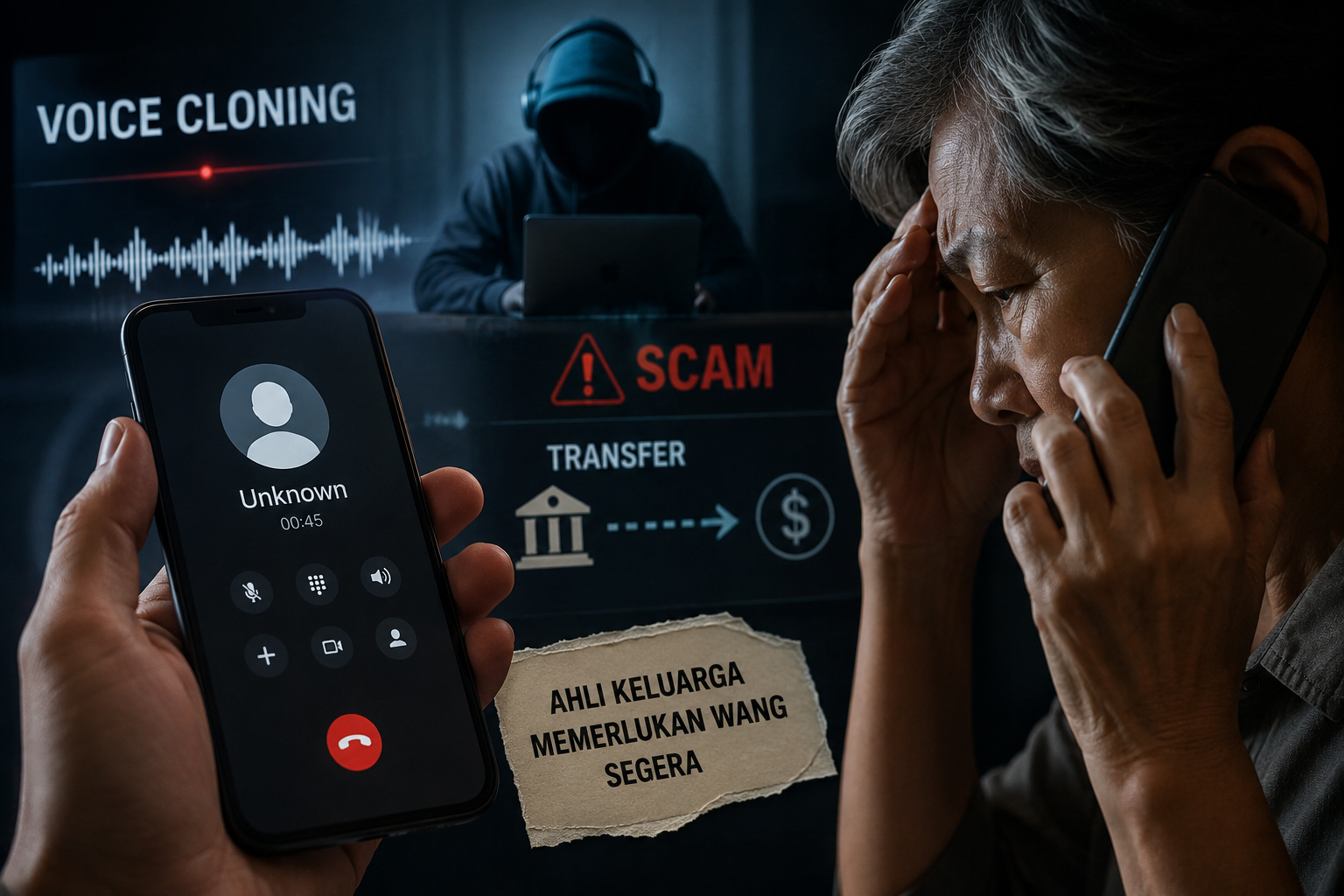
The threat posed by scams is becoming increasingly challenging as syndicates begin using artificial intelligence (AI), including voice-cloning technology.
The technology enables scammers to replicate the voices of family members, parents, friends, or other close contacts and use them to impersonate them and request financial assistance.
Similarly, deepfakes can manipulate a person’s face and create the impression that the individual is genuinely a police officer, bank employee, or government agency official.
Scammers also use caller ID spoofing to manipulate the caller’s identity, making the number displayed on a victim’s phone appear to be an official agency line.
Do not panic, verify
Izwan therefore advised the public not to panic when receiving suspicious calls, but instead to end the call and verify the matter through official channels.
The public should also understand the basic procedures of government agencies to identify suspicious instructions.
He emphasised that no police officer would ask someone to transfer money directly to a personal or third-party account for investigation purposes.
As a safeguard against becoming a victim, the public is advised to practise the 3S: Check, Block, and Verify (Semak, Sekat, and Sahkan).
Check any suspicious portal, app, or account; block suspicious calls; and verify claims from anyone claiming to represent the authorities, a bank, or a particular agency through official channels.
In an increasingly sophisticated world of scams, knowledge alone may not always be enough. The ability to stop, think, and verify before taking action can help safeguard against syndicate manipulation.