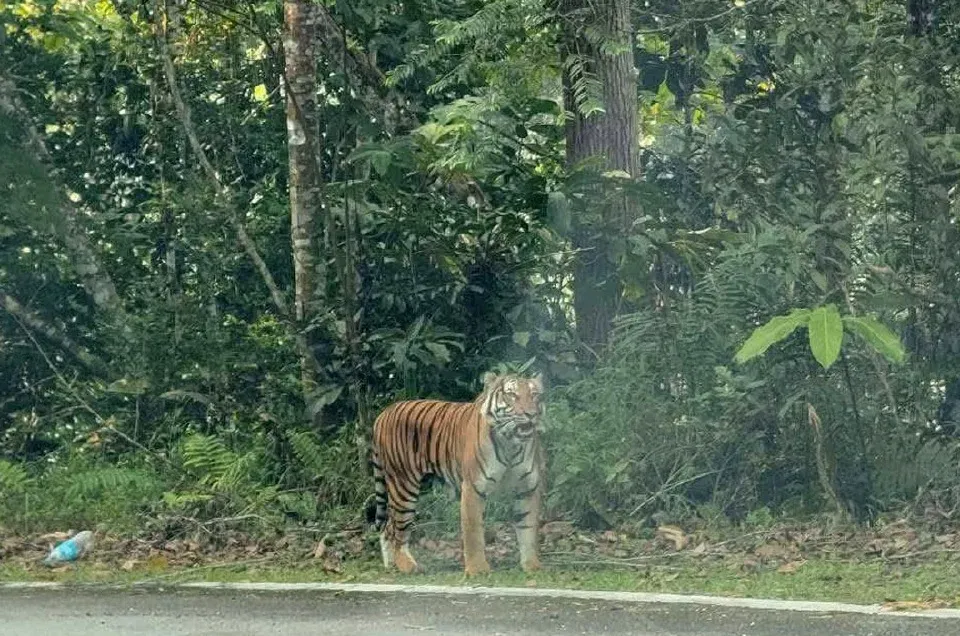
KUALA LUMPUR, Nov 11 — The government will review the standard operating procedures (SOP) for the Property and Crop Loss Assistance (BKHT) in January to speed up the approval process for aid to victims of human-wildlife conflict.
Natural Resources and Environmental Sustainability Deputy Minister Syed Ibrahim Syed Noh said the current processing time for complete applications that meet the stipulated requirements ranged from 44 to 72 days.
BKHT is a one-off financial assistance programme and not compensation or damages for individuals who suffered property damage or crop losses due to wildlife attacks.
“However, the ministry will review the SOP to expedite the approval process in the future,” he said when winding up the debate on the Supply Bill (Budget 2027) and the 2027 Development Expenditure Estimates at the committee stage for the Natural Resources and Environmental Sustainability Ministry (NRES) in the Dewan Rakyat today.
Syed Ibrahim added that the government allocated RM12.7 million for BKHT from 2024 to 2026, benefiting 740 applicants with RM3.6 million in assistance as of September.
In 2024, 246 recipients received RM987,000 in assistance, followed by 314 recipients who received RM1.497 million in 2025. As at September 2026, another 180 recipients had received RM1.2 million.
However, increasing financial assistance alone is insufficient unless the root causes of human-wildlife conflict are addressed comprehensively.
He said close cooperation between the federal and state governments is needed, particularly in monitoring changes in land use that could lead to encroachment into wildlife habitats and trigger conflict with local communities.
Meanwhile, two bills related to climate change will be tabled in Parliament only after the government reaches a consensus with the Sabah and Sarawak state governments through engagement sessions, which will continue in 2027 in line with a Cabinet decision made on July 15.
Syed Ibrahim said four engagement sessions on the National Climate Change Bill and the National Climate Change Authority Bill were held with Sarawak between August and October, while further sessions, including with Sabah, will continue next year.
The proposed legal framework is important to strengthen the country's climate change governance, including implementing a national carbon market policy, compliance mechanisms, registration, and the measurement and verification of carbon trading.
“The government has also approved an allocation of RM3 million for 2027 to develop technical documents and supporting infrastructure for the implementation of the climate change bills and the National Carbon Market Policy.
“The allocation includes the development of guidelines for monitoring, reporting, and verification of greenhouse gas emissions in designated economic sectors, helping industries prepare for climate change regulatory requirements,” he said.
Meanwhile, the government also allocated RM56.48 million under the 13th Malaysia Plan to implement six projects to strengthen the Malaysian Meteorological Department's (MetMalaysia) weather monitoring, forecasting and early warning systems.
The projects included upgrading weather radars and observation stations, modernising information and communications technology infrastructure, and enhancing forecasting capabilities through artificial intelligence, big data analytics, and high-performance computing to better prepare for El Nino and haze risks.
Earlier, during the debate, most MPs raised issues on managing human-wildlife conflict, including compensation for losses caused by animal attacks, as well as climate change.
The Dewan Rakyat subsequently approved the NRES's 2027 operating and development expenditure estimates totalling RM2,508,821,500 under Budget 2027 by a majority vote after 24 MPs participated in the debate.