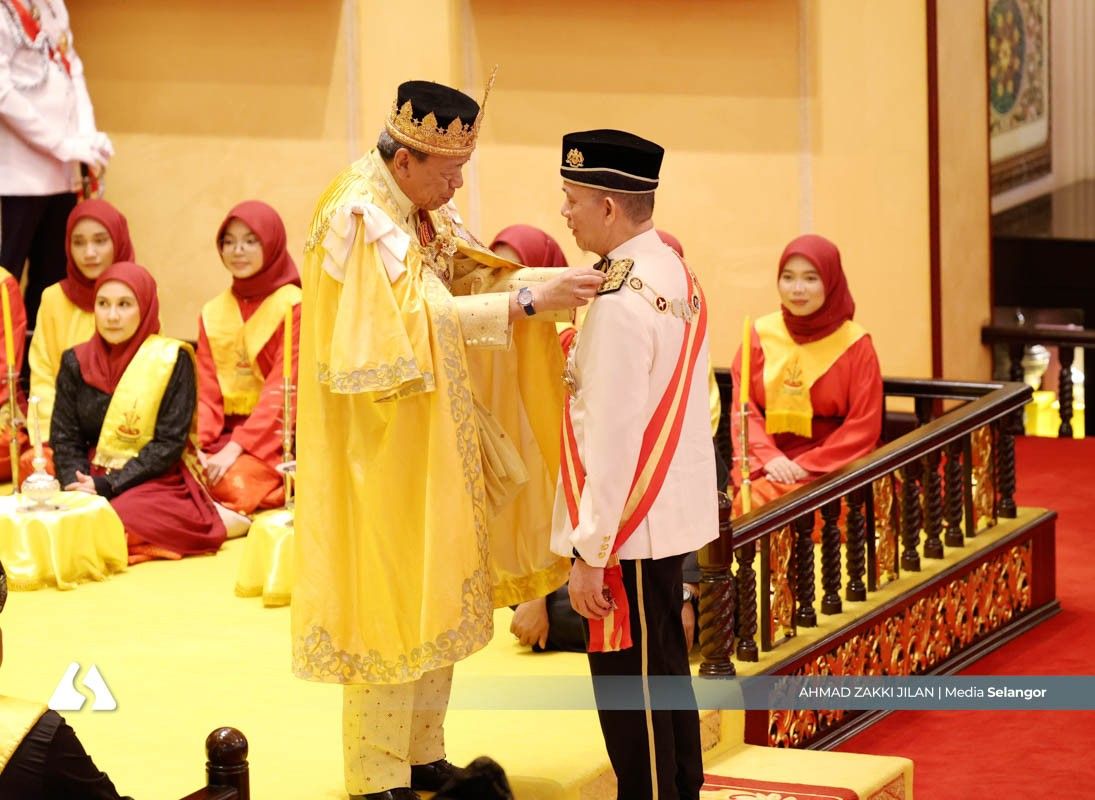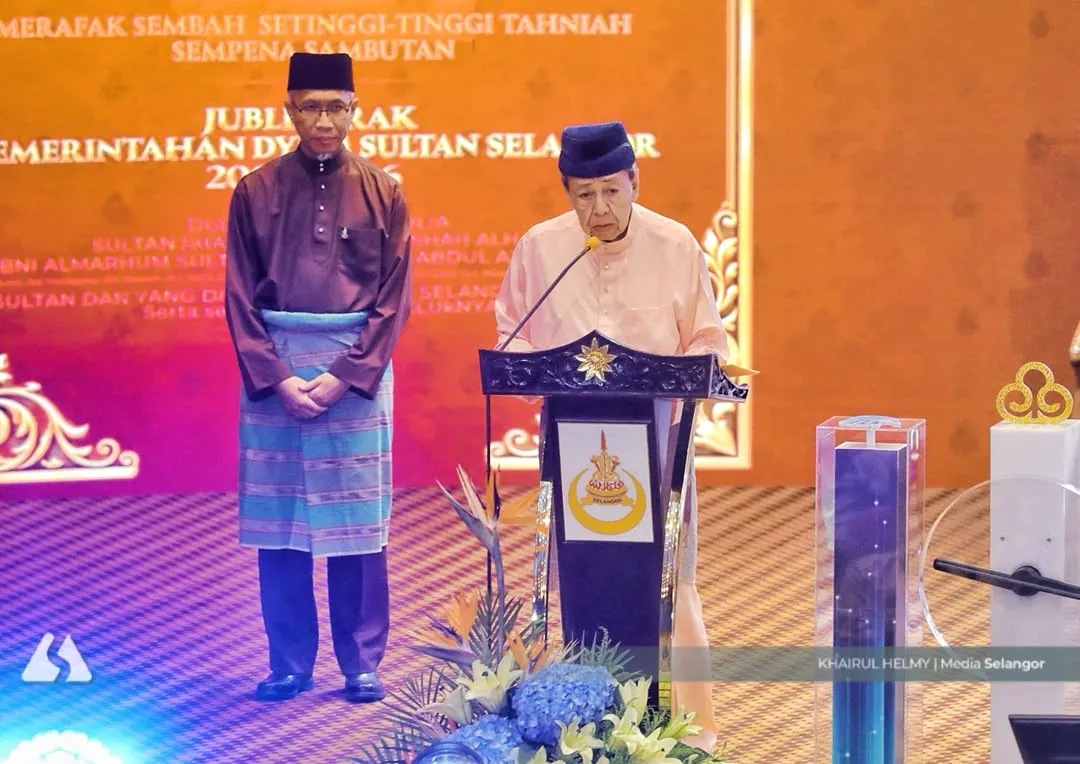


SHAH ALAM, Oct 31 — Serving the Sultan of Selangor Sultan Sharafuddin Idris Shah Alhaj as aide-de-camp (ADC) for 27 years gave Captain (Rtd) Dato’ Ahmad Ramli Kardi the opportunity to gain a close understanding of His Royal Highness' personality.
Having retired from active service in the Royal Malaysian Navy, he witnessed first-hand the Sultan’s emphasis on discipline, work ethic, and concern for the well-being of ordinary people.
Ramli observed that Sultan Sharafuddin's love for his people was among the qualities that shaped His Royal Highness’s considerations and decisions.
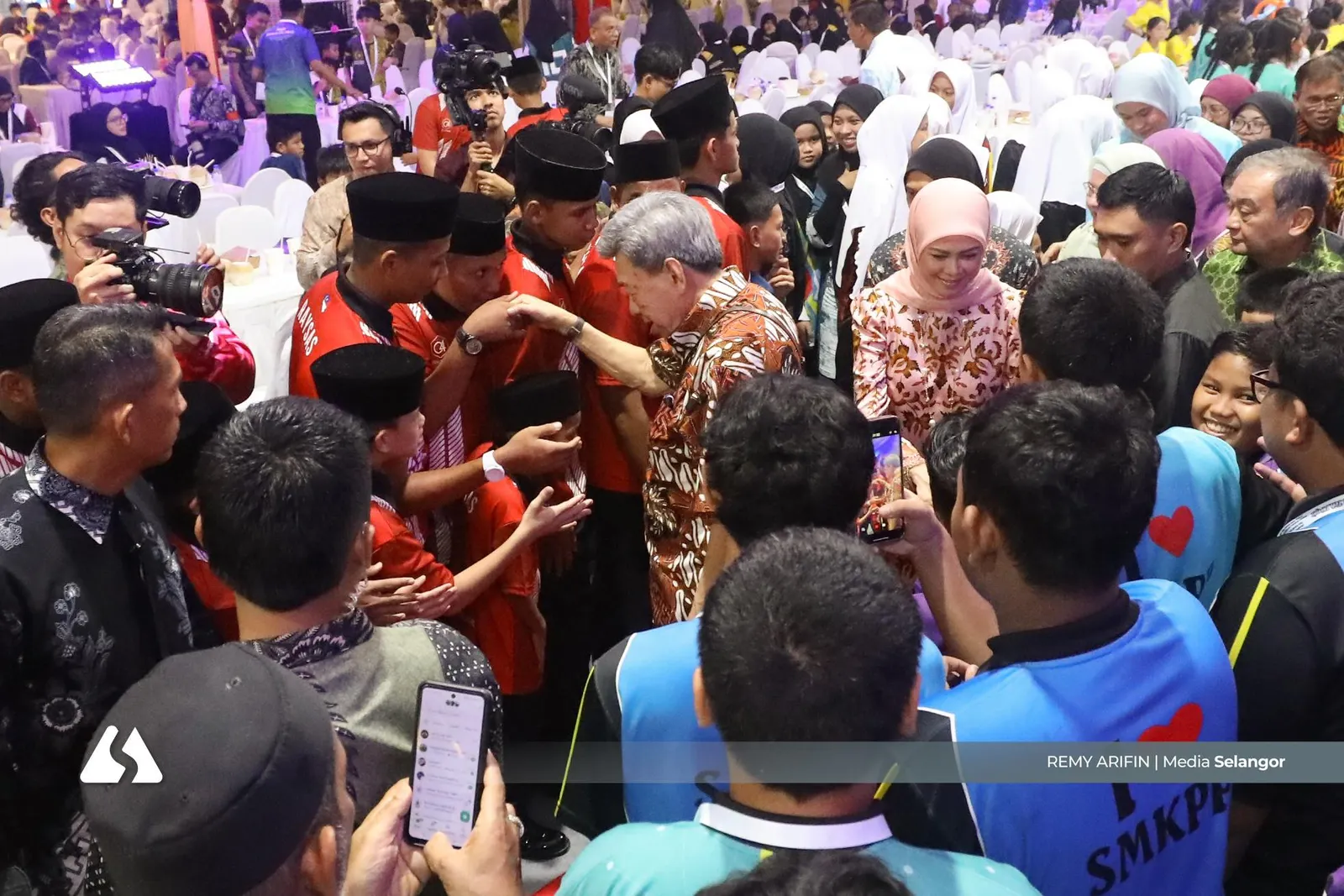
For instance, the Sultan dislikes official events with lavish celebrations that burden the public. The Ruler also prefers gatherings that let children interact with him directly in a comfortable setting.
In addition, His Royal Highness does not approve of police escorts sounding their sirens after 10.30pm, as this is considered a time for people to rest and sleep. During the day, sirens should also be avoided in areas near hospitals and schools.
Sultan Sharafuddin is highly punctual. He not only expects every programme to run on schedule but is also consistently ready about 30 minutes before departure.
Recalling a visit to Klang scheduled for 3pm, Ramli said the clock at the location chimed three times as the Sultan arrived. Members of the public who noticed His Royal Highness’s punctuality spontaneously applauded.
“His Royal Highness asked why they were doing that. I told him that he had arrived right on time, when the clock struck three. That is simply His Royal Highness’s nature,” he said.
Ramli was appointed to serve as the Sultan’s ADC on the recommendation of then-Navy chief Tan Sri Abu Bakar Jamal. At the time, he was undergoing a transition programme from active service in the Navy.
In a recent interview broadcast by SelangorFM 100.9, he revealed details of his first audience with the Sultan at Istana Alam Shah, Klang, in June 1999, before beginning his service.
“Are you ready to become my ADC?”
That was the first question Sultan Sharafuddin asked before Ramli responded respectfully. However, at the time, he was not yet fully familiar with the language and etiquette used when addressing royalty.
“I replied, ‘I am ready, Tuanku.’ At that time, I was not yet very proficient in using the royal form of address. Then I realised my mistake and immediately corrected my answer: ‘Ampun Tuanku, patik bersedia.’
“His Royal Highness replied, ‘You are welcome.’ I still remember that first meeting to this day,” he said.
That experience marked the beginning of Ramli’s service to the Sultan. His responsibilities went beyond accompanying His Royal Highness, including coordinating schedules and official engagements, attire for certain occasions, vehicles, security, and protocol compliance.
These duties also required more than simply carrying out clearly stated instructions. Ramli had to understand the Sultan’s expectations to ensure that all arrangements ran smoothly.
“The duties of an ADC are not all written down. We have to be able to read what His Royal Highness wants,” he said, adding that he also served as a liaison for conveying certain royal instructions.
Based on his experience, Ramli found that the Sultan frequently thought about the problems faced by the people and various state issues, including matters that others might consider minor.
He also described Sultan Sharafuddin as a royal leader who dislikes work being delayed without reasonable cause. His Royal Highness regards this as essential to discipline in administrative affairs.
To date, Ramli has witnessed many of the Sultan’s aspirations become reality. However, he believes some ambitions remain unfulfilled, including the dream of seeing Sungai Klang restored to a clean state, more green spaces created, a litter-free environment achieved, and flood problems addressed more effectively.

A lover of knowledge
Meanwhile, Selangor Public Library Corporation (PPAS) director Datin Paduka Mastura Muhamad revealed that the Ruler is an avid reader with a keen interest in knowledge and intellectual development.
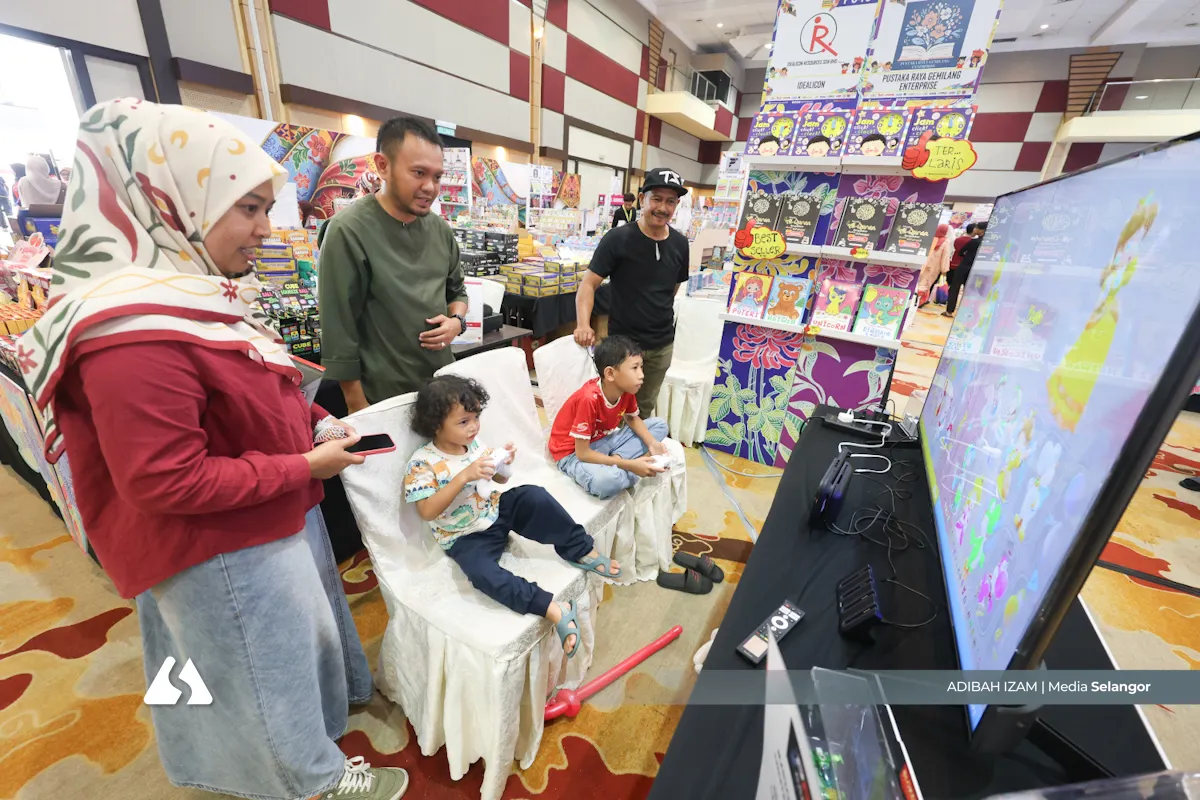
His Royal Highness' passion for learning is evident and was translated into the establishment of Pustaka Raja Tun Uda. The Sultan believes education can transform people’s lives and help build a better future for younger generations.
Recalling the initial plans for the library, she said a RM5 million monument was originally proposed in 2005 to commemorate Selangor's progress, but the Sultan did not consent to the idea.
Instead, His Royal Highness was more interested in building a fully equipped public library to improve the community's knowledge and intellectual development, particularly among the state's children.
“His Royal Highness asked: What was the point of building a monument? It would be a waste. He wanted the allocation to be used to build a comprehensive public library as a gift to the people,” Mastura said, recalling the Sultan’s vision that led to the construction of the library in Section 13, Shah Alam.
The royal instruction carried an important lesson: a state’s true progress lies not in static monuments, but in the knowledge and intellectual capacity of its people.
“His Royal Highness wanted this library to be a gift to the people. He believes education can improve the lives of the community, particularly Selangor’s children,” she told Media Selangor.
The library was subsequently built with a RM70 million state allocation and opened on July 22, 2011. It has since developed into one of Selangor’s important centres of knowledge.
More than a decade later, it continues to provide people from all walks of life with a place to read, learn, and access a wide range of educational materials.
Mastura noted that Sultan Sharafuddin also instructed that every book donation be recorded and properly acknowledged, while emphasising the importance of caring for books so future generations can use them.

Preserving heritage
Similarly, Sultan Abdul Aziz Shah Royal Gallery general manager Dato’ Munasor Aliyasak said the Sultan was directly involved in developing the gallery to preserve Selangor's heritage.
From checking the spelling of exhibition captions to determining the placement of thousands of artefacts, His Royal Highness not only approved but also helped arrange the gallery’s contents.
Such attention to detail was intended to ensure that all historical information presented in the gallery is factually accurate and easy for members of the public to understand.
“If His Royal Highness feels that something is incorrect, he will go straight to the location and ask us to check it again. Out of the more than 1,000 items in our gallery, each with its own caption, the Sultan can point out an item that he believes is inaccurately described.
“When we check again, there are indeed mistakes, including spelling errors and names that do not actually exist as written,” he said in a separate interview broadcast by SelangorFM 100.9.
Munasor said this experience reflects a key principle in gallery management: factual accuracy must never be compromised. The Sultan also provided extensive input on exhibition planning and the selection of artefacts, photographs, and historical documents.
“His Royal Highness’s vision is to make the gallery more accessible so that everyone can visit it easily. Its narrative must show how the Selangor Sultanate began and developed,” he said.
Sultan Sharafuddin also takes a keen interest in caring for the artefacts and the condition of the gallery. A total of 12 staff members handle security, collection maintenance, and various visitor-related matters.
The sovereign wants to ensure that the people have the opportunity to learn about history and understand the role of the Selangor Sultanate in the state’s development.
Munasor also recalled the Sultan’s advice during the gallery’s opening ceremony, when he emphasised the importance of maintaining its standards.
“His Royal Highness once said during the opening ceremony, ‘Today is the opening, but every time I visit, it must look like this.’ This means the gallery must consistently maintain the same standard, rather than looking beautiful only on its opening day,” he said.
As such, the gallery is not merely a display of artefacts but also a place where people can understand history, appreciate the legacy, and learn about the Selangor Sultanate across generations.
The gallery also showcases the Sultan’s involvement in cultural events, including Chinese New Year celebrations. Rare books, old manuscripts, maps, keris, and works of art from the Mah Meri Orang Asli community belonging to His Royal Highness are also on display.
The gallery began as the Memorial Museum, which housed the late Sultan Salahuddin Abdul Aziz Shah Alhaj’s personal collection. It opened on March 8, 1999, in Kampung Jawa, Klang.
When Sultan Sharafuddin acceded to the throne in 2001, His Royal Highness opened a new gallery at Bangunan Sultan Suleiman in Klang.

Public well-being
Elsewhere, state executive councillor for investment, trade, and mobility Ng Sze Han said the Sultan has repeatedly reminded the state administration over his 25-year reign that economic development must translate into better well-being for the people.
The Ruler also frequently emphasised the need for the state administration to address flooding to safeguard public safety and well-being.
“His Royal Highness’s instructions on the issue of flooding are always in my mind. Throughout 2024 and 2025, RM13.93 million was spent on flood mitigation projects in Kinrara, the area that gave me the opportunity to serve in His Royal Highness’s state administration,” he said.
State executive councillor for human resources and poverty eradication Papparaidu Veraman said the royal institution remains a symbol of historical continuity and a unifying institution for the state’s multiracial and multi-religious population.
He hopes that Selangor will continue to progress, prosper, and remain harmonious under Sultan Sharafuddin’s reign, paving the way for a better future for generations to come.
“The true progress of a state is measured not only by economic development but also by its ability to protect those in need, provide employment opportunities, and ensure that every segment of society benefits from development,” Papparaidu said.
For the Klang Royal City Council (MBDK), the 25th anniversary of Sultan Sharafuddin’s reign is not merely an occasion to express appreciation for His Royal Highness’s leadership, but also a reminder for local authorities to strengthen integrity, sustainability, and public well-being.

Klang Mayor Dato' Abd Hamid Hussain said the city’s development should continue under the Sultan’s guidance, which consistently prioritises sustainable development and community well-being.
“His Royal Highness is deeply concerned about the problems faced by the community. As a local authority, we always uphold his instructions to ensure that every initiative is based on sustainable development that improves residents’ well-being,” he said.
The Sultan has also frequently emphasised the importance of integrity among civil servants, ensuring that every duty is carried out honestly and efficiently for the benefit of the community.
In conjunction with the Silver Jubilee celebrations, MBDK has organised several programmes using existing allocations, in line with the Sultan’s instructions that celebrations should be modest and avoid wastage.
Abdul Hamid added that the planned arts, cultural, and sporting programmes will also provide opportunities to bring the community together to mark the historic anniversary.
MBDK has also helped organise state government programmes, including sessions on the palace grounds involving various groups, such as disabled persons, civil servants, and retirees.
The celebrations are not merely events to commemorate the Sultan’s reign but also a reminder for MBDK to improve service standards and address issues that directly affect residents’ daily lives.
Urban cleanliness, waste management, and efforts to reduce flood risks remain among the main challenges, particularly given the size of the council’s administrative area, industrial activities, and the busy operations at Port Klang.