
SHAH ALAM, Sept 26 — Early industry involvement in Technical and Vocational Education and Training (TVET) is important to ensure graduates’ skills genuinely match current employment needs.
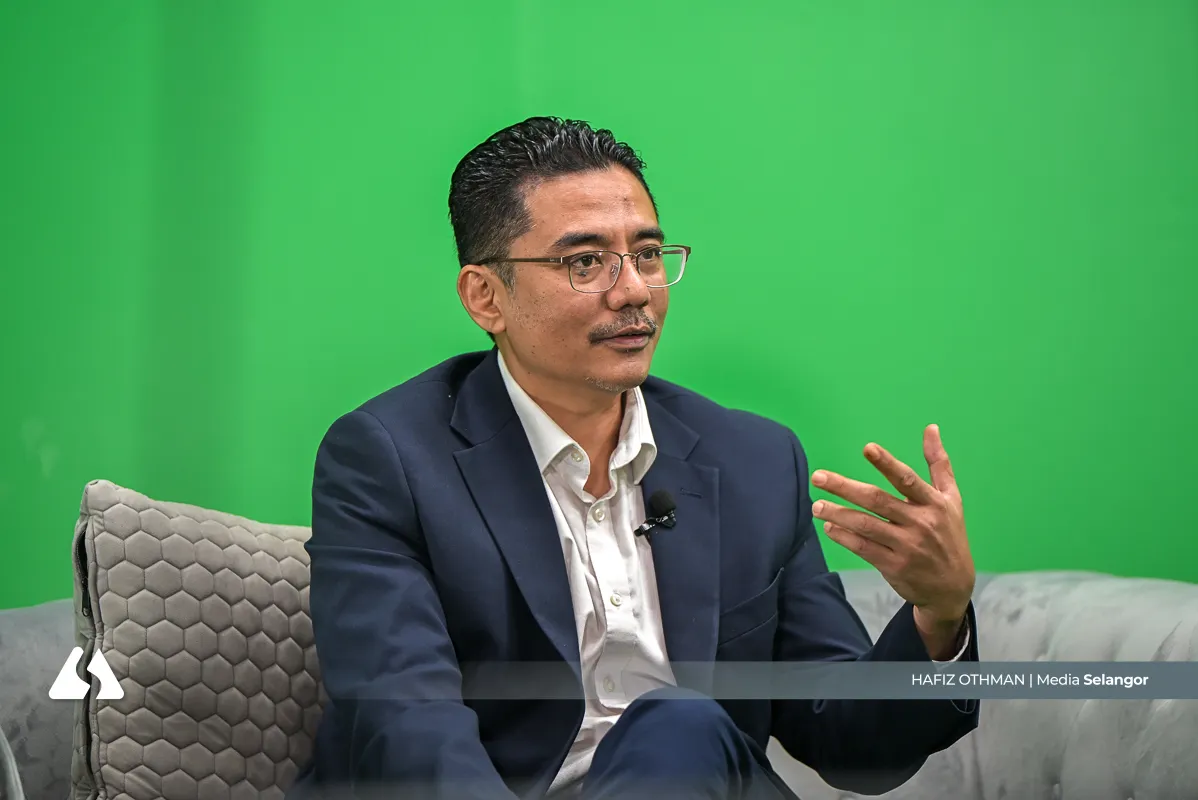
The Selangor Technical Skills Development Centre (STDC) chief executive officer Harizal Hamid said skills mismatch among TVET graduates can occur in two situations, depending on their competency level and the suitability of their skills for the careers they pursue.
“There are two scenarios for this mismatch. First, the student’s competency is too low for the career they pursue, so when they enter the industry, they have to start learning again and undergo retraining.
“Second, our students are highly competent but begin their careers in an industry that does not require their skills, so there is an imbalance,” he said.
Harizal was speaking as a guest on the 'Bicara Semasa' programme titled "Learning TVET, after that, where next?" produced by Media Selangor recently.
He added that one factor contributing to the situation is the lack of sufficiently close and continuous engagement between educational institutions and industry throughout the learning process.
Educational institutions generally teach based on syllabuses, even as technology and industry requirements change rapidly.
“Industry engagement for educational institutions is often limited to meetings with industry advisers once, twice, or three times a semester. That is insufficient and is one of the factors contributing to the mismatch.
“Industries are moving very rapidly. That is why we do not want students to be left behind,” Harizal said.
As such, industry players need to be brought in earlier as strategic partners in the training process, including by sharing expertise, providing trainers, and offering professional certifications to students.
For example, STDC has established partnerships with several industry and technology players, including Siemens, Google, Apple, and BMW, in areas related to manufacturing, digital technology, artificial intelligence (AI), and the automotive sector.
He noted that this approach not only gives students industry recognition but also enables them to build networks and gain earlier exposure to the employment ecosystem.
This measure is vital to ensure the skills taught keep pace with industry developments, reducing the gap between the training received and the competencies employers require.
Meanwhile, overlapping TVET programmes also require more integrated coordination of resources and the allocation of training fields.
Harizal said that such coordination was particularly important for strategic sectors such as AI, aerospace, microelectronics, semiconductors, and green technology, which increasingly require a skilled workforce.
“The allocation of each initiative managed by specific institutions needs to be implemented and mandated more comprehensively so that, eventually, demand for skilled workers will no longer be a problem for Selangor.
“We also do not want to have to bring in expertise from outside to meet current needs,” he said.
The Second Selangor Plan (RS-2) also emphasises TVET development through Mission Four: Productive and Inclusive Human Capital, which focuses on developing talent and a workforce capable of meeting industry needs, among others.
When presenting RS-2 in August, Menteri Besar Dato' Seri Amirudin Shari said the state government will strengthen the TVET framework led by STDC through the proposed TVET Corporation.
The move aims to prevent overlapping training offerings in the market while ensuring that Selangor’s TVET system genuinely meets industry needs.