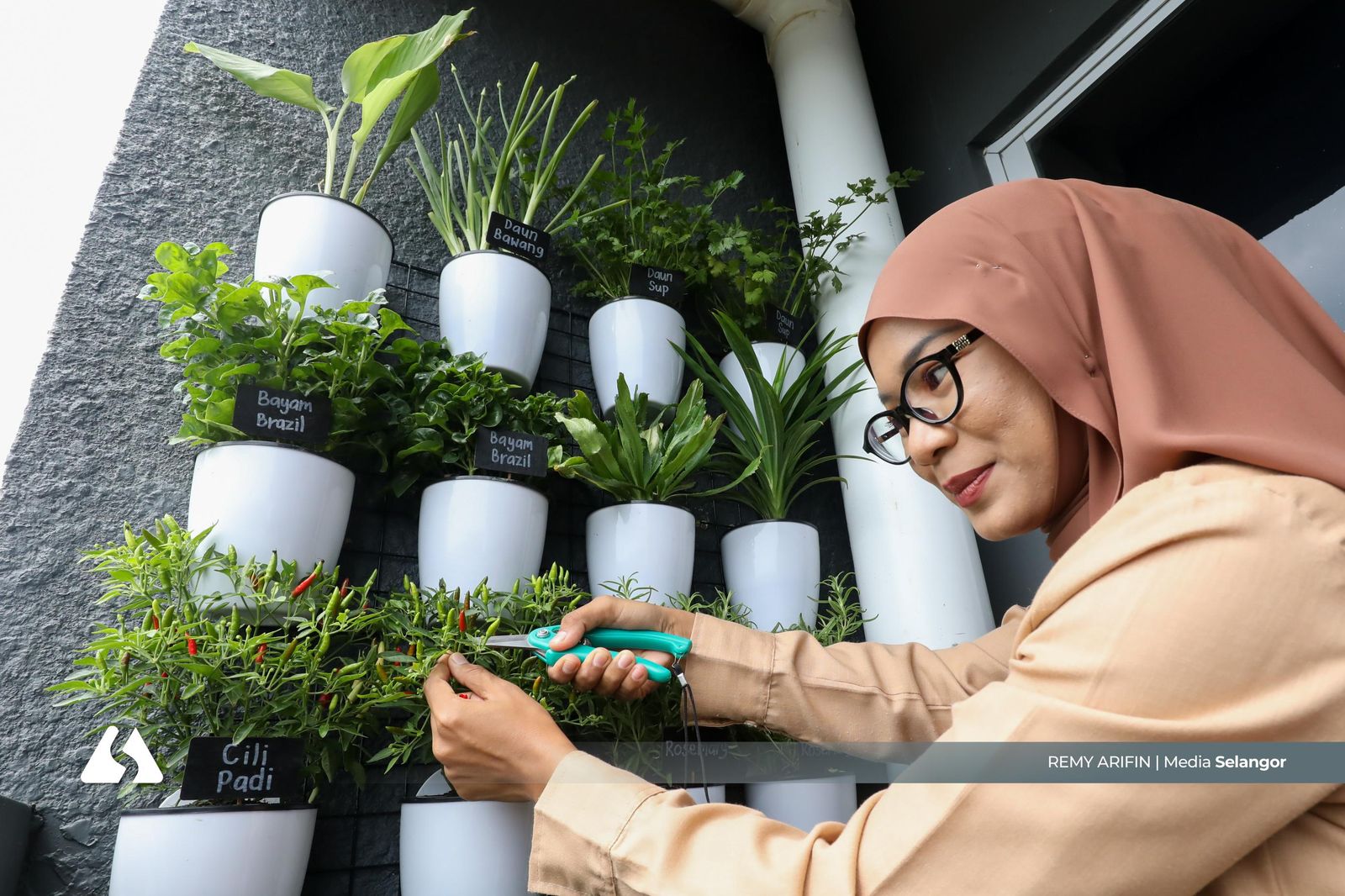


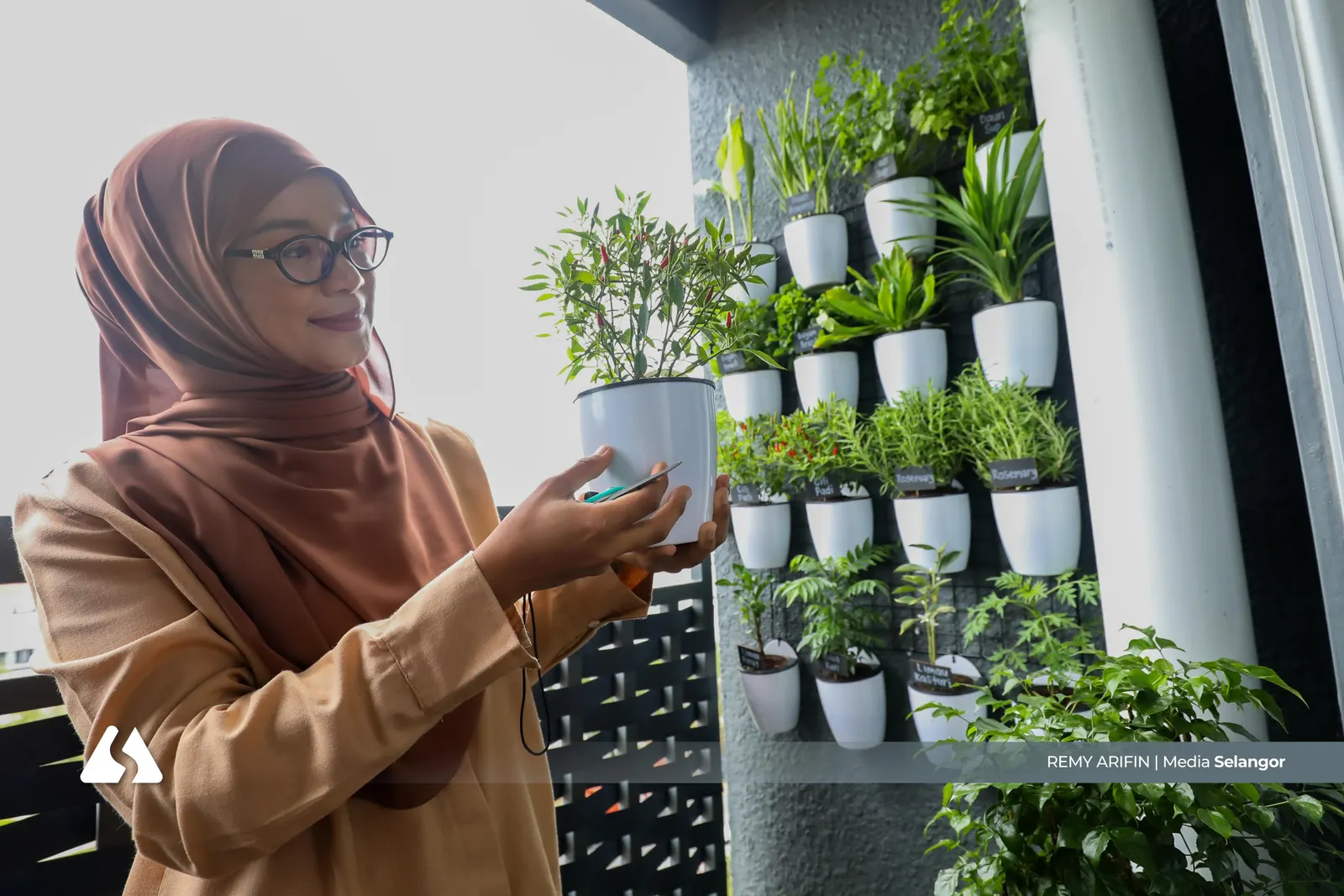
SHAH ALAM, Sept 22 – Living in an apartment with only a small balcony does not prevent residents from growing their own fresh and healthy food.
For Marlyana Mohamed, 31, growing vegetables and food crops at home is more than just a hobby, as it allows her family to enjoy produce she has grown herself.
She said choosing plants that could be used in everyday cooking, coupled with organic fertilisers and natural methods to manage pests, gave her greater confidence in the food her family consumed.
Knowing exactly how each plant is cared for also means the produce can go straight to the kitchen without having to worry about the processes it may have gone through before reaching consumers.
For her, growing food at home not only provides greater peace of mind but can also help reduce daily expenses.
“If we do it ourselves, we already know. When we want to eat it, we don't have to feel doubtful,” she said when met by Media Selangor at her home in Puncak Alam.
Making the most of small spaces
For those looking to start growing their own food, Marlyana recommended several low-maintenance plants that can be grown at home, including Brazilian spinach, curry leaves, calamansi, and kaffir lime.
Lettuce and ulam raja are also among the food crops that can be grown in limited spaces for everyday use.
These plants are particularly suitable for apartment residents or those with limited time to tend to a garden.
“I suggest that if the house does not have much space, for example, if an apartment only has a balcony, you can start with Brazilian spinach; curry leaves can also be grown, as well as calamansi and kaffir lime.
“These are among the plants that are not troublesome. If we plant them, they will grow. They really are not troublesome; they are easy,” she said.
According to the physical education teacher, beginners do not necessarily have to start with seeds.
Using young plants or stem cuttings can be a more practical option, as it saves space and allows the planting process to get underway more quickly.
However, when transferring a young plant into a new pot, she advised against completely removing the original soil, particularly around the roots, as this could cause stress to the plant.
“If you want to remove it, remove only a little at a time. Don't remove everything, especially the roots. If there is soil there, don't remove all of it because it has the potential to become upset and die,” she explained.
From balcony to kitchen
Beyond the satisfaction of watching plants grow, Marlyana said the harvested produce can be used in everyday meals, helping households reduce their grocery expenses.
Brazilian spinach, for example, can be eaten raw as ulam or cooked, while ulam raja can be served as an accompaniment to meals.
Calamansi can also be added to drinks to enhance their flavour, while providing a source of vitamin C.
“If we are bored of drinking plain water every day, we can squeeze lime into our drinks for additional flavour,” she said.
Brazilian spinach is among the plants she considers easy to grow, as it can be propagated through stem cuttings without having to wait for seeds to germinate.
“Brazilian spinach itself—if we buy it at the supermarket, we can simply take the older stem cuttings and plant them ourselves. Within a week, roots will start to grow, and then shoots will begin to grow,” she said.
For Marlyana, limited space and a busy work schedule should not be reasons to avoid growing food at home.
By selecting suitable food crops and adopting practical care methods, even a small space at home can produce fresh food for everyday use.
She said starting small is the key and learning to understand the needs of each plant.
From just one corner of a balcony, that small space can ultimately show that enjoying food with greater confidence does not necessarily require a large garden.