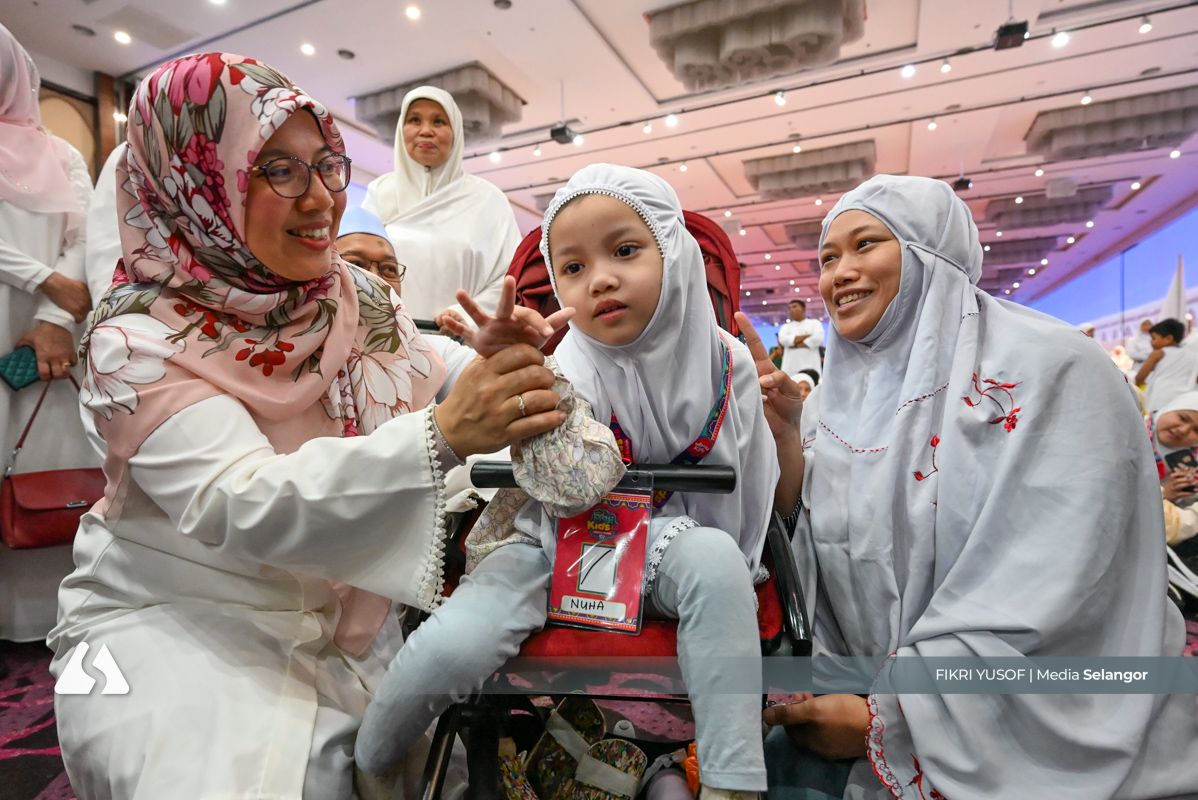
SELAYANG, May 31 — The state government is designing guidelines for early intervention centres registered as vendors under Bantuan Rahmah Insan Istimewa Selangor (BRAIS) to ensure their services meet established standards, said state executive councillor for welfare and women empowerment Anfaal Saari.
She said the move is part of efforts to improve the early intervention ecosystem for children with special needs in Selangor.
“In the process of improving intervention centres, we have implemented early registration for vendors, and have received participation from around 300 early intervention centre operators,” she added when met at an Aidiladha event at SK Selayang Baru 2 here yesterday.
In April, Anfaal said RM800,000 was allocated for BRAIS, which aims to assist the development and education of people with disabilities (OKU). The programme replaces Bantuan Khas Anak Istimewa Selangor (ANIS) and is set to benefit 1,800 recipients.
She explained that the rebranding is aimed at strengthening comprehensive support for OKU and their caregivers in terms of monetary and non-monetary aid.
She said the Selangor government is looking into compliance among registered intervention centres, including educators’ qualifications and therapeutic methods.
“From the compliance and implementation aspects, a guide must be developed. We don’t want there to be intervention centres that claim to be able to provide therapy, but fail to comply with conditions and standards,” Anfaal added.
She said the state is aware of the need to ensure intervention centres not only fulfil local authorities’ registration and licensing conditions, but also for educational content and approaches to meet established standards.
Even though the education and healthcare sectors are under the federal government’s jurisdiction, she said Selangor would continue acting proactively to strengthen support systems for children with special needs.
“The challenge now is the lack of PPKI (Integrated Special Education Programme) places at mainstream schools. This must be discussed with a whole-of-nation approach and not separately by sector.
“I see that the federal government has the political will to do this. The effort won’t just help more children with special needs enjoy their right to education, but allow early intervention to be applied more effectively,” Anfaal said.