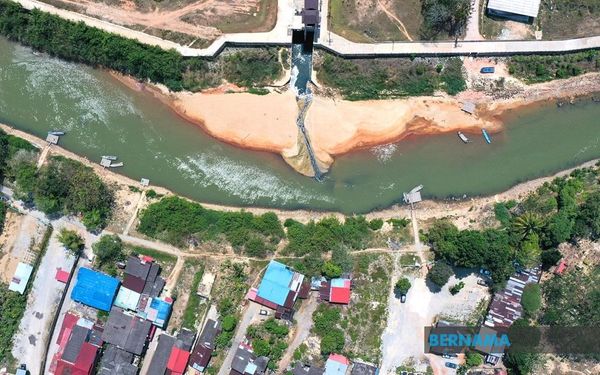
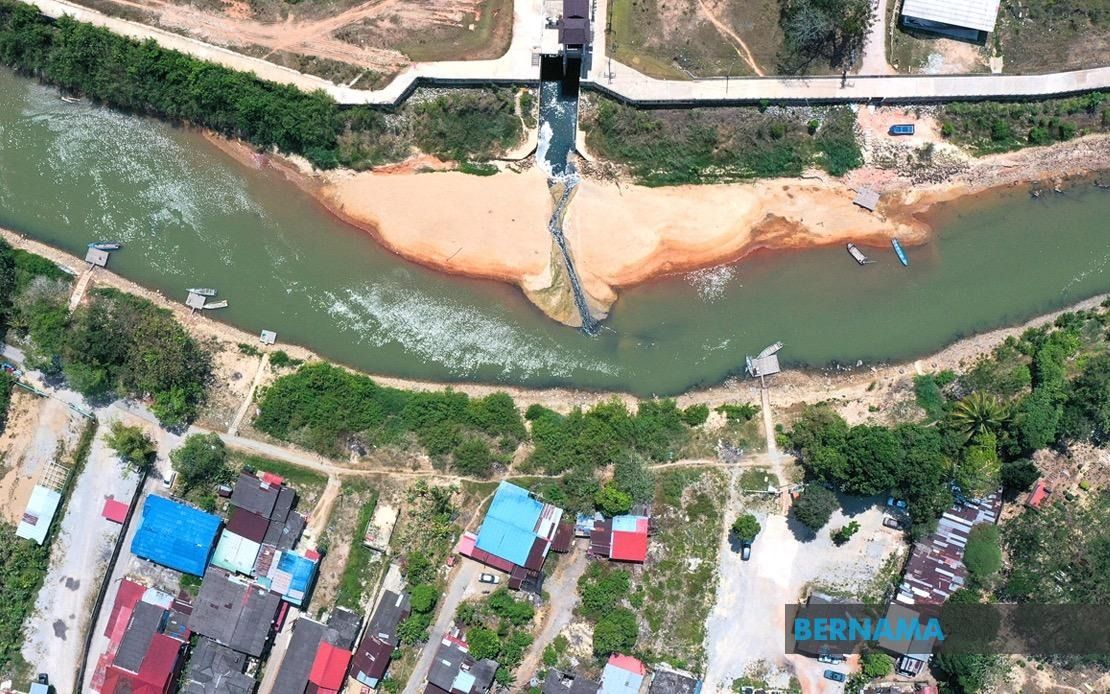
KOTA BHARU, March 30 — The phenomenon of river water turning green and falling levels in several rivers in Kelantan is due to prolonged dry weather and ecosystem stress, not an indication that the rivers are becoming cleaner.
Head of the Climate, Water and Environmental Resilience Research Group at the Faculty of Earth Sciences, Universiti Malaysia Kelantan (UMK), associate professor Mohamad Faiz Mohd Amin said the two conditions are interrelated due to a lack of rainfall.
He explained that during the rainy season, Sungai Kelantan typically carries a high load of suspended sediment caused by erosion, giving the water a murky brown appearance.
However, reduced rainfall slows the river flow and lowers erosion rates, significantly decreasing the amount of suspended sediment entering the river.
“This change is often misinterpreted as an improvement in water quality. In fact, it is merely a physical change.
“When the water becomes clearer, sunlight penetrates deeper, highlighting the natural colours of the aquatic system, including the presence of phytoplankton or algae to some extent,” he told Bernama.
Mohamad Faiz said flowing rivers such as Sungai Kelantan are not prone to large-scale algal blooms.
“Therefore, the green colour is more likely linked to reduced sediment rather than algae as the primary cause,” he said.
Commenting on the drop in Sungai Golok’s water level to 3.26 metres, well below the normal level of five metres, he warned that the situation reduces the river’s ability to dilute pollutants.
“When water volume decreases, substances such as nutrients from agricultural runoff or waste discharge become more concentrated, while water temperature rises.
“This can affect water quality and place stress on aquatic life. The impact may extend to threats to raw water supply and daily drinking water for residents,” he said.
He stressed that the current situation in Kelantan is an early indicator of a water security crisis driven by climate change, with increasingly erratic rainfall patterns and prolonged dry spells.
“Rivers that appear more ‘beautiful’ today may actually be losing their natural ability to support life.
“Therefore, water resource management must shift towards a more adaptive, data-driven and climate-responsive system,” he added.