
SHAH ALAM, Feb 23 — For years, online content creators and influencers have carved out a place in Malaysia’s economy by posting videos, running online tuition classes, selling homemade bakes, and livestreaming.
Yet, because their work is not formally recognised, many remain invisible in the country’s official labour surveys.
The Economic Census 2026 (BE2026) is set to change that narrative. According to the Statistics Department (DOSM), the census will place greater focus on the informal sector, which includes digital content creators such YouTubers.
For the first time, many of them will be officially included, which would recognise the growing contribution of digital work.
Malaysia University of Science and Technology lecturer Prof Emeritus Barjoyai Bardai said the move reflects a broader shift in how Malaysians participate in the economy.
“By formally counting influencers and YouTubers, Malaysia acknowledges that content creation is no longer a fringe activity, but a legitimate economic sector.
“Malaysians are increasingly participating in the economy through non-traditional, digitally mediated work, from the hawkers using social media to the micro-entrepreneurs monetising online audiences,” he told Media Selangor recently.
He added that the rise of digital work, particularly content creation, reflects deeper flaws in Malaysia’s traditional job market, despite there being various new opportunities.
This, he said, is evidenced by the Malaysian Employers Federation’s (MEF) observation that youth often change jobs within 18 months of employment due to limited career progression, unstable wages, and workplace culture mismatch.
Barjoyai said frequent job-hopping points to concerns over job quality, stability, and career progression, and stressed that many traditional roles fail to meet young employees’ expectations for meaningful work, growth opportunities, and work-life balance.
“Traditional employment is not offering the stability or development young Malaysians seek, which pushes them towards informal or digital alternatives,” he said.
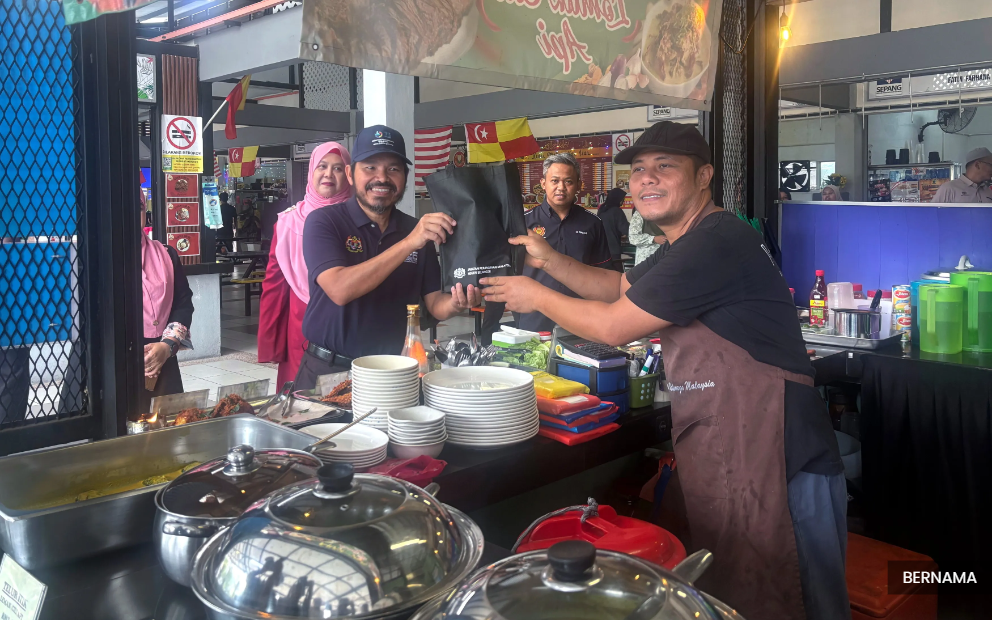
On January 6, it was reported that for the first time, the BE2026 will include the informal sector, encompassing digital content creators, food vendors, market traders, small retail shops, transport operators, homestay owners, tuition centres, mobile microbusinesses, and various support activities that contribute significantly to the local economy.
Chief statistician Datuk Seri Mohd Uzir Mahidin said influencers and content creators, previously captured only through statistical modelling, would now be included through field verification and digital tracking via the census, which will be conducted from January to October and survey 1.34 million businesses and organisations.
Shaping policies
Barjoyai said the move ensures content creators’ contributions are captured in official statistics, thus shaping policies under the nation’s digital economy agenda and Industry 4.0 goals.
He said the census also provides concrete data on the scale of informal digital work, which has been difficult to measure in the past, and helps determine whether influencer-driven and gig-based work is a temporary trend or a structural shift in Malaysia’s labour market.
“Without this data, policies risk being outdated, failing to support workers in emerging sectors,” Barjoyai added.

Like Barjoyai, Universiti Malaya’s Asia-Europe Institute executive director Prof Datuk Rajah Rasiah said the census is vital in providing crucial, reliable data on informal digital work, which would allow policymakers to assess whether it represents a lasting shift.
He said digitalisation also expands labour market flexibility and creates sustained opportunities for small enterprises and content creators.
“The spread of digitalisation has made the labour market more flexible, creating more opportunities for micro and small enterprises to compete with medium and large companies by leveraging economies of scope rather than economies of scale.
“For example, small home enterprises can now compete with supermarkets and retailers by promoting their products online.
“The experience of countries such as the United States, Germany, Japan and China shows that its permanence will only increase.”
On the finding that youth frequently change jobs, Rajah said this shows greater job mobility and flexibility in the country.
“This reflects a labour market that offers young workers the fluidity to change jobs, even (in) less than two years. That should be viewed positively, as it allows jobseekers to consider opportunities, as well as address frictional and structural economic issues,” he said.
Risks, gaps
Meanwhile, Barjoyai cautioned that while digital work may appear attractive, income is often unstable and dependent on platform algorithms, audience trends, and monetisation rules, with limited social protection.
“The challenge now is ensuring these workers are not left behind in terms of protection, stability, and skill development, while harnessing their creativity as a driver of national growth.”
Barjoyai noted that many creators focus on niche skills, which may limit broader professional development.
He added that overreliance on digital platforms may hinder career transitions if trends shift.
The Economic Census is conducted every five years to produce comprehensive economic data and establish a new national baseline, with 2025 serving as a “normal” reference year for the latest edition after the Covid-19 pandemic.
BE2026 would be the sixth Malaysian census since 2001.