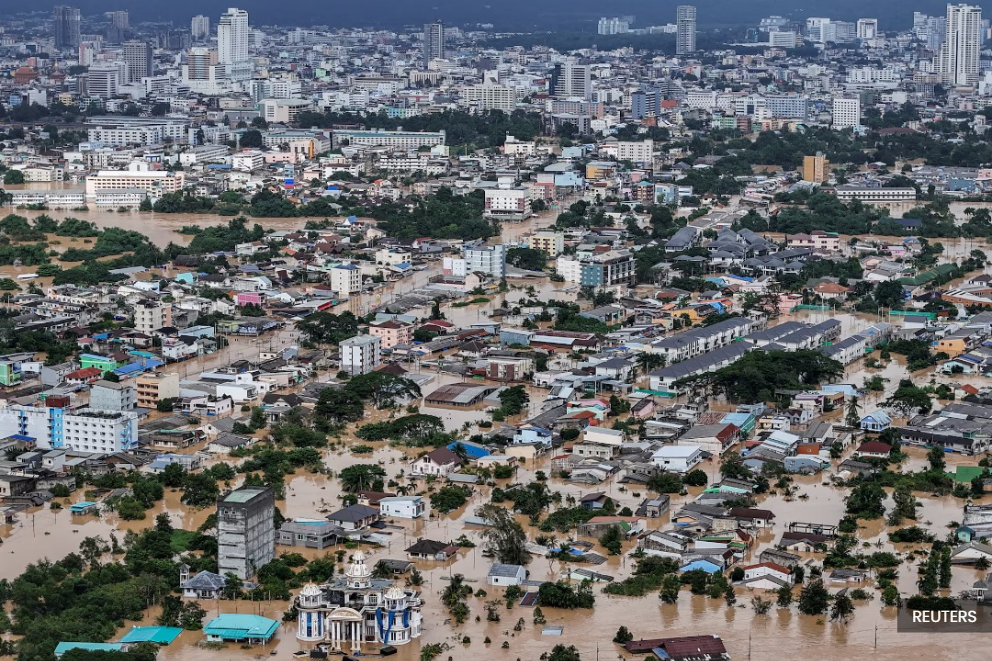
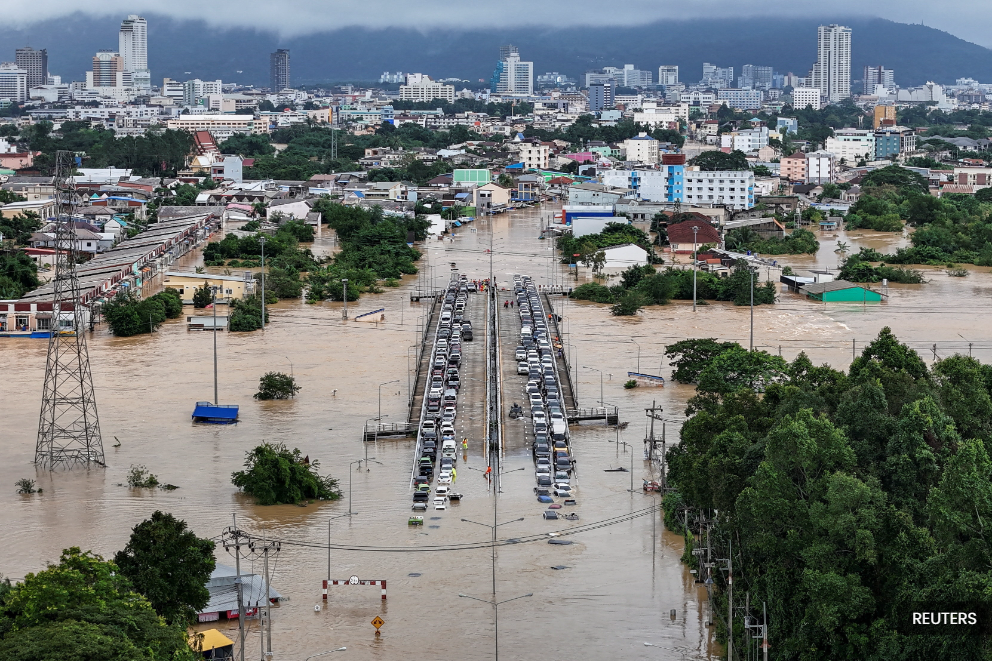
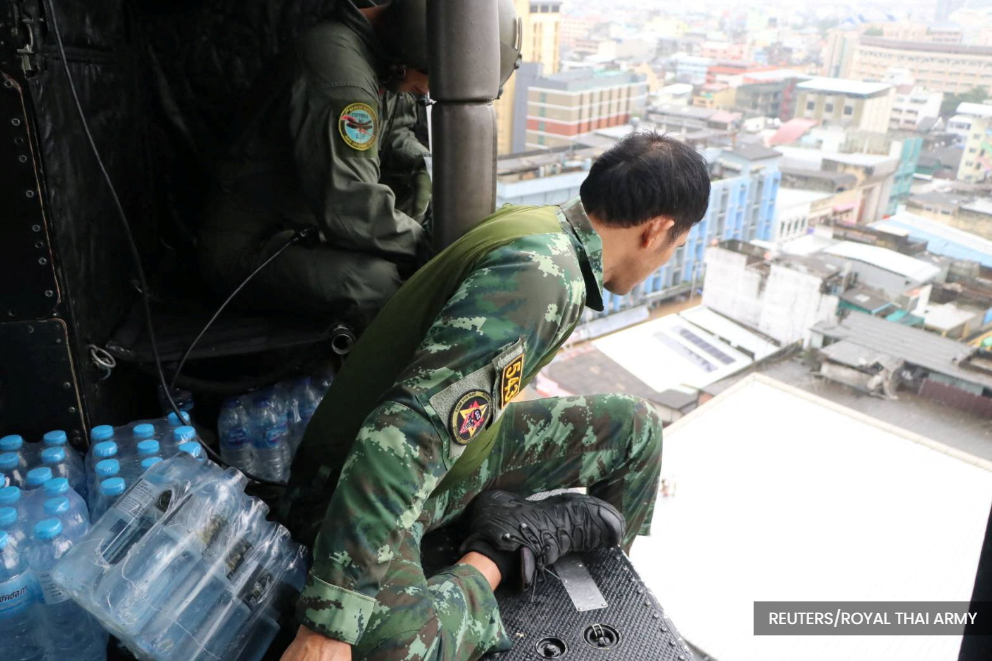

HAY YAI/KUALA PERLIS — Rescuers in Thailand readied drones today to airdrop food parcels, as receding floodwaters in the south and neighbouring Malaysia brightened hopes for the evacuation of those stranded for days, while cyclone havoc in Indonesia killed 28.
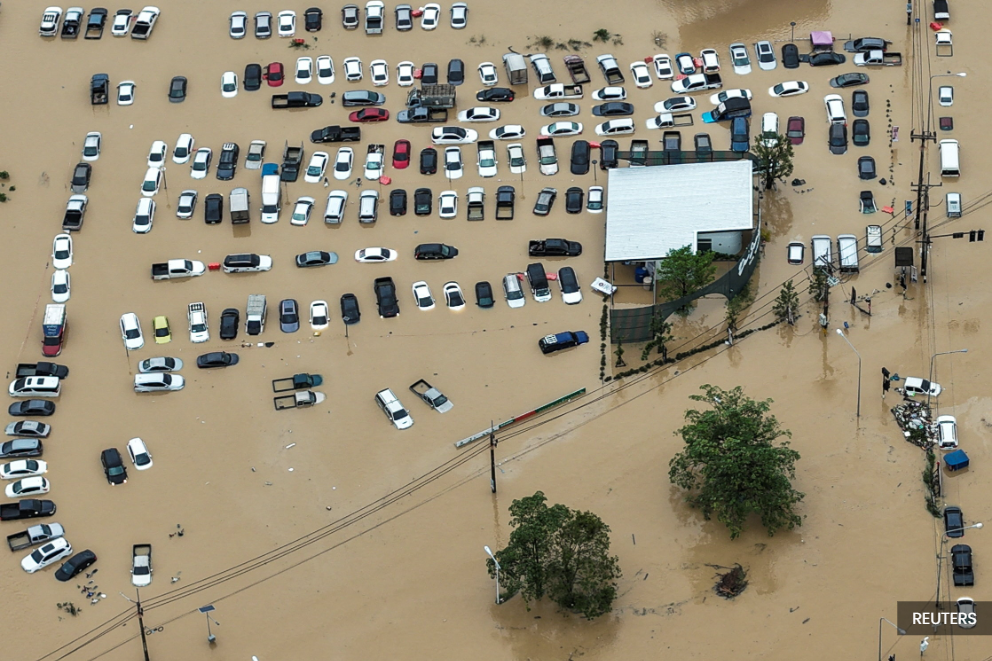
Severe floods after a week of heavy rain have killed at least 33 in Thailand and two in neighbouring Malaysia, with tens of thousands huddling in evacuation centres, some after being cut off for days by waters as much as 2m high.
"It is a race against time," Thai government spokesman Siripong Angkasakulkiat told Nation TV, adding that rescue teams were preparing to use drones to deliver food parcels, relying on satellite internet in the face of telecoms outages.
"We have to help them out," he said, noting that the authorities expected to rescue even more people today.
The receding floodwaters are allowing disaster teams in Thailand and Malaysia to boost aid deliveries and efforts to move people out of waterlogged homes.
According to the authorities, the floods affected nearly three million people in nine southern Thai provinces, with 3,000 moved to safety from the worst-hit city of Hat Yai, including some critically ill people airlifted yesterday from a partially inundated hospital.
Thousands have been marooned on rooftops in the commercial hub by record rainfall, which reached 335mm, the highest in a single day in 300 years.
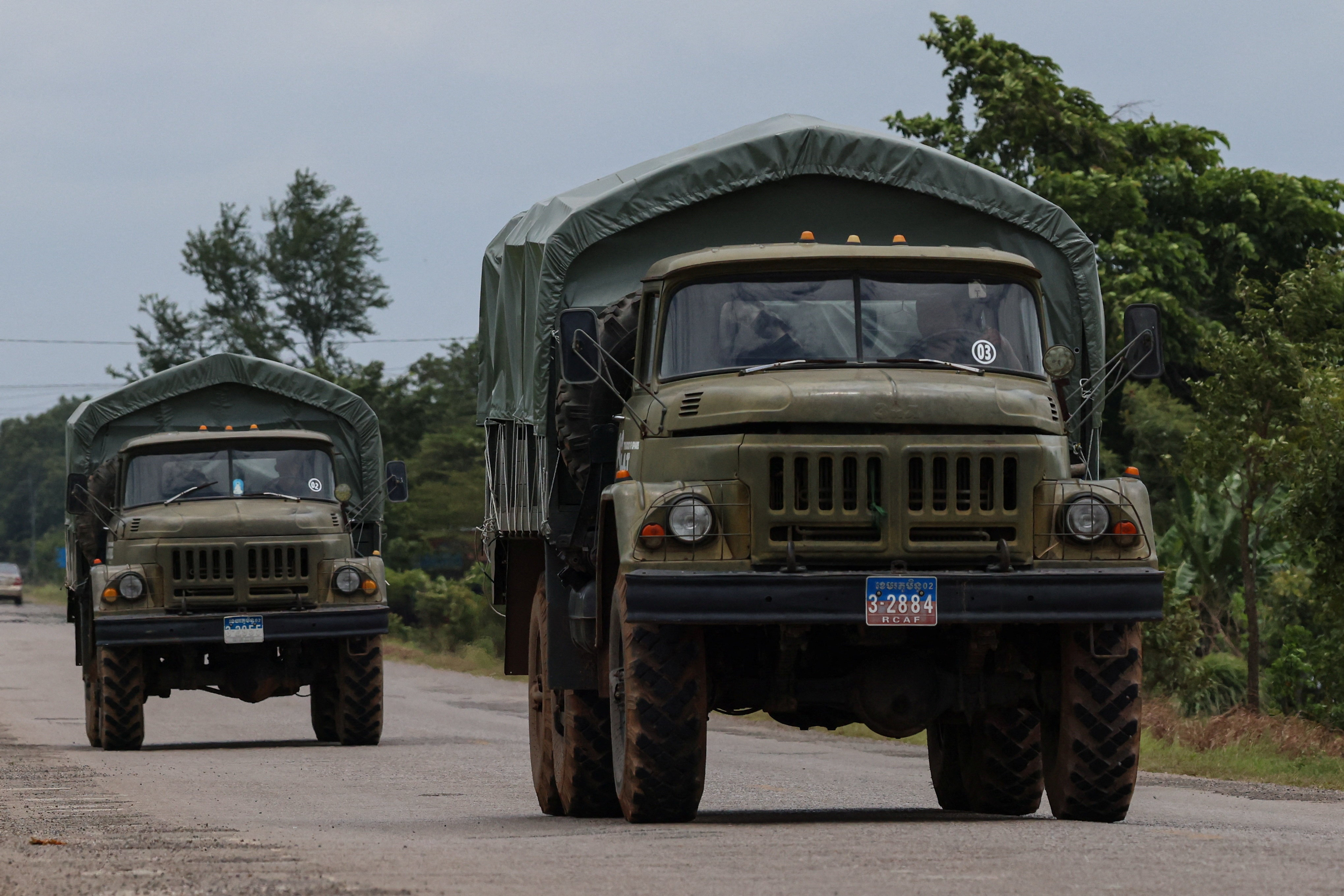
Thailand pushed relief efforts into higher gear when the military drafted in at least 20 helicopters, planes, and convoys of trucks to deliver food, medicine and small boats today, and made a public appeal for boats and jet skis.
The country's only aircraft carrier Chakri Naruebet is also providing air support, food and medicines.
Tropical cyclone devastates Indonesian province
In Indonesia's province of North Sumatra, a tropical cyclone unleashed floods and landslides to kill at least 28, with 10 missing. The disaster agency said that power outages and damaged bridges and homes hampered rescue efforts.
Kompas TV showed images of earth sliding down a hillside to pile up in front of homes, while gushing waters higher than 1m swept along debris and the branches of trees.
Meteorologists say the current weather extremes in Southeast Asia could stem from the interaction of two active systems: Typhoon Koto in the Philippines and the unusual formation of Cyclone Senyar in the Malacca Strait.
Global warming can bring more frequent extreme events as higher sea surface temperatures supercharge tropical storms.
The most recent floods follow a series of deadly typhoons and heavy monsoon rains that have lashed the Philippines and Vietnam, and have swelled rivers and caused flooding elsewhere.
'The water was like the ocean'
In Malaysia, with floods in seven states, the authorities said more than 34,000 people were evacuated, and about 500 nationals were still stranded in the Thai tourist destination of Hat Yai.
Foreign Minister Datuk Seri Mohamad Hasan told the Dewan Rakyat today that container lorries were used to bring home some Malaysians, as smaller vehicles were unable to traverse the floodwaters.
In the smallest state of Perlis, Gon Qasim said rising waters trapped her in her home in the middle of a paddy field.
"The water was like the ocean," the 73-year-old evacuee said.
Teams in Hat Yai worked into the dark yesterday, racing to reach the stranded after more boats arrived for the rescue effort, navigating the challenges of strong currents and shallow waters.
A tearful Kritchawat Sothiananthakul described the inexorable rise of the water in his home as he waited with his dog for rescue.
"We had to climb down from the roof, get into the boat. I needed to carry it and then get onto a truck," said the 70-year-old, stroking the animal while sitting on a mat in a makeshift evacuation centre in a sports hall.