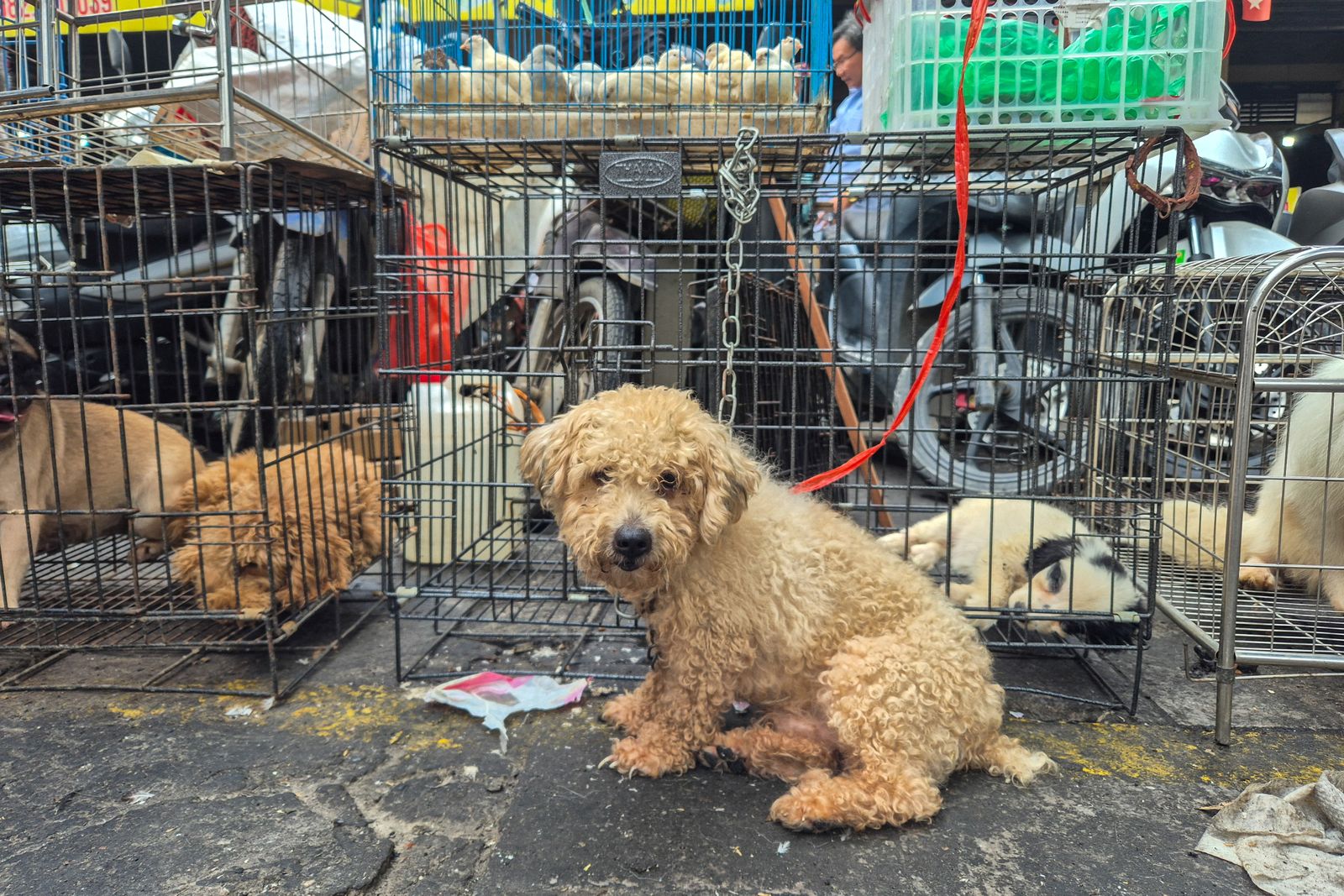
HANOI, Nov 27 — At a roadside market on Hanoi’s outskirts, Kieu Minh Phuong searches for his missing nine-year-old calico cat among dozens of cages crammed with animals — cats, dogs, rabbits and fighting roosters — destined to be sold as pets or for other purposes, including slaughter for meat.
Phuong is here because he has read numerous accounts in Facebook groups of owners finding their missing pets at markets like this one.
“There is a high chance that Dom was stolen,” the 40-year-old ceramics trader says of the cat he raised from a kitten.
She has never gone missing before, he says, and several neighbours also lost their pets on the same night.
Pet theft rings
Vietnamese police report detaining dozens of suspected pet thieves this year, accused of stealing thousands of cats and dogs to sell for slaughter.
The crime is classified as theft of property. The trade, sale and consumption of cat and dog meat remain legal in Vietnam.
There is no nationwide database on pet theft, but authorities sometimes publish accounts in police-run newspapers.

Last month, Ho Chi Minh City police arrested 12 people accused of stealing 2,700 cats destined for the meat trade. In April, Hanoi police arrested five people over the theft of more than 300 cats.
According to the reports, criminals tend to operate late at night, riding motorcycles and carrying sacks, duct tape and makeshift weapons, including improvised stun guns, to subdue the animals.
Hanoi police did not respond to a Reuters request for comment and data on pet thefts.
Clash of cultures
The criminals are operating at the intersection of a cultural shift in the country of 100 million people, with attitudes divided largely along generational lines.
Younger Vietnamese increasingly view dogs and cats as pets, and Hanoi’s municipal government has made efforts to curb the trade in dog and cat meat to align with global norms.
However, the meat remains on menus across the country, and whole roasted dogs can still be seen at street stalls in parts of the capital.
Rising pet ownership has provided thieves with more targets, with stolen animals being sold into a well-established meat trade.
Prices vary widely, but a live dog fetches around US$1.50 (RM6.18) per kg, while a cat fetches closer to US$5 (RM20.60) per kg, according to police reports. For comparison, Vietnam’s minimum wage ranges from 69 to 99 US cents (RM2.84 to RM4.08) per hour.

“Cat meat is a favourite dish for working-class people,” said Tran Thanh, a 50-year-old lorry driver from Haiphong.
“Mostly people of my age or older keep the habit,” he said, explaining that for about US$23 (RM94.76), a group of six people can share a cat meat hotpot.
“We choose cat meat instead of pork or chicken because it goes well with rice wine.”
Eating dog and cat meat has a long history in Vietnam, with some believing that the meat boosts vitality or wards off bad luck.
There are no official figures on the size of the market, but animal welfare group Four Paws International estimated in a 2020 report that more than five million dogs and one million cats were slaughtered annually.
However, shifting attitudes have taken a toll on the industry, which has experienced a steady decline over several years.
“Young people nowadays keep dogs indoors and treat them like members of the family,” said Tran Huu Thanh, a 70-year-old former dog meat restaurant owner who shut his business in 2019 after sales dropped significantly.

In 2018, Hanoi’s government urged residents to stop eating dog and cat meat, saying the practice tarnished the city’s image and facilitated the spread of rabies.
Last year, it launched a pilot programme to encourage dog and cat meat traders to move into other professions by providing vocational training.
The finance ministry-run Vietnam Investment Review reported this week that, a year into the initiative, 28 businesses had made the switch.
Open-air trade
By law, vendors are required to provide proof of origin for the animals they sell, but Hanoi residents say enforcement is lax.
Three of the five stall operators at a wet market in the city approached by Reuters said they did not know where their animals came from. All declined to give their names.
The Hanoi city government and police did not respond to Reuters requests for comment.
Hanoi’s largest sanctuary for abandoned and stolen pets, SNNC Dog and Cat Rescue Center, sometimes receives calls from people reporting animals being transported to slaughterhouses.
Workers often intervene by buying the animals for more than their meat would fetch, said Phan Trung Thanh, who volunteers as communications manager for the non-profit group.
However, he said SNNC had been forced to scale back its rescue operations because it lacked the funds to accommodate more than the approximately 1,400 animals already at the sanctuary.
Meanwhile, Phuong has still not found his cat, a month after she went missing.
He continues to monitor websites where he says people post photographs of animals and demand payment for their return.
“Dom was my emotional support,” he said. “The house is empty without her.”