
SHENZHEN, Nov 19 — Chinese President Xi Jinping has called on Asia-Pacific Economic Cooperation (APEC) economies to strengthen solidarity, openness, innovation, and inclusive development to realise the vision of a stronger, more sustainable community.
Regional cooperation must be enhanced in response to profound global changes driven by rapid developments in science, technology, and industries, as well as emerging opportunities and increasingly complex challenges.
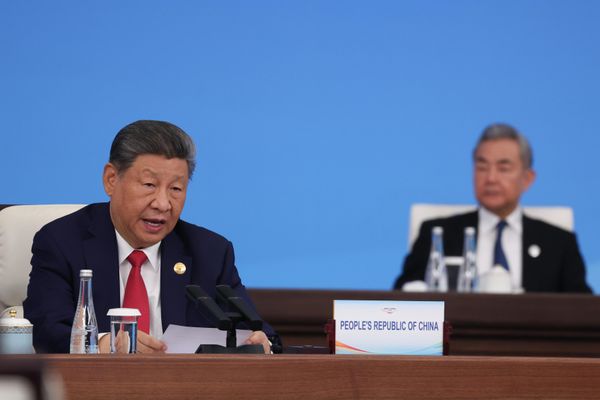
Delivering his keynote address during the 33rd Asia-Pacific Economic Cooperation (APEC) Economic Leaders’ Meeting today, he said the Asia-Pacific region has made significant progress since APEC was established over 30 years ago, creating an Asia-Pacific miracle of rapid economic growth.
APEC economies must move forward as one community by expanding shared interests, addressing challenges collectively and ensuring that regional cooperation remains open and integrated rather than exclusive or fragmented.
Xi outlined four key pillars to strengthen to advance regional integration and competitiveness: economy and trade, connectivity, innovation, and development.
On economy and trade, he emphasised the importance of making steady progress towards realising the Free Trade Area of the Asia-Pacific (FTAAP), including reducing trade and investment barriers and strengthening trade facilitation and digitalisation.
On connectivity, Xi called for improvements in physical infrastructure, greater alignment of policies and regulations, and enhanced cross-border payment cooperation to ensure stable and uninterrupted industrial and supply chains. He also emphasised facilitating travel and cultural exchanges to strengthen people-to-people ties.
On innovation, he said the digital economy and artificial intelligence (AI) are key growth drivers. Xi highlighted the need to strengthen digital infrastructure, improve regional data governance, and facilitate efficient, convenient, and secure cross-border data flows.
For development, Xi called for closer cooperation in energy and food security, skills development, women's economic empowerment, and youth talent exchanges, while expanding green and low-carbon initiatives to achieve sustainable growth.
Meanwhile, the President also announced that China would contribute US$20 million (RM82.30 million) to support APEC's practical cooperation and establish a Centre for Asia-Pacific Community Studies in Shenzhen to strengthen policy research and exchanges.
China will also establish cooperation institutions in digital technology, cross-border data flows, clean energy, and the development of small and medium enterprises.
Prime Minister Datuk Seri Anwar Ibrahim was one of the leaders of the member economies to deliver Malaysia’s country statement at today’s Leaders’ Meeting, to discuss regional economic priorities and cooperation amid evolving global challenges.
APEC is an intergovernmental forum for 21 member economies in the Pacific Rim that promotes free trade throughout the Asia-Pacific region, which represents nearly 40 per cent of the world’s population, almost half of global trade and over 60 per cent of the global economy.
Malaysia is among the 12 APEC founding members. The others are Australia, Brunei, Canada, Indonesia, Japan, South Korea, New Zealand, the United States, the Philippines, Singapore, and Thailand.
China, Hong Kong, Taiwan, Mexico, and Papua New Guinea joined in 1993. Chile acceded in 1994, and in 1998, Peru, Russia, and Vietnam joined, taking the full membership to 21.