
KUALA LUMPUR, Nov 12 — New borrowings by the Madani Government are used to finance national development, including schools, hospitals, roads, and water and electricity supply, Prime Minister Datuk Seri Anwar Ibrahim said.
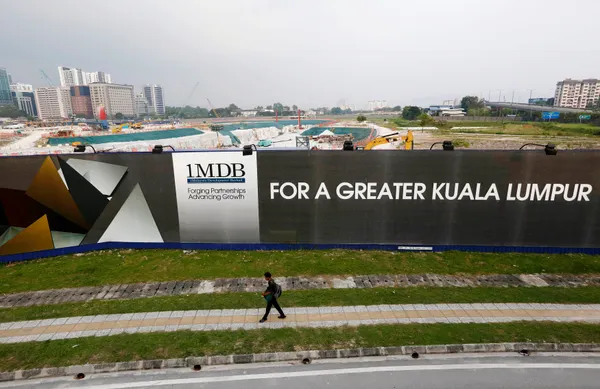
“We also have to meet inherited financial obligations. In 2023 alone, RM13 billion was needed to redeem 1MDB bonds,” he said.
Anwar, who is also finance minister, said as long as the national budget stays in deficit and financed through borrowings, the country’s total debt would keep increasing.
“Debt is cumulative. Net borrowings in the current year add to the outstanding debt from previous years that has yet to be repaid.
“The Madani Government took office with an already towering debt burden exceeding RM1 trillion,” he said during Minister’s Question Time in the Dewan Rakyat today.
He was responding to Howard Lee Chuan How (DAP-Ipoh Timor), who asked why the government has yet to reduce national debt to a more sustainable level and to what extent the current fiscal position provides room for interventions to protect the economy and public well-being should the conflict in West Asia escalate.
Anwar said that in line with its commitment under the Fiscal Responsibility Act 2023 (FRA), the Madani Government has successfully narrowed the fiscal deficit from 6.4 per cent in 2021 to 5.5 per cent in 2022, 5 per cent in 2023, 4.1 per cent in 2024 and 3.7 per cent in 2025.
The deficit is projected to narrow further to 3.6 per cent in 2026, 3.3 per cent in 2027 and 3 per cent in 2028.
He said the narrowing deficit has reduced the government’s borrowing requirements, with new borrowings falling to RM75.6 billion in 2025 from RM76.8 billion in 2024, RM92.6 billion in 2023 and RM100 billion each in 2021 and 2022.
“Net borrowing requirements for 2026 are expected to remain around last year’s level of debt obligations, despite the government facing higher subsidy pressures arising from the conflict in West Asia,” he said.
The federal government’s debt-to-gross domestic product (GDP) ratio is also on a downward trajectory, projected to decline to 64 per cent in 2026 from 65.2 per cent in 2025.
Anwar said the ratio is expected to fall further to 63.7 per cent in 2027, against the FRA target of 60 per cent.
Addressing claims that the previous administration had a lower debt-to-GDP ratio, he said such comparisons do not provide a complete picture of the country’s financial position.
“This is because comparing debt-to-GDP ratios alone is insufficient to assess the government's overall financial obligations,” he said.
Before 2018, he said, some government expenditure was also financed through off-balance-sheet arrangements, including government-guaranteed commitments and public-private partnership (PPP) projects.
Although these commitments were not recorded as direct debt, they still presented implications to the government’s financial position and could become liabilities for the country, so the direct debt figure of about 50 per cent of GDP at the time does not reflect the country’s full financial commitments and liabilities, he explained.
Taking debt and liabilities into account, the broader debt and liabilities ratio stood at 80.7 per cent as at June 2026, down from 80.9 per cent at end-2022 and 80.3 per cent in 2017, he said.
The prime minister said fiscal management is not focused on just strengthening fiscal sustainability but also on ensuring fiscal policy remains expansionary to support economic growth.
He said targeted subsidies have helped shield the public from fluctuations in global oil prices arising from the conflict in West Asia.
Anwar added that as the Madani Government enters its fourth year, economic indicators continue to point to encouraging fundamentals that would make the country more resilient, such as the Statistics Department’s (DOSM) preliminary estimate that the GDP grew by 5.3 per cent in the third quarter of 2026.
“This marks the third consecutive year under the Madani Government that growth is expected to exceed 5 per cent. The unemployment rate stood at 2.9 per cent as at September 2026, its lowest level in more than 10 years.
“Inflation remains under control and is expected to stay below 2 per cent this year,” he said.