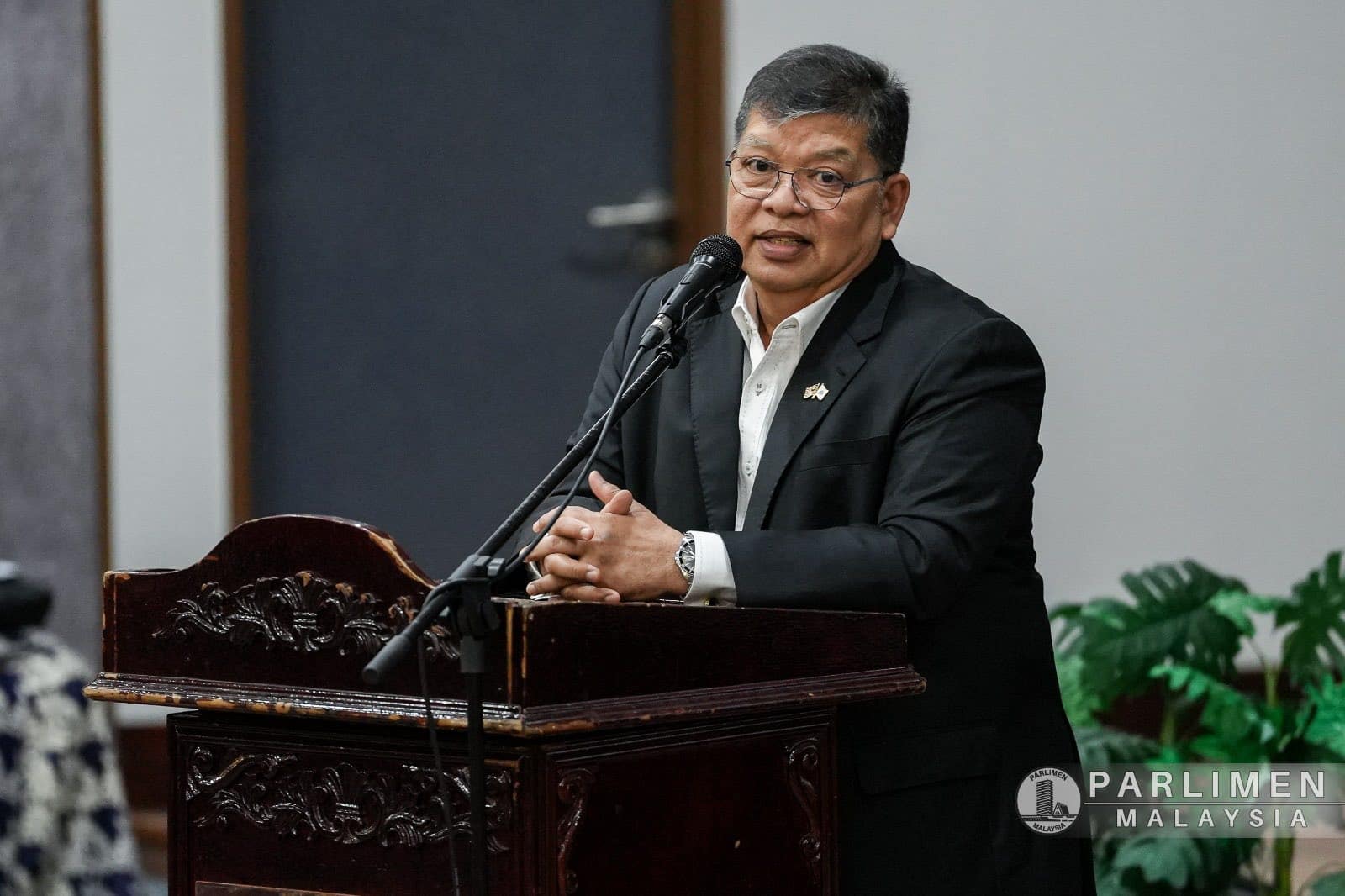
KUALA LUMPUR, Sept 3 — Parliament must translate demographic challenges such as ageing populations, smaller families and changing intergenerational needs into concrete laws, budgets and policies, said Dewan Rakyat Speaker Tan Sri Johari Abdul.
He said population and development issues are ultimately political questions as public priorities must find expression through legislation, institutions and government spending.
“Words create attention. Attention creates pressure. Pressure creates priorities and priorities eventually appear in legislation, institutions and budgets,” he said at a welcome dinner he hosted for participants of the Asian Forum of Parliamentarians on Population and Development (AFPPD) Annual Conference here today.
Also present were Works Minister and AFPPD Malaysia president Datuk Seri Alexander Nanta Linggi and his deputy Howard Lee Chuan How, who is also Ipoh Timur MP.
Johari said he is pleased that ageing, an issue often associated with criticism or speculation in political circles, was instead given a firm place on the policy agenda at the conference.
“Parliamentarians have a complicated relationship with age. When we are young, people tell us we lack experience. When we acquire experience, people begin asking when we plan on retiring, so I am delighted to attend a conference where, for once, ageing is neither criticism nor speculation. It is an important item on the agenda,” he added.
Johari said issues brought up by parliamentarians at the conference go beyond population statistics, encompassing how societies prepare young people for adulthood, support families, value care, and allow women’s full participation in society.
He added that they include the challenge of responding to longer life expectancy at a time when families are becoming smaller.
According to Johari, the work of AFPPD is particularly important as demographic changes unfold over decades, while electoral politics often operate within much shorter timeframes.
Recalling Malaysia’s journey towards hosting the AFPPD Global Secretariat, he said the initiative began after AFPPD Malaysia returned from Tokyo in April 2024, when then deputy president Lee approached him with the proposal.
He said Lee had explained why Malaysia is well positioned to host the secretariat and why Parliament should provide political and institutional support.
Johari said he participated in AFPPD Malaysia’s regional meeting in Kuala Lumpur in July 2024, which focused on ageing preparedness and the care economy.
“Two years later, the global secretariat is here, so Howard (Lee), congratulations. You kept pursuing it through Parliament, government and AFPPD, and you have delivered what you said Malaysia should set out to achieve,” he added.
Johari congratulated AFPPD, its member states, Nanta and the entire team on establishing the global secretariat in Malaysia, stressing that its success should not be measured by the number of conferences or communiques issued, but by whether parliamentary cooperation translates into laws, budgets, oversight and action.
He said the inauguration of the AFPPD Global Secretariat office in Kuala Lumpur tomorrow would mark a new chapter in parliamentary cooperation on population and development.
The two-day conference, themed “Parliamentary Leadership for the Future: An All of Society Approach to the Care Economy and Demographic Resilience”, gathered parliamentarians from Asia, the Pacific, Africa, and the Arab world.