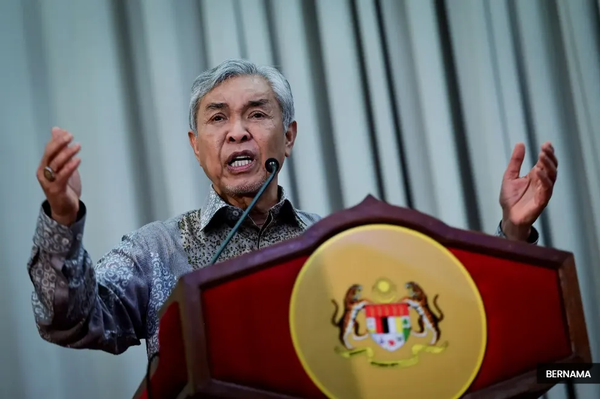
PUTRAJAYA, Aug 17 — The government, through the Cabinet Committee on Road Safety and Traffic Congestion, has set a target of reducing deaths due to road crashes, especially involving motorcyclists, by 50 per cent by 2030.
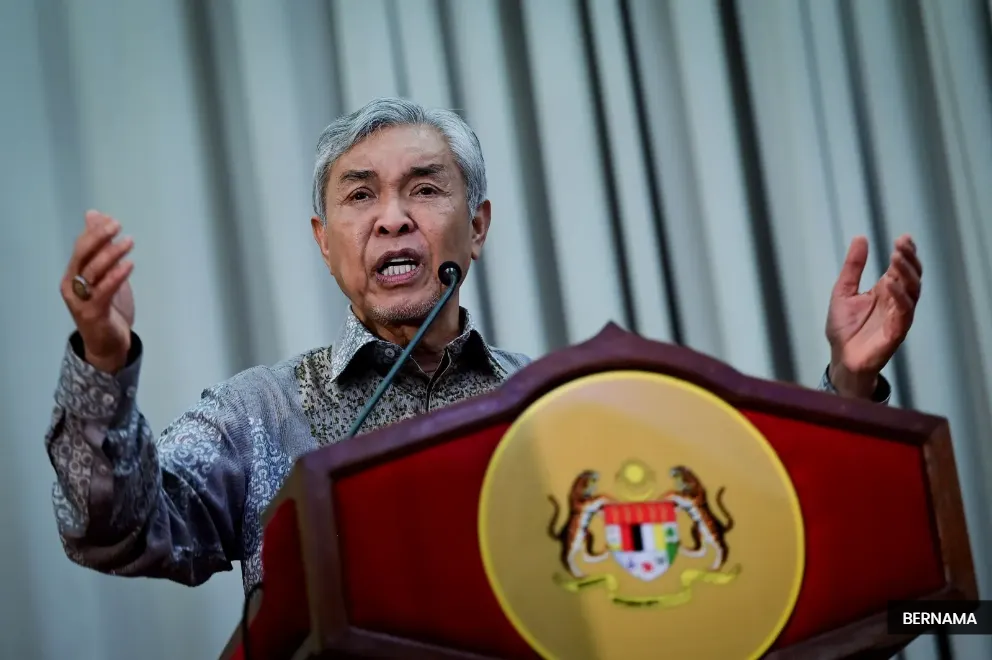
Deputy Prime Minister Datuk Seri Ahmad Zahid Hamidi said the coordination of policies, resources and accountability among ministries and agencies would be strengthened so every intervention is not only implemented, but results in a measurable reduction in deaths and serious injuries.
He said this is important as 6,537 lives were lost due to road crashes last year, equivalent to 18 deaths a day.
More worryingly, he said, motorcyclists and pillion riders accounted for about 66 per cent of total deaths, although motorcycles only represented 14 per cent of the total number of vehicles involved in crashes.
“This means almost two out of three road deaths involve motorcycle riders or pillion riders,” he said in a statement after chairing the committee meeting today.
Zahid said the figures show the government can no longer rely on conventional approaches, but must implement more targeted interventions for high-risk groups, while addressing other factors such as infrastructure safety, healthcare, education, enforcement, and urban planning in a more comprehensive manner.
He also emphasised that the socio-economic losses resulting from road deaths last year were estimated at RM30 billion based on the Value of Statistical Life (VOSL) approach.
“This proves investment in road safety is not just expenditure, but an investment in saving lives, protecting families and reducing losses to the national economy,” he added.
Zahid said the committee would also implement the Road Safety Framework Programme (SAFERO) in collaboration with the Transport Ministry, Petronas, the Land Public Transport Agency (APAD), the Road Transport Department (JPJ), and the Malaysian Institute of Road Safety Research (MIROS).
He said SAFERO would leverage industry expertise in defensive driving, fatigue management and monitoring driver behaviour to enhance the competency and professionalism of heavy vehicle drivers.
Zahid added that Op Cegah, conducted by the Social Security Organisation (SOCSO), would be strengthened through collaboration with the Royal Malaysia Police (PDRM), JPJ, and employers using data to identify high-risk organisations and areas.
“SOCSO data showed that the fatality rate from crashes involving workers commuting to and from work in 2024 was 2.4 times higher than that of industrial crashes,” he said.
Op Cegah is SOCSO’s employer-friendly programme, or soft approach, to raise awareness among employers and employees to practice a culture of occupational crash prevention.
Zahid said road safety is a shared responsibility that requires a whole-of-society approach.
“The government can provide policies, infrastructure, technology and enforcement, but a culture of safety can only be developed when industries, employers and every road user play their respective roles.
“The measure of our success is not by how many campaigns or operations are carried out, but how many lives we are able to save,” Zahid added.