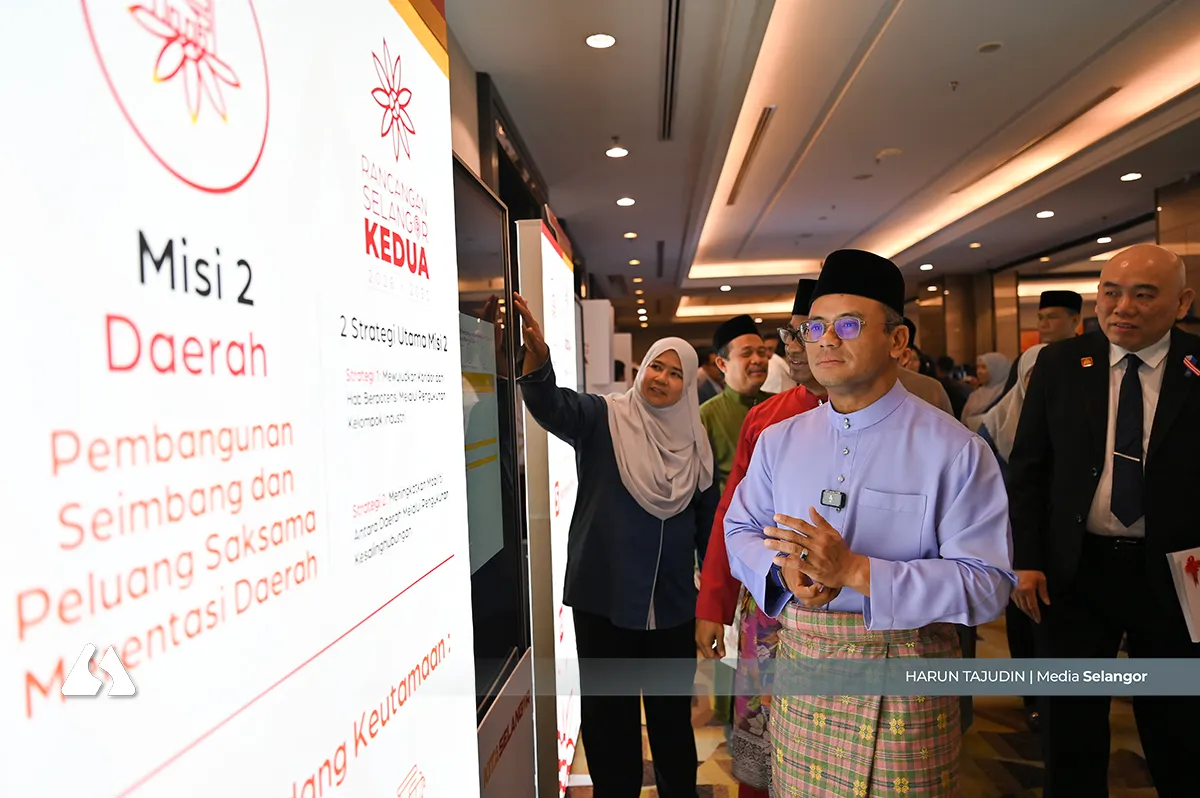
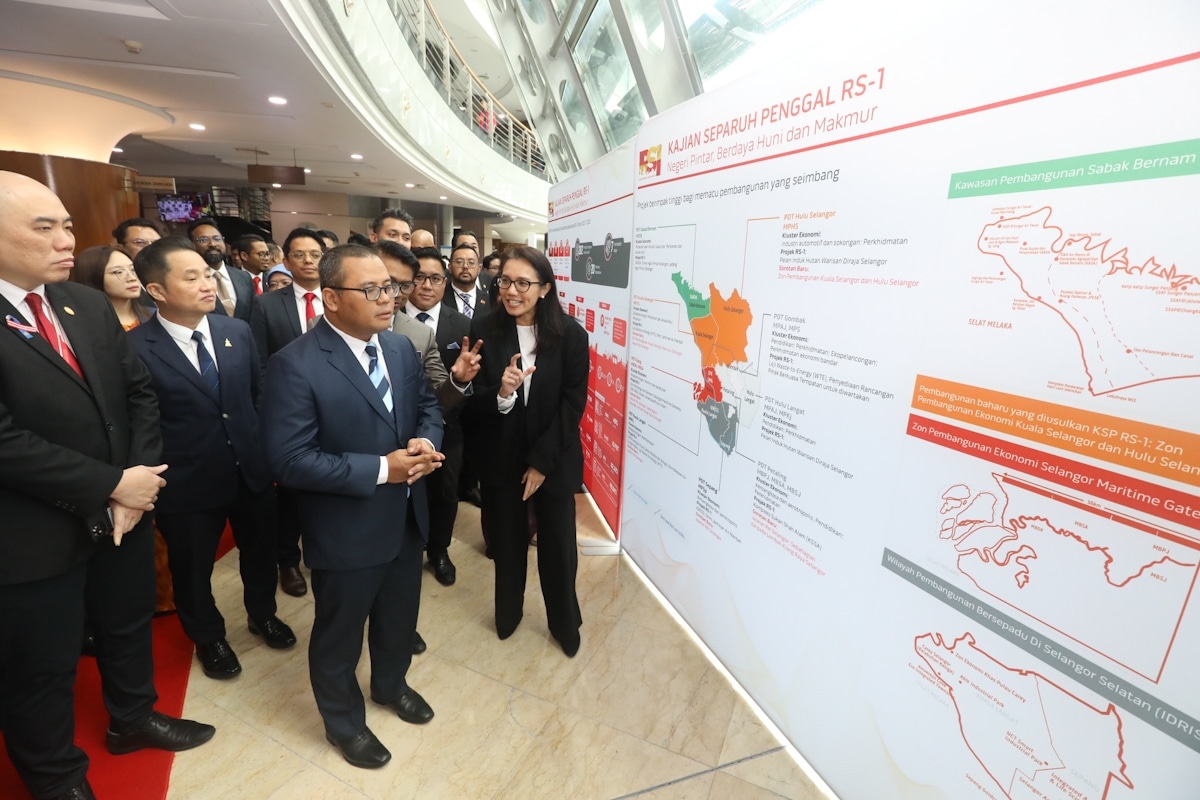
SHAH ALAM, Aug 7 — Selangor’s economy grew by RM133.3 billion, or 28.97 per cent, over the course of the First Selangor Plan (RS-1) from 2021 to 2025, said Menteri Besar Dato’ Seri Amirudin Shari.
While tabling the RS-2 today, he said the state’s economy was valued at RM326.8 billion in 2020, reflecting a contraction due to the Covid-19 pandemic.
Along with the state government’s recovery measures, the RS-1 contributed to Selangor’s economic expansion, he added.
“This achievement (RM133.3 billion expansion) was made possible through the contributions of every Selangor resident, from factory workers and schoolteachers, to sanitation workers and road maintenance crews, bus drivers and e-hailing riders, as well as entrepreneurs, PLATS hawkers and civil servants,” he told the Selangor State Legislative Assembly here.
Amirudin said 79 per cent of all initiatives under RS-1 have either been achieved or are being implemented, adding that of the 16 key performance indicators under the state’s medium-term plan, the Selangor government exceeded nine of them.
Among other achievements, he said the state’s gross domestic product (GDP) growth has consistently met the 7.5 per cent level, surpassing the original annual target of between 6.5 and 7 per cent.
“Investment value, employment and median monthly household income also exceeded their respective targets. Median monthly household income reached RM10,736, exceeding the target of RM9,290 by RM1,436.
“The relative poverty rate was reduced to 8.5 per cent, the Happiness Index increased to 7.21 compared with the target of 7.00, and uninterrupted clean water supply was maintained, specifically by preventing disruptions caused by river pollution.
“Permanent forest reserve coverage expanded to 31.7 per cent, while public satisfaction with local authority services surpassed the target, reaching 94.71 per cent.”
Amirudin said among the seven indicators that have yet to be achieved and require improvement include environmental sustainability, air quality, recycling rates, and absolute poverty rate.
“Under RS-1, we targeted reducing absolute poverty to 0.7 per cent. While we did not achieve that target, we successfully reduced the rate from 1.7 per cent before RS-1 to 0.9 per cent.
The menteri besar said that among key lessons the state administration learnt from executing RS-1 is the importance of high-impact critical infrastructure projects and developing local talent that matches industry needs.
He added that as the state embarks on RS-2 for the 2026 to 2030 period, several key considerations must shape the state’s development planning, including responding to supply chain disruptions arising from the West Asia conflict.