



PUTRAJAYA, July 30 — Datuk Seri Mohd Uzir Mahidin never set out to become a statistician, but a career decision made during an economic recession grew into a 36-year journey dedicated to strengthening Malaysia’s statistical system — one he stayed committed to despite modest pay, slow promotions, and opportunities to leave.
Passionate about making statistics relevant to ordinary citizens, the former Malaysian Statistics Department (DOSM) chief statistician became known for translating complex data into information that is easy to understand, helping even those less comfortable with numbers make sense of the figures shaping their daily lives.
Reflecting on his career during a recent interview with Media Selangor, Uzir, who retired on July 8, said his decision to remain in public service was never driven by financial rewards, but by a sense of responsibility to contribute to nation building.
“I became a statistician by chance,” he said, recalling that he had completed six months of teaching training in 1990 before an economic recession altered his career path.
At the time, teaching positions were among the few jobs available, but an interview opportunity with DOSM ultimately set him on a different career path.
In the early 1990s, much of the Western world was grappling with an economic downturn, driven by factors such as restrictive monetary policy and weakened business confidence following an oil price shock.
Meanwhile, Malaysia was hit by a severe economic recession in the late 1990s triggered by the 1997 Asian financial crisis, which also affected countries like Indonesia, Thailand, and South Korea.
Uzir’s early years in DOSM were far from glamorous. He recalled that promotions were painfully slow, salaries remained largely stagnant, and many colleagues left for better-paying jobs in the private sector.
But instead of following his peers, Uzir chose to stay in government service, where he was able to further his studies and gain overseas experience.
“I did not look at everything in terms of dollars and cents. Government service gave me opportunities that money alone could not buy,” he said.
Among others, Uzir spent six months at the United States (US) Bureau of Economic Analysis in Washington, D.C. to study the country’s national accounting system. He also completed his master’s degree in the US before pursuing doctoral studies in the United Kingdom.
Those experiences allowed him to contribute directly to improve Malaysia’s national accounts and statistical capabilities.

Growing demand for data
Over three decades, Uzir said he witnessed statistics evolve from a largely supporting government function into a critical pillar of policymaking as Malaysia’s economy became increasingly sophisticated.
“When I first joined, statistics were not as important as they are today. But as the economy became more complex, the demand for statistics grew tremendously,” he said.
Under Uzir’s tenure, DOSM has seen its scope expanded beyond traditional economic indicators to measure areas such as productivity, inequality, tourism, and digital economy, providing data to support evidence-based policy making.
Among the achievements he considers his most significant is the Statistics Bill 2026, which will replace the outdated Statistics Act 1965, strengthening DOSM’s role in coordinating the national statistical system. It was passed in the Dewan Rakyat on July 16.
Uzir added that the legislation gives the department greater authority to harmonise statistical standards across ministries and agencies, improve data governance, and ensure government institutions work from a common statistical framework.
“The biggest change is that DOSM now has a coordinating role. We can provide guidance on classifications, standards, and data governance across government agencies,” he said.
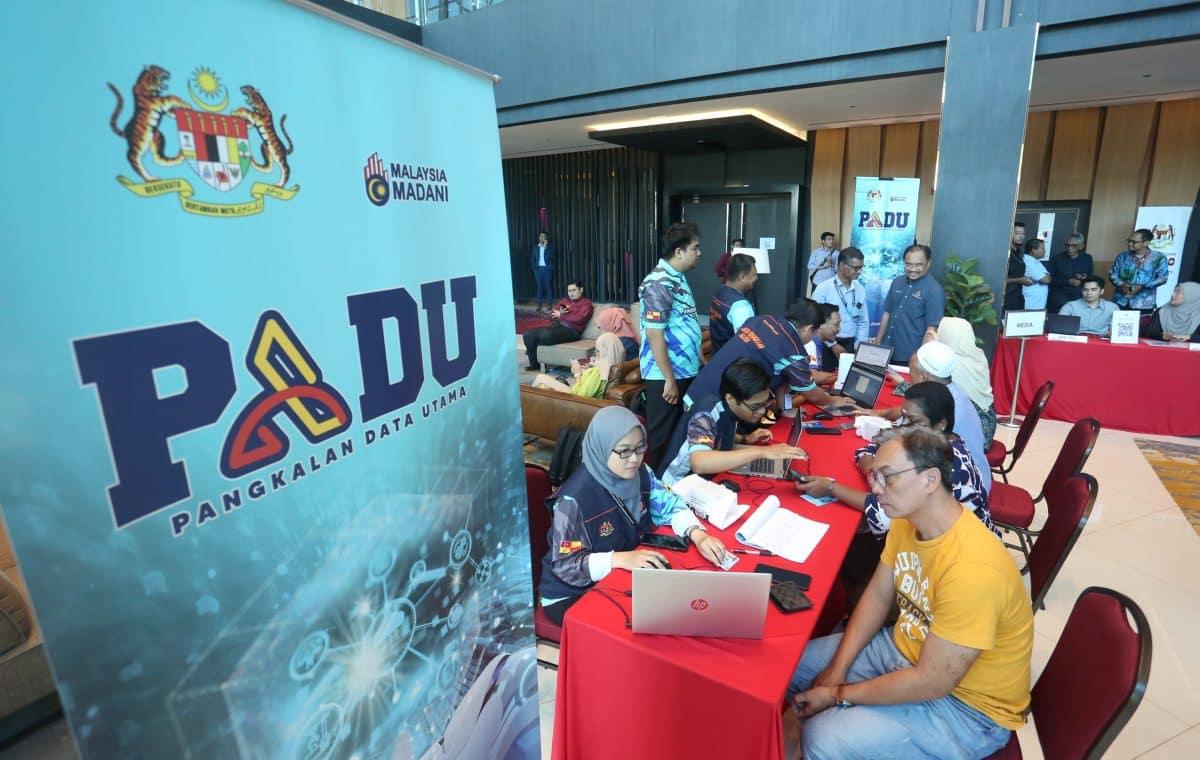
Uzir also cited the development of the Central Database Hub (PADU) as another major milestone, noting that although it faced public scrutiny over data privacy when it was introduced, the underlying work to integrate data had been underway within DOSM long before PADU was formally launched.
He described PADU as a strategic national platform that enables the government to design more targeted and data driven policies by integrating household and socioeconomic information.
Describing himself as a “village boy” from Sabak Bernam, Selangor, who never forgot his roots, Uzir said he always regarded his role as chief statistician as a trust rather than a privilege.
“I see myself as belonging to the country. Whatever opportunities I received , I had to give something back,” he said.
One of Uzir’s greatest satisfaction has been seeing people who once found statistics intimidating begin to understand and appreciate the subject after listening to his explanations.
“People have told me that something they never understood before suddenly became easy (to understand) after I explained it. That is a gift,” he said.