
SHAH ALAM, July 19 — The Malaysian Chinese Education Parents Association (PIPCM) has welcomed the implementation of the Online Safety Act 2025 (ONSA) but hopes the government will clarify the responsibilities and role of parents in enforcing the law, including whether they are expected to help close their children's social media accounts.
Its chairman Loh Tian Hong said parents generally support the government's efforts to strengthen online safety, but many questions and uncertainties remain that require further clarification from the authorities.
"There are still many children under the age of 16 using social media. Therefore, parents are still unclear about how these control measures will be implemented.
"Social media is not inherently bad. It is a double-edged sword, but if managed and monitored properly, it can still be used beneficially," he told Media Selangor.
Loh, who is also SJK(C) Puay Chai 2's Parent-Teacher Association president, said that one of their main concerns is the actions that could be taken against them or their children if minors are still able to create social media accounts through alternative means.
"Parents are worried that they may be fined, which would create unnecessary anxiety. At the same time, it is not impossible that irresponsible individuals could take advantage of the situation by impersonating enforcement officers, claiming that children have violated the regulations and demanding payment of a fine within a specified period," he said.
Govt urged to provide clearer guidelines
Loh added that parents hope the government will provide more comprehensive, clear, and accurate explanations of the ordinance's contents.
"They want to clearly understand the responsibilities they are expected to shoulder, for example, whether they are required to help their children close their social media accounts.
"Therefore, the implementation details and the scope of these responsibilities should be clearly explained to avoid misunderstandings and confusion," he said.
On the proposal to restrict social media use among those aged 13 to 16, the government could consider a more flexible approach by allowing supervised access rather than imposing a complete ban.
"At this age, children generally possess sufficient maturity to distinguish between right and wrong. Besides educational purposes, social media can also raise awareness of current issues, broaden perspectives and increase knowledge," Loh said.
However, he emphasised that any relaxation of the rules should be accompanied by effective supervision, with parents playing an active role in monitoring their children's social media use.
"With appropriate flexibility, parents can still supervise and guide their children over time," Loh said.
He noted that children could be allowed to download and use social media platforms on the condition that parents can monitor their use and filter out inappropriate content.
"As far as I understand, there are various parental control tools that can limit the amount of time children spend on social media. Once the usage limit is reached, the system will issue a warning, and parents can also disconnect Internet access to strengthen supervision," Loh said.
Avoid giving access to social media for under-13 children
For children under 13, he believes they should not be exposed to social media at such a young age.
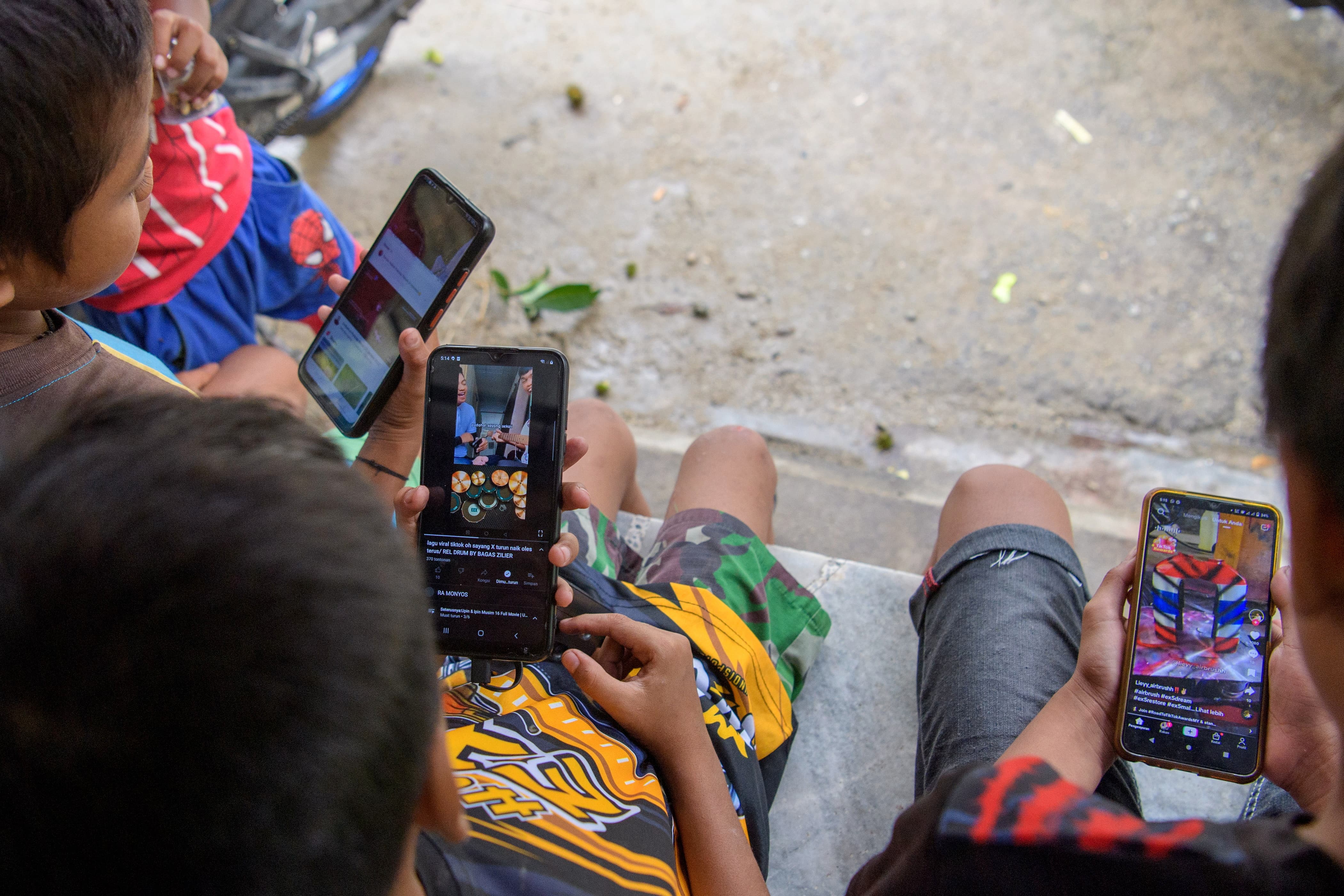
Many children today begin using smartphones as early as five years old and are exposed to various social media platforms throughout their formative years. Some are even more proficient than adults at using these platforms, despite there still being a great deal of online content that is unsuitable for them.
"Children today are exposed to technology at increasingly younger ages. Their proficiency with social media may exceed that of adults, but not all online content is appropriate for them," Loh said.
If children in this age group wish to access social media, parents should accompany them while they browse the Internet rather than allowing them to use it unsupervised.
"If children of this age want to browse social media, parents can simply say, 'Let us look at it together.' Just as we did before the Internet became widespread, we should accompany and guide our children in a safe environment while they access information online," he said.
ONSA, through the Child Protection Code and the Risk Mitigation Code, came into force on June 1, marking an important step in Malaysia's efforts to create a safer online environment for children.
Licensed service providers, such as social media platforms, bear the primary responsibility for ensuring the safety of users, particularly minors and families.