SHAH ALAM, July 17 — Selangor’s new Business Linkages and Advancement Programme (BLAST) is set to help small and medium enterprises (SMEs) secure business opportunities while enhancing their competitiveness, said SME Association of Malaysia president Chin Chee Seong.
He said the state government’s initiative is timely and much needed to strengthen linkages between local SMEs and multinational corporations (MNCs), mid-tier companies and major investors, while helping them integrate into high-value global supply chains.
“We believe that with the strong commitment and support of the Selangor government, BLAST has the potential to create meaningful business opportunities for many local SMEs.
“If implemented effectively, BLAST will not only help SMEs secure new contracts but also enhance their competitiveness, capabilities and long-term sustainability,” he told Media Selangor.
Chin said the programme is also expected to bridge gaps between local SMEs and larger corporations by highlighting local SMEs’ capabilities and encouraging the localisation of supply chains.
“This is particularly important during the current challenging economic environment, where many foreign direct investment (FDI) companies still tend to source products, components and solutions from suppliers in their countries of origin.”
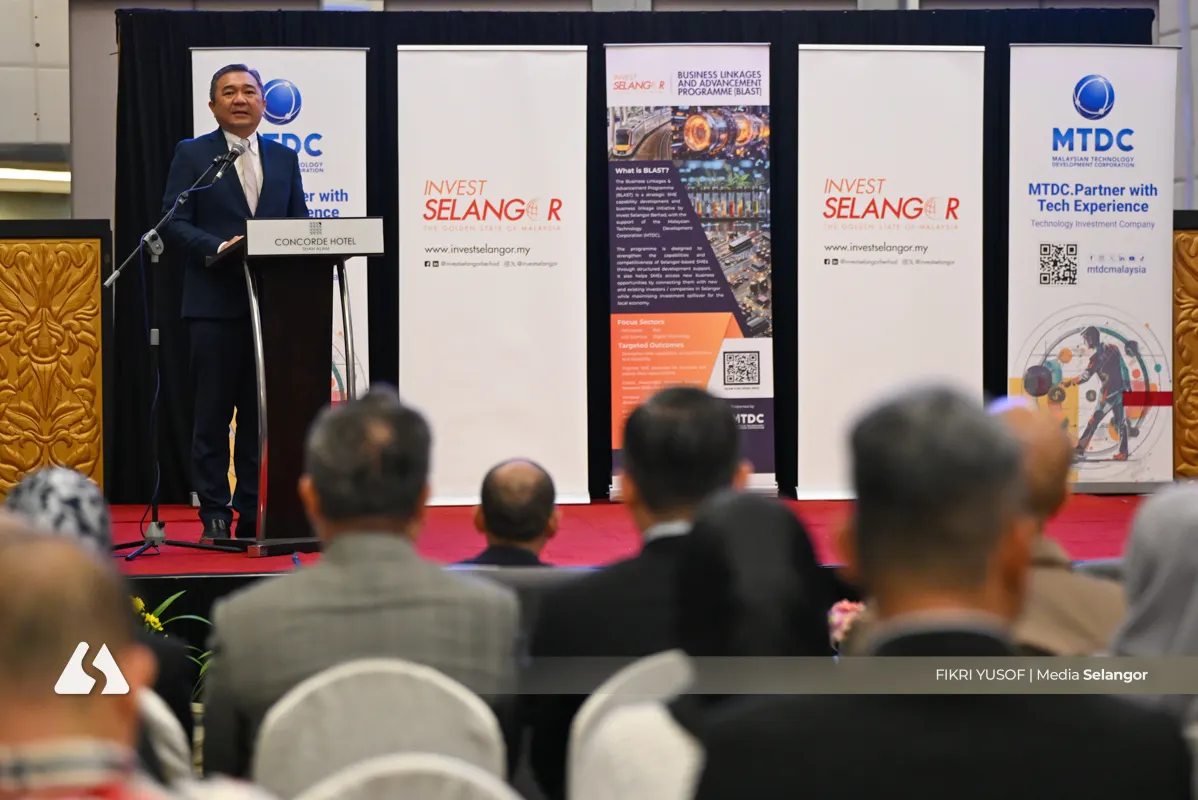
When launching BLAST on July 14, state executive councillor for investment, trade and mobility Ng Sze Han said the collaboration between Invest Selangor Bhd and the Malaysian Technology Development Corporation (MTDC) aims to connect SMEs with major investors to boost supply chains.
He said the initiative would allow local SMEs to supply products and services to large MNCs and domestic firms that have invested in Selangor, with Phase 1 to involve four anchor investors — Bridge Data Centres, UMW Aerospace, Base Maintenance Malaysia, and Malaysia Rail Link (MRL) — alongside 12 local SMEs.

Empowering SMEs
Chin said rather than just a business-matching programme, BLAST should be expanded into a comprehensive ecosystem that helps SMEs grow.
To achieve this, he proposed greater financing aid be made available for SMEs to obtain international certifications, adopt automation and digital technologies, embrace environmental, social and governance (ESG) practices, and improve productivity.
He also suggested the programme be expanded beyond Selangor through collaborations with federal agencies and other state governments, while structured mentoring by MNCs and industry leaders could help SMEs better understand procurement expectations and prepare to meet them.
“We also hope to see stronger participation and commitment from MNCs and major investors to increase local sourcing whenever suitable Malaysian suppliers are available. This would significantly strengthen domestic supply chains and create more sustainable business opportunities for local companies.”
Chin said the biggest challenge SMEs may face in meeting the standards needed to participate in programmes like BLAST is not the lack of capability, but how prepared they are.
He said while many SMEs have quality products and innovative solutions, they may struggle to meet stringent requirements set by MNCs, such as international quality certifications, ESG compliance, digitalisation, cybersecurity, traceability, governance, financial reporting, and supply chain management.
He added that many SMEs have limited financial resources to invest in operation upgrades, certifications, or advanced technology, and that some are unfamiliar with major firms’ procurement processes and supplier qualification standards.
“Besides capability building, SMEs require practical guidance and mentoring to bridge the gap between their current capabilities and the expectations of multinational buyers,” Chin explained.