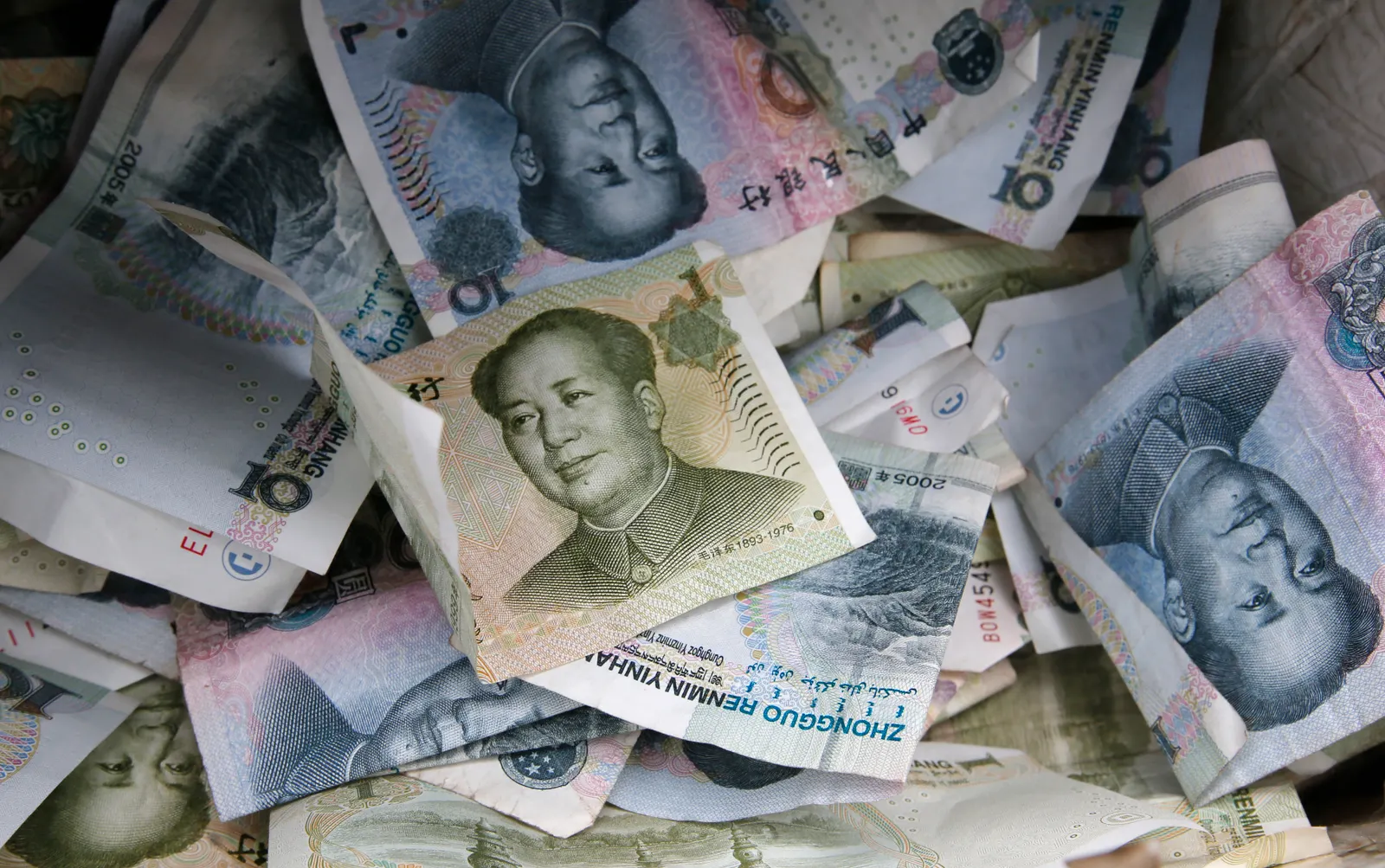
SINGAPORE/NEW YORK, July 7 — Investor thinking on Chinese assets is changing, as steady returns through the turbulence of the Iran war and the artificial intelligence (AI) frenzy show how China has broken step with global markets, carving out a niche as a sandbag against volatility.
The shift has brought money into the bond market and encouraged investors to seek out stocks with drivers distinct from global trends.
"The role of China in portfolios is evolving from a simple emerging-market growth allocation toward a more nuanced source of diversification.
"Diversification is ultimately about combining exposures that respond differently to economic and market conditions, and China is increasingly being assessed through that lens," said Invesco's head of client investment solutions for Asia Pacific ex-Japan, a manager of about US$2.2 trillion (RM8.97 trillion) in global assets.
Since the Middle East conflict began at the end of February, China's bond market has been the world's strongest, and the yuan is the only major currency to have climbed against the dollar.
The currency's gains helped mainland blue-chip stocks log an almost 11 per cent first-half rise in dollar terms.
While that lagged the roughly 13 per cent rise in the S&P 500 and the record 110 per cent surge in dollar terms for South Korea's KOSPI, it did so without the same reliance on AI fervour or sensitivity to United States (US) rates that drove other markets.
"It means that when we allocate to, and assess, Chinese assets, it is no longer determined by short-term valuations, trading sentiment, or changes in the US Federal Reserve's interest rates," said the Shanghai-based think tank CEIBS Lujiazui International Institute of Finance's executive deputy director Liu Gongrun.
Detached from traditional drivers
China's relative insulation from global market forces reflects an economy out of sync with the inflationary cycles in the rest of the world and a stock market dominated by retail investors with very different agendas to global fund managers.
Analysts have said that regulators, state banks, and state-backed investors have also swung behind promoting stability as a policy goal, which has supported the yuan's standout gains.
The local currency's 5.4 per cent advance against the dollar over the past 12 months has come despite broad dollar strength and rock-bottom yields, and reflects strong exports as well as authorities' encouragement of a slow, steady rise.
The yuan is seen going further, with global banks revising up year-end forecasts for gains beyond June's 3-1/2-year high of 6.7522 per dollar.
"Yuan strength is sort of detached from traditional bog-standard long-run drivers, like how the economy is doing. Instead, it is policy driven: the intention from the authorities to project currency stability at a time of global chaos," said Pantheon Macroeconomics senior economist Kelvin Lam.
Foreign investor comeback
Keying on the same theme, global asset managers have turned into buyers of stocks and bonds, a sea change for a market some had called "uninvestable" only a few years ago.
"There has been renewed demand for China bonds, which we believe was driven by relative safety and low volatility," said BNY's Asia-Pacific macro strategist Wee Khoon Chong.
China's benchmark 10-year sovereign yields — which fall when prices rise — are down almost 10 basis points to 1.73 per cent since the start of the Iran war, compared with a 51-basis-point rise in 10-year US yields.
The bond market logged net foreign inflows for the first time in more than a year in May, the latest month for which data is available.
In late May, the securities regulator's vice chairman Liu Haoling told a forum that foreign holdings of onshore A-shares also increased from CN¥3.67 trillion (RM2.20 trillion) at the end of last year to more than CN¥4 trillion (RM2.40 trillion). China has not published regular data on equity capital flows since 2024.
To be sure, skeptics remain.
Manulife John Hancock Investments' co-chief investment strategist Matthew Miskin said they have been neutral to underweight China equities in some strategies because they lack the earnings growth of South Korea or Taiwan.
Others are turned off by China's moribund consumer and protracted property downturn.
"We are not thinking of it as a safe haven. We certainly want to find assets that are less correlated to the US markets, but in doing so, we are primarily thinking about risks around the AI trade and the US dollar
"Developed markets and some non-China emerging markets can serve that purpose just fine," said Facet's chief investment officer Tom Graff, whose organisation is based in Phoenix, Maryland.
However, many investors are drawn to the particular idiosyncrasies driving China's divergence.
"We have long seen China's market, especially onshore-listed China A-shares, as a rare source of diversification. Now, in addition, you have got an actual economic decoupling that is happening," said Rayliant Investment Research head of portfolio management Phillip Wool.