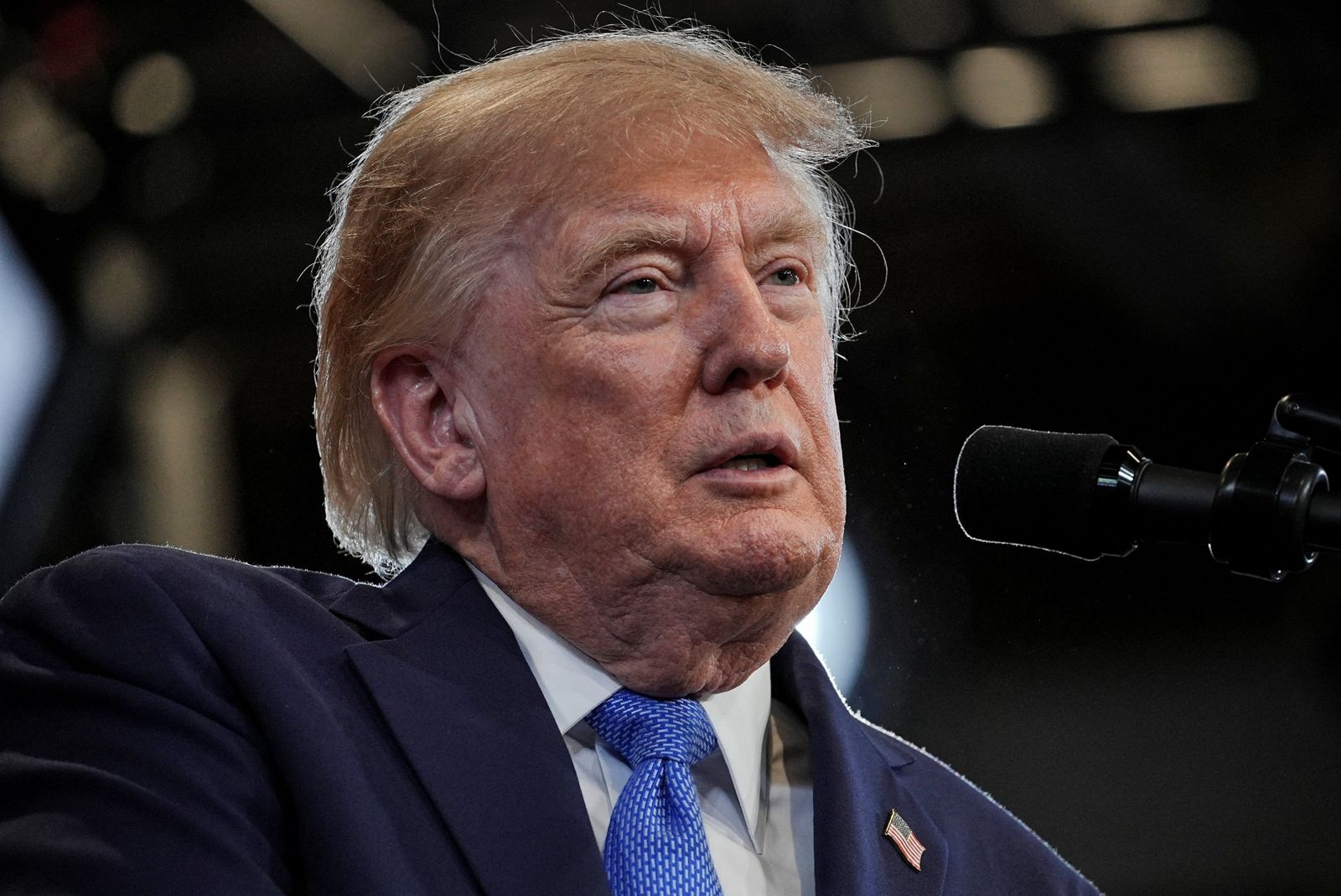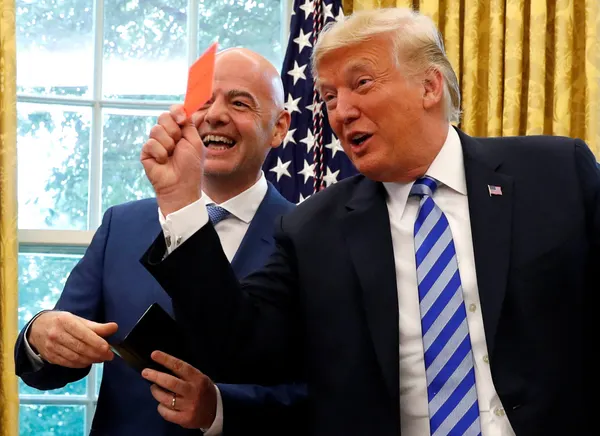
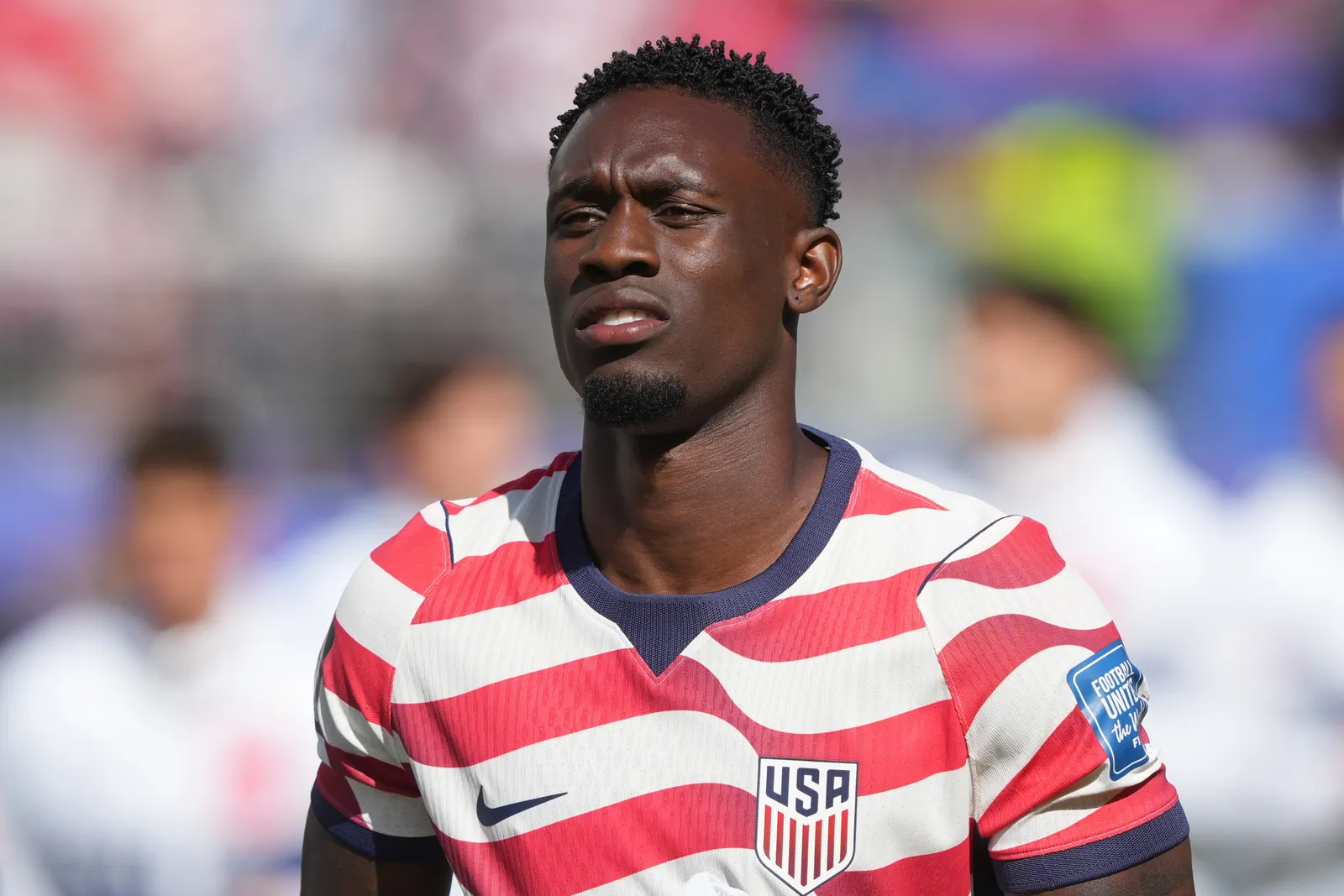
WASHINGTON/SEATTLE, July 6 — The United States' World Cup campaign took an extraordinary turn today when FIFA made the unprecedented decision to suspend Folarin Balogun's automatic red-card ban, clearing the striker to face Belgium in tomorrow’s round of 16 clash after US President Donald Trump personally urged FIFA President Gianni Infantino to review the case.
The move thrust FIFA's disciplinary process into the global spotlight, prompted an angry response from Belgium and ensured that one of the tournament's biggest talking points would centre not on tactics or team selection, but on the relationship between football's governing body and political power.
Within minutes, the decision had ignited one of the tournament's biggest media storms, dominating sports bulletins and talk shows as pundits, commentators and former players argued over whether FIFA had upheld justice or undermined its own rules.
As questions mounted over the circumstances surrounding the decision, FIFA did not respond to multiple Reuters requests for comment about the ruling or Trump's call with Infantino.
Balogun scored his third goal of the World Cup in the United States' 2-0 win over Bosnia and Herzegovina but was sent off in the second half after a VAR review for planting his boot on the ankle of Tarik Muharemovic.
US coach Mauricio Pochettino insisted the challenge did not warrant a red card.
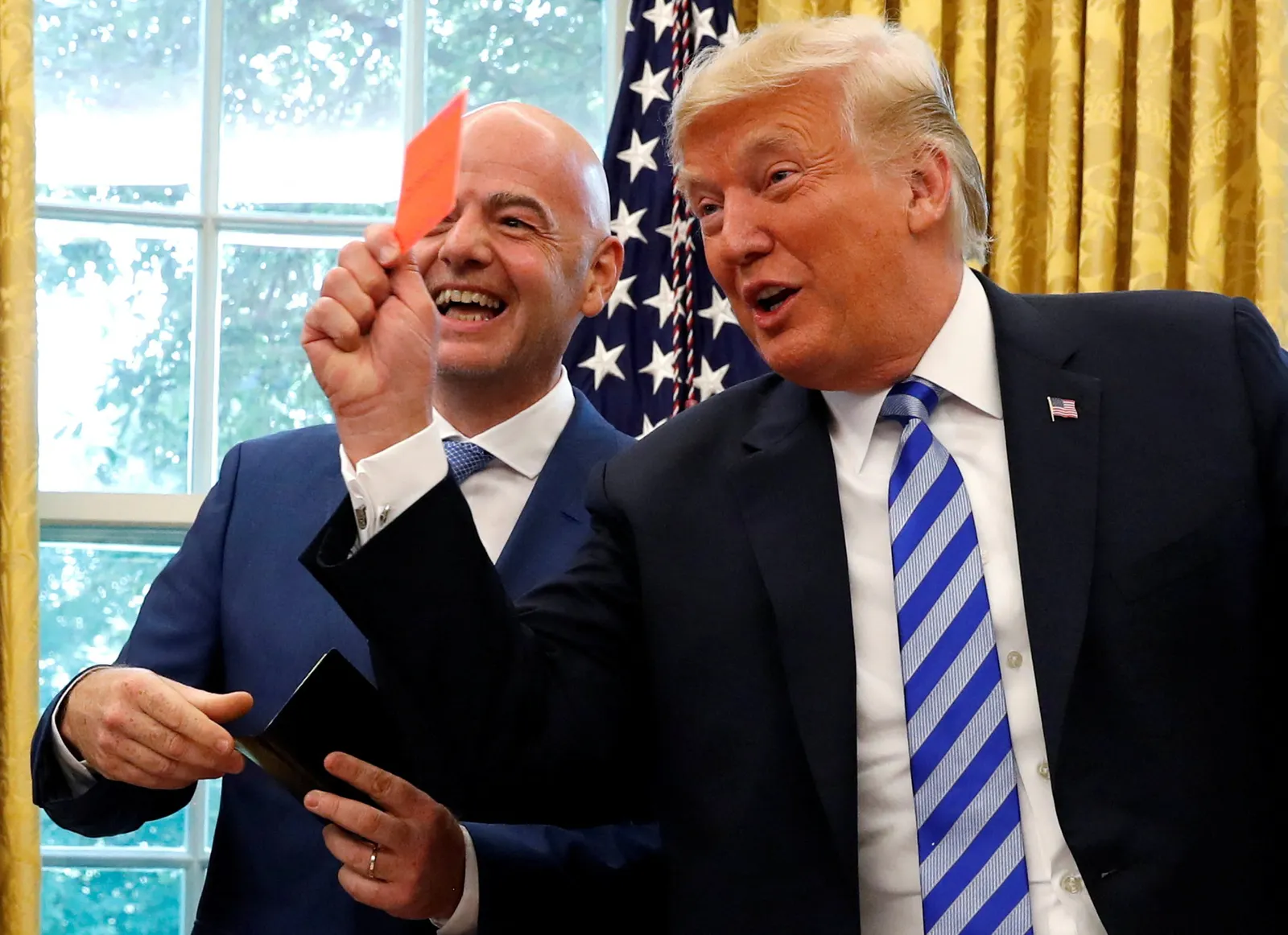
Trump later called Infantino to ask football's world governing body to review the sending-off, according to a source briefed on the conversation.
FIFA is allowing Balogun to play without rescinding the red card.
"In line with Article 27 of the FIFA Disciplinary Code, the implementation of the match suspension is suspended for a probationary period of one year," FIFA said in a statement.
"If Folarin Balogun commits another infringement of a similar nature and gravity during the probationary period, the suspension shall be revoked and the sanction enforced without prejudice to any additional sanction imposed for the new infringement."
Article 27 allows FIFA's judicial bodies to suspend the implementation of all or part of a disciplinary sanction while leaving the sanction itself in force. In effect, the punishment does not have to be served immediately unless the suspension is later revoked.
The disciplinary code, however, does not specify the circumstances under which FIFA's judicial bodies may decide to suspend a sanction. Those judicial bodies include the Disciplinary Committee and the Appeal Committee.
Under the code, a player whose sanction has been suspended is placed on a probationary period of between one and four years. If the player commits another infringement of a similar nature during that period, the original suspension is automatically reactivated in addition to any new disciplinary sanction.
In Balogun's case, FIFA set the probationary period at one year.
The only disciplinary sanctions that cannot be suspended under Article 27 are those related to match manipulation.
'A great injustice'
"Thank you to FIFA for doing what was right, and reversing a great injustice," Trump wrote on Truth Social, while the White House celebrated Balogun's reinstatement with a post on X saying: "USA-USA-USA."
US Soccer accepted the decision, while Balogun's teammates said they first learned of it through social media on their way to training ahead of the match in Seattle.
"We found out about it just coming over here," forward Christian Pulisic told reporters. "At first, you're like, 'Oh really, is this real?' And then, 'Oh, this is great news'."
Pochettino welcomed the decision at the United States' pre-match press conference.
"I think 99.9 per cent of people in football have said this is an unfair punishment and there's evidence from the past that makes it possible to suspend a punishment and to fulfil it later on, so I don't understand how people can be surprised," he said.
"This has happened in the past. It's not something extraordinary that has only happened for us. It has happened before. We've seen many players in this World Cup who were not punished and I'm happy because it would have been unfair."
Belgium 'astonished' by decision
The Royal Belgian Football Association (RBFA) said it was "astonished" by FIFA's decision to declare Balogun eligible to play and said it was examining all available options.
"FIFA bases its decision on Article 27 of the FIFA Disciplinary Code. This provision states that the FIFA Disciplinary Committee may decide to suspend the enforcement of a previously imposed disciplinary sanction," the RBFA said.
"However, Article 66.4 of the same FIFA Disciplinary Code clearly provides that a red card (sending-off) automatically results in a suspension for the team's next match, as has been the case for all previous red cards issued during this FIFA World Cup."
The RBFA said the decision also appeared to contradict the tournament regulations.
"As set out in Article 10.5: 'If a player or team official is sent off as a result of a direct or indirect red card (second caution), they will automatically be suspended from their team's subsequent match,'" it added.
Portugal captain Cristiano Ronaldo was allowed to play in his country's opening World Cup matches after FIFA suspended the final two games of a three-match ban imposed following his sending-off against Ireland in a World Cup qualifier last year.
Qatar midfielder Assim Madibo, meanwhile, received a five-match suspension after a tackle that seriously injured Canada midfielder Ismael Kone during a group-stage match at the tournament.
Tomorrow's match will now be played against the backdrop of a decision that has become one of the defining controversies of the tournament, with debate over FIFA's disciplinary powers unlikely to end at the final whistle.