

KUALA LUMPUR, July 5 — Economists have revised Malaysia’s full-year growth for 2026 to 4.8 per cent from 4.6 per cent, citing a stronger-than-expected first-half performance underpinned by resilient domestic fundamentals despite external headwinds.
These fundamentals helped cushion the economy in the first half of the year (1H 2026) against intense pressure from the fallout of the United States (US)-Iran war and the crippling effects on seaborne trade following the closure of the Strait of Hormuz.
Despite these tough external conditions, Malaysia’s economy expanded by a commendable 5.4 per cent in the first quarter of 2026 (1Q 2026), while research houses forecast gross domestic product (GDP) growth to be between 4.6 and 4.9 per cent in 2Q 2026.
Nevertheless, Bank Muamalat Malaysia Bhd chief economist Mohd Afzanizam Abdul Rashid cautioned that renewed geopolitical tensions in West Asia, elevated crude oil prices, and prolonged global trade uncertainty remain the principal downside risks to Malaysia’s economic outlook in 2H 2026.
Weathering the storm
Malaysia's resilient domestic demand was the primary driver of growth in 1H 2026, followed by diversified exports, sustained investment inflows, and prudent policy measures.
These attributes placed Malaysia in a position of strength, and the government's pragmatic policies helped the economy withstand escalating geopolitical tensions, volatile energy prices, and global trade uncertainty.
The first six months of the year also saw policymakers redrawing fiscal plans amid mounting uncertainty, as the war in West Asia pushed crude oil prices to a record US$120 per barrel in recent years.
At the same time, trade protectionism had intensified, and global supply chains remained vulnerable, clouding the outlook for global growth and prompting governments and central banks, including Bank Negara Malaysia, to adopt measures to preserve economic and financial stability.
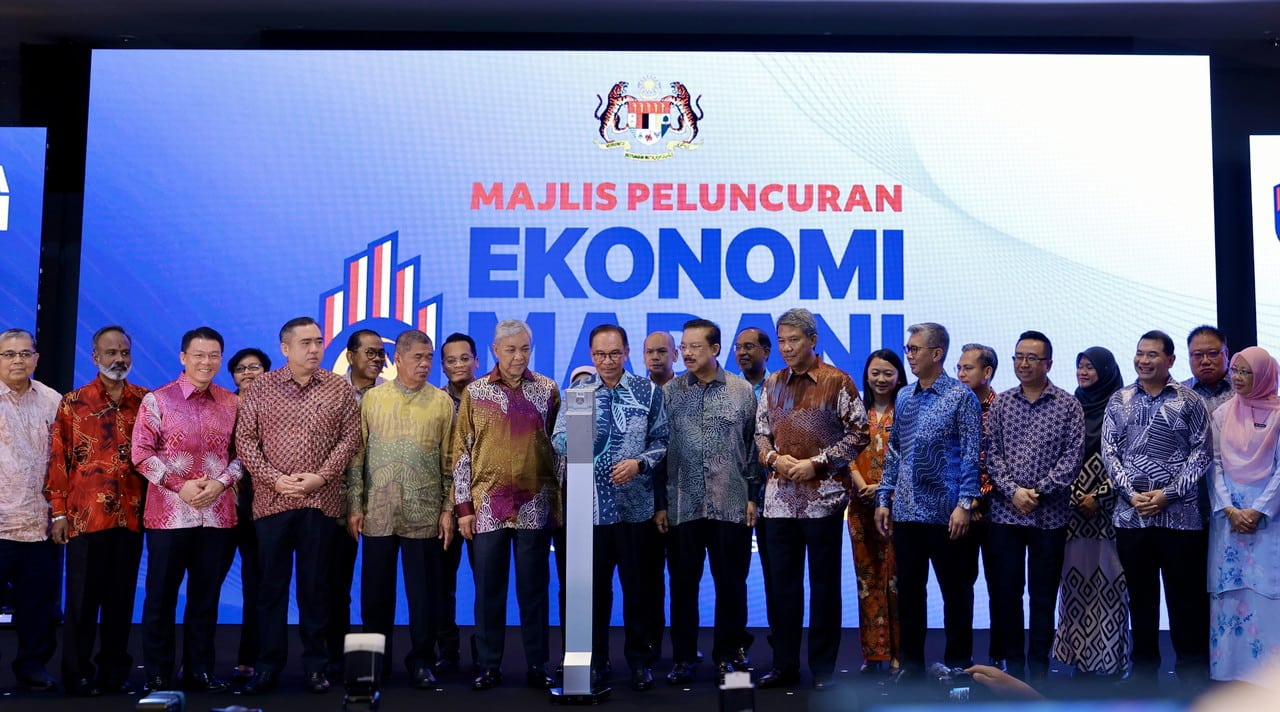
MADANI Economy measures underpin economic strength
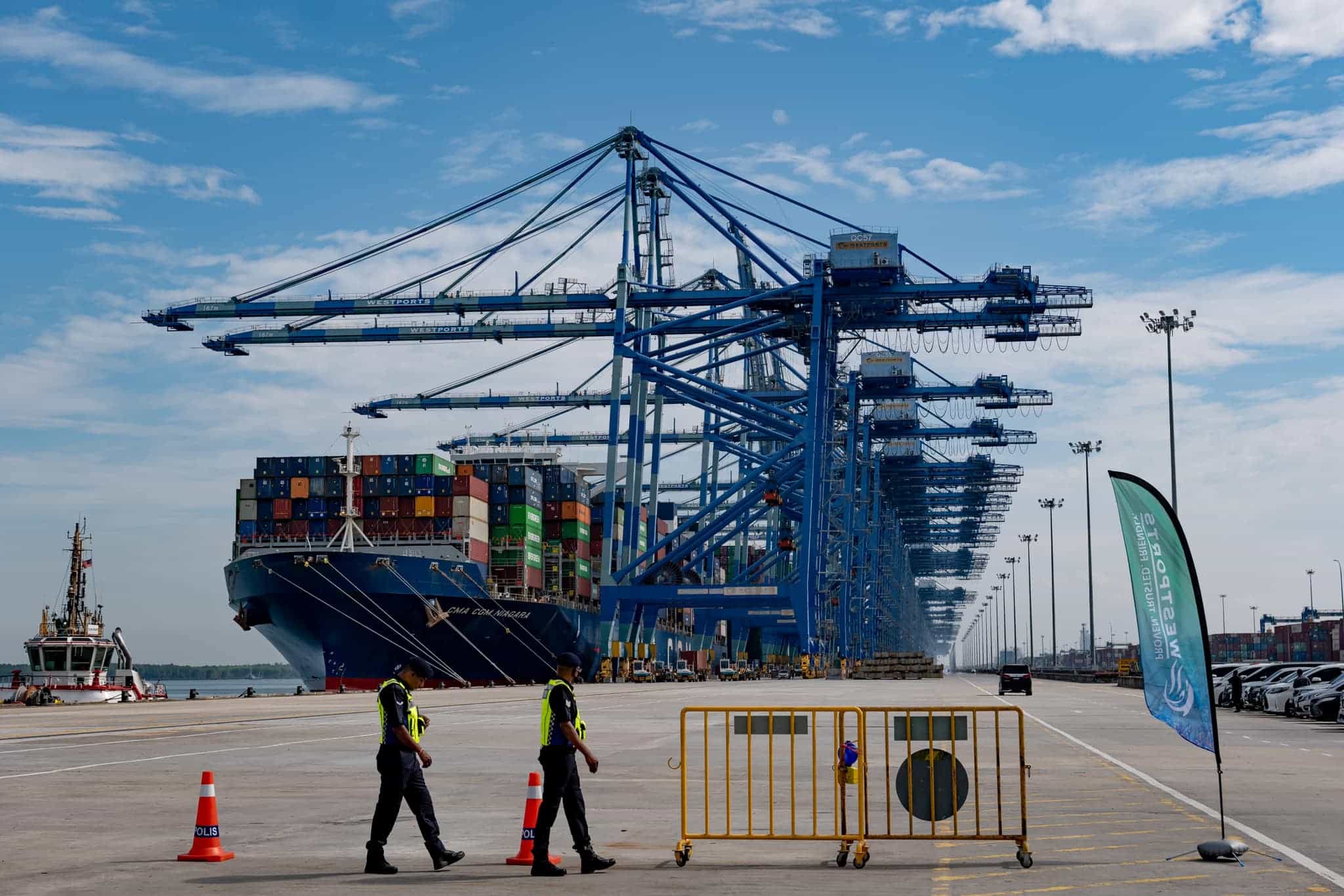
A key factor supporting growth was the rise in approved investments, which reached RM92.8 billion in 1H 2026, and exports surged 45.3 per cent year-on-year (y-o-y) in May, while the current account surplus widened to 3.0 per cent of GDP from 0.5 per cent a year earlier.
Prime Minister cum Finance Minister Datuk Seri Anwar Ibrahim attributed the stronger-than-expected economic performance to the resilience of the MADANI Economy framework, underpinned by sound macroeconomic fundamentals, sustained investment, and responsible fiscal management.
Additionally, targeted measures, including the implementation of BUDI MADANI RON95 (BUDI95) and enhanced assistance under BUDI Diesel, helped cushion the impact of higher global fuel prices on households and businesses, while continuing to support domestic demand and economic growth.
The rollout of BUDI95 marked one of the government’s most significant economic policy initiatives in 1H 2026, reflecting its commitment to rationalise subsidies while ensuring assistance reaches eligible Malaysians.
The targeted mechanism is expected to reduce subsidy leakages, strengthen public finances, and channel savings towards programmes that generate broader economic benefits.
Beyond subsidy reforms, the government continued to expand financing facilities and credit guarantees for micro, small, and medium enterprises through various agencies, while financial institutions worked with affected borrowers to provide repayment assistance and financing flexibility to help businesses manage cash flow amid heightened uncertainty.
The first half also saw Malaysia reinforce its position as a preferred destination for high-value investments in artificial intelligence (AI), semiconductors, data centres, and digital infrastructure, reflecting growing investor confidence in the country’s long-term growth prospects.
Approved investments in the information and communications sector also remained a key contributor to overall investment performance during the period.
Bank Negara Malaysia governor Datuk Seri Abdul Rasheed Ghaffour said Malaysia entered the current period of heightened global uncertainty from a position of strength, supported by resilient domestic demand, healthy labour market conditions, and sustained investment activities.
Domestic demand is expected to remain the principal driver of growth throughout the year, underpinned by favourable employment conditions, continued household spending, and ongoing investment projects, although risks from geopolitical developments and global trade uncertainty continue to warrant close monitoring.

Fiscal discipline a key factor
Reviewing the first half of the year, Afzanizam said the global environment was marked by “somewhat chaotic” conditions, with tariff uncertainty and the US-Iran conflict dominating policymakers’ attention globally.
Speaking to Bernama, he noted that heightened uncertainty and higher oil prices prompted governments and central banks to implement various policy measures to safeguard their economies.
“Nonetheless, Malaysia’s macroeconomic indicators have been decent, and its economy performed commendably in 1H 2026,” Afzanizam said.
The nation's diversified economic structure enabled it to absorb external shocks better than many economies.
“The AI frenzy has benefited our electrical and electronics and information and communication technology services exports, while higher commodity prices bode well for our crude palm oil and liquefied natural gas exports.
“The inflows of foreign direct investment have also helped sustain private investment at a time when consumer spending growth remains cautious,” he added.
Fiscal discipline remained central to investor confidence, as the government pursued stabilisation measures alongside a commitment to prudent fiscal management.
“The pragmatic approach in implementing BUDI95 through the MyKad verification mechanism has strengthened confidence that subsidy rationalisation can be carried out without compromising fiscal discipline or the welfare of the rakyat.
“This has earned the trust of both the public and the investment community,” Afzanizam said.
Eyes on the horizon
Although global uncertainty is expected to persist into 2H 2026, he has revised his full-year GDP growth forecast upwards to 4.8 per cent from 4.6 per cent previously.
Going forward, Afzanizam noted that AI-related industries, semiconductors, and renewable energy remain Malaysia’s biggest growth opportunities.
Food security is also another promising growth driver, as plantation companies diversify into agri-food businesses by leveraging technology to improve crop yields and enhance operational efficiency.
Overall, he believes that Malaysia’s diversified export base, resilient domestic demand, sustained investment momentum, and continued implementation of structural reforms should enable the country to remain on a firm footing despite an increasingly uncertain global economic landscape.