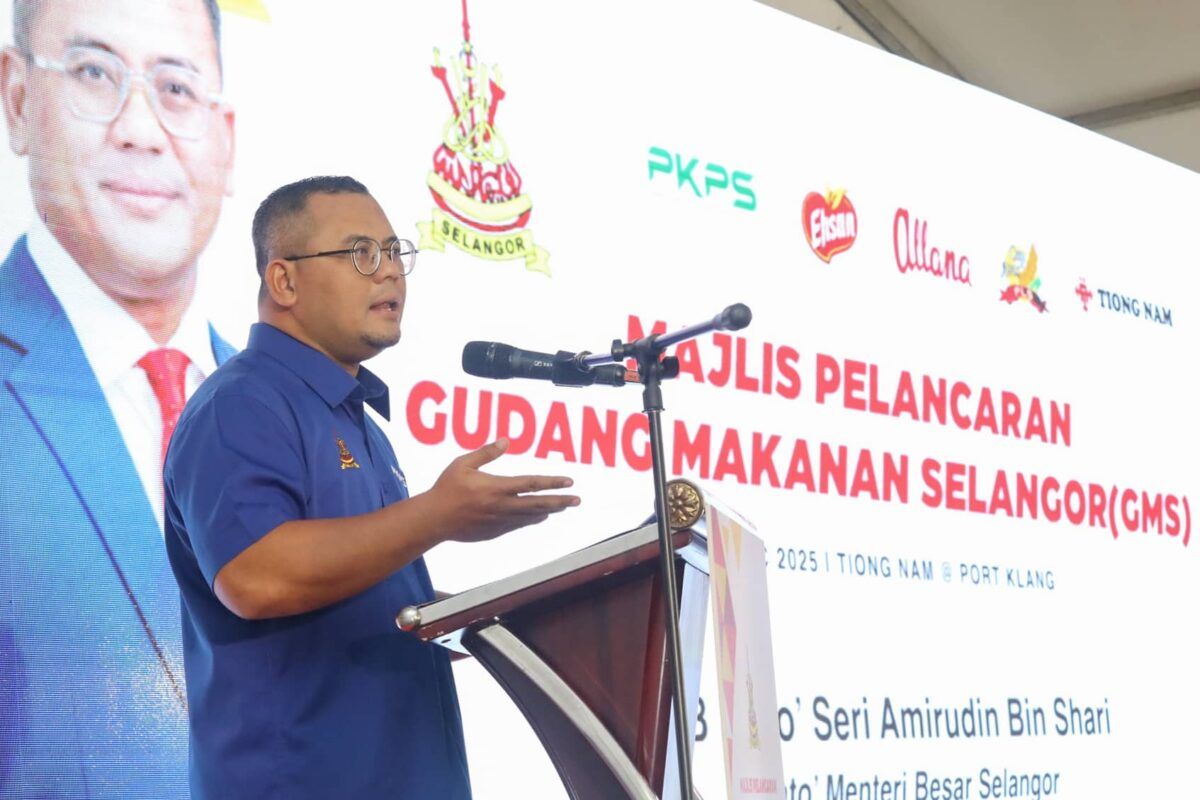
SHAH ALAM, June 23 — Selangor needs time to gradually expand its food stockpile due to substantial financial and logistics commitments, but is confident of achieving its long-term goal of maintaining a three-month reserve, said state executive councillor for infrastructure and agriculture Dato’ Izham Hashim.
He added that the Selangor Food Warehouse (GMS) is key in the state’s efforts to boost food security and ensure sufficient supply during emergencies such as floods.
However, he noted that maintaining a reserve equivalent to just 15 per cent of the state’s food requirements would cost about RM50 million, covering staples like chicken, fish, beef, cooking oil, and rice.
“To provide one month of food for all seven million Selangor residents, we need approximately RM350 million just to purchase the food.
“If we want to sustain supplies for three months for seven million people, we would need close to RM1 billion,” he said in his wind-up speech on Phase 2 of the Selangor Resilience Enhancement Package (SREP) at the Selangor State Legislative Assembly sitting today.
Given the scale of investment required, Izham said the state is implementing the GMS programme in stages to develop necessary infrastructure and management systems.
“We need time to gradually increase the stock; this is not a simple matter. I am confident that, step by step, we will achieve our ultimate goal of having sufficient food supplies for three months for all Selangor residents through GMS.”
Izham added that the initiative is not only about storing food, but also managing stock rotation to prevent spoilage.
“For GMS, our goal is to have a stockpile or buffer stock of food to ensure that in any crisis situation, we can release supplies to stabilise food prices. This is indeed our intention, but it is not easy to start something from scratch.”
He said food stock management requires careful planning, including periodic replacement of supplies such as rice, chicken, fish and meat.
“Rice, if kept for more than a year, becomes old stock, so we must ensure it is rotated every one or two months, with some stock … replaced.”
Izham added that the state is looking into packaging technologies such as vacuum sealing, which, when used on rice, can extend its shelf life from one year to two.