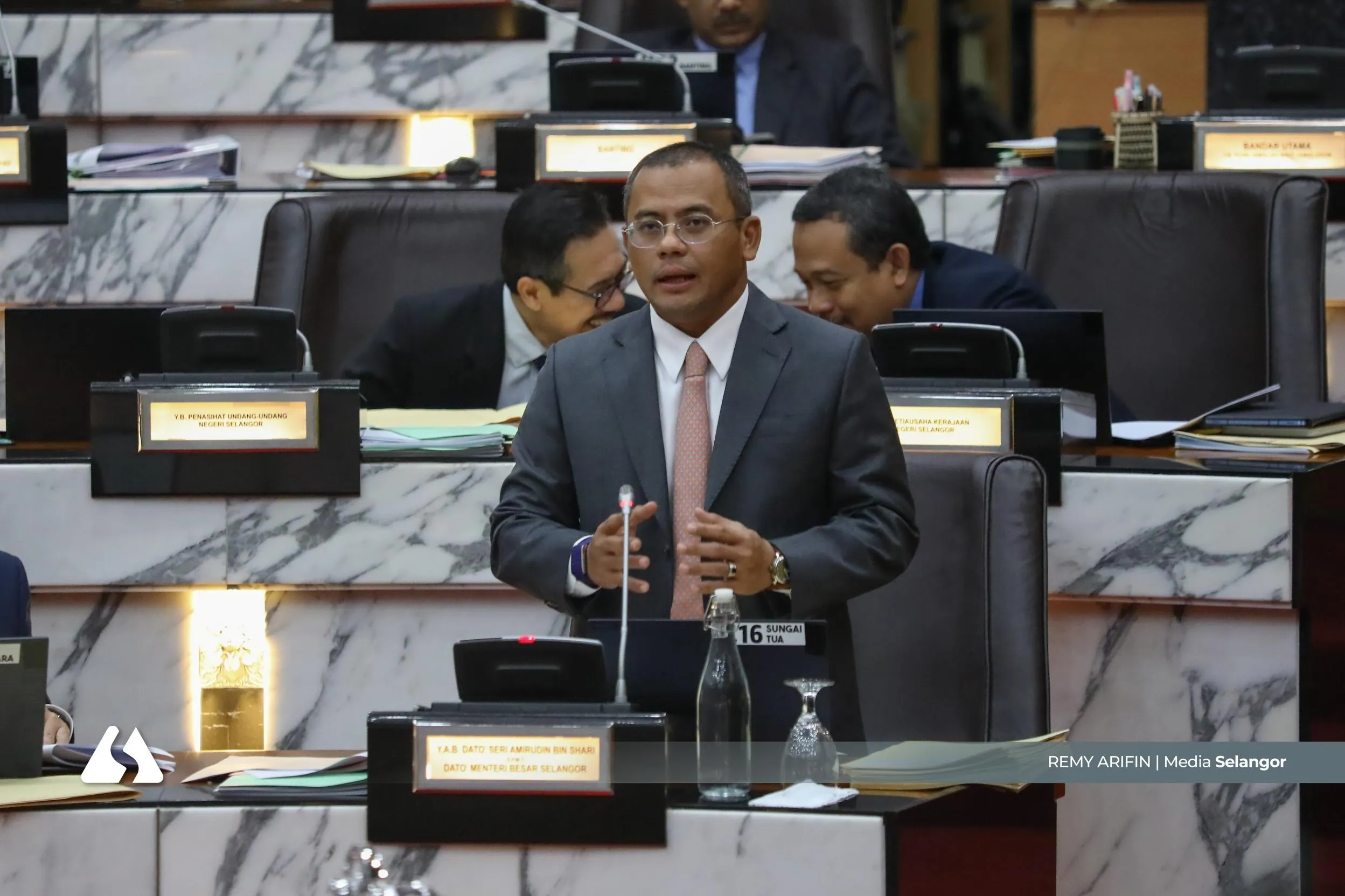
SHAH ALAM, April 28 — Selangor is enhancing international collaborations, including with the Netherlands, while stepping up river rehabilitation efforts as water quality in Sungai Klang shows significant improvement, said Menteri Besar Dato’ Seri Amirudin Shari.
During his wind-up speech on the motion of thanks for the Royal address, Amirudin explained the state has long engaged with Dutch expertise especially in water management, although cooperation requires alignment with federal-level agreements.
“We have long approached the Netherlands, but they have only recently signed an MOU with the federal government, and after that, they will start working with the state,” he told the Selangor State Legislative Assembly here today.
He explained that areas identified for collaboration include Sungai Bernam in Sabak Bernam, where the river’s characteristics align with Dutch expertise, particularly in agricultural irrigation.
Previously, it was reported that the Dutch government is collaborating with Malaysia, with Selangor as a key focus area, to enhance flood mitigation efforts by leveraging Dutch expertise, including nature-based solutions and sustainable water management under the Dutch Surge Support scheme.
The project includes pilot initiatives to enhance flood resilience through eco-friendly, sustainable approaches, with one planned for execution in Sabak Bernam.
River care for less severe floods
To address flood issues in the state, Amirudin added that Selangor has also worked with Japanese agencies to strengthen early detection systems and disaster sensitivity, especially to address flood risks.
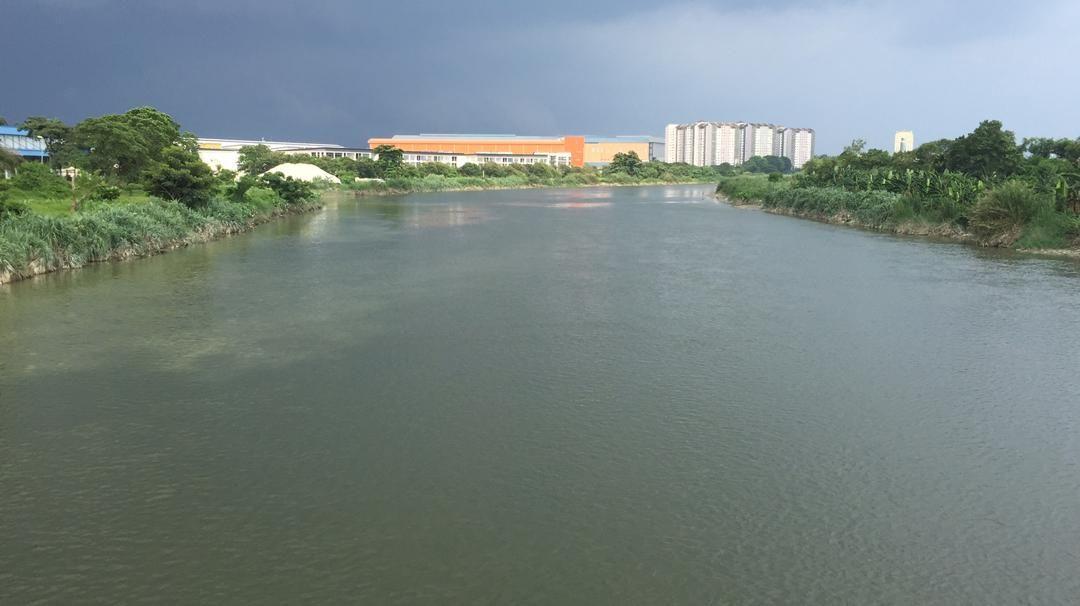
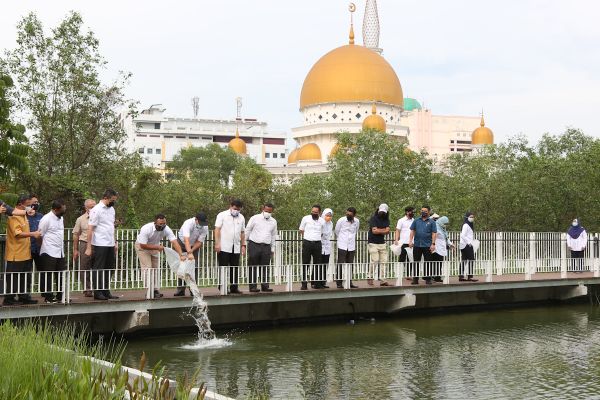
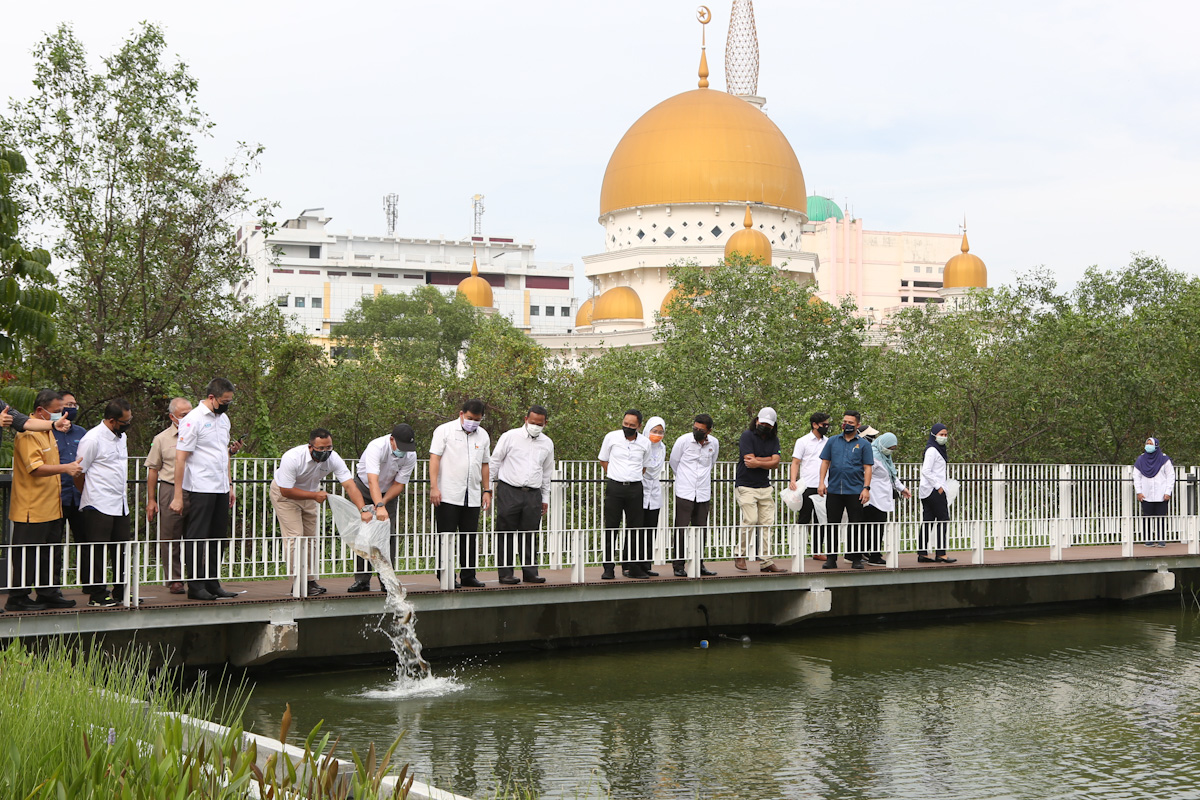
Additionally, he said there have been consistent clean-up efforts at Sungai Klang that have led to significant improvements in river conditions and public awareness.
“We are not perfect, but we are doing everything we can to resolve these issues through ongoing plans, including cooperation with institutions from countries such as the Netherlands.
“For example, in terms of river cleaning, we are the first to implement the Sungai Klang clean-up with The Ocean Cleanup. They previously focused on the ocean, but are now working in rivers, and Selangor is the first to deploy their Interceptor machines.
“To date, about 87,000 tonnes of waste have been collected under these efforts.
“I have outlined some of the measures under the Selangor plan (RS-1/RS-2),” he said.
He said ongoing clean-up efforts in Sungai Klang have led to steady decline in debris, reflecting growing public awareness, while the return of wildlife signals improving ecological conditions.
“Species such as crocodiles and otters, which previously could not survive in Sungai Klang, have reappeared.
“SPAN (National Water Services Commission) has said Sungai Klang’s water can now be abstracted. Previously, it was at Class 5, and now it has improved to Class 3,” he said.
Increased water quality, usability
Amirudin added that the upcoming Sungai Rasau Water Treatment Plant, expected to be completed soon, will draw water from a Sungai Klang tributary, with initial capacity estimated between 350 million and 700 million litres per day.
“Once fully completed, we can abstract up to 1,400 million litres per day from Sungai Klang, which clearly shows a significant improvement in river water quality.”
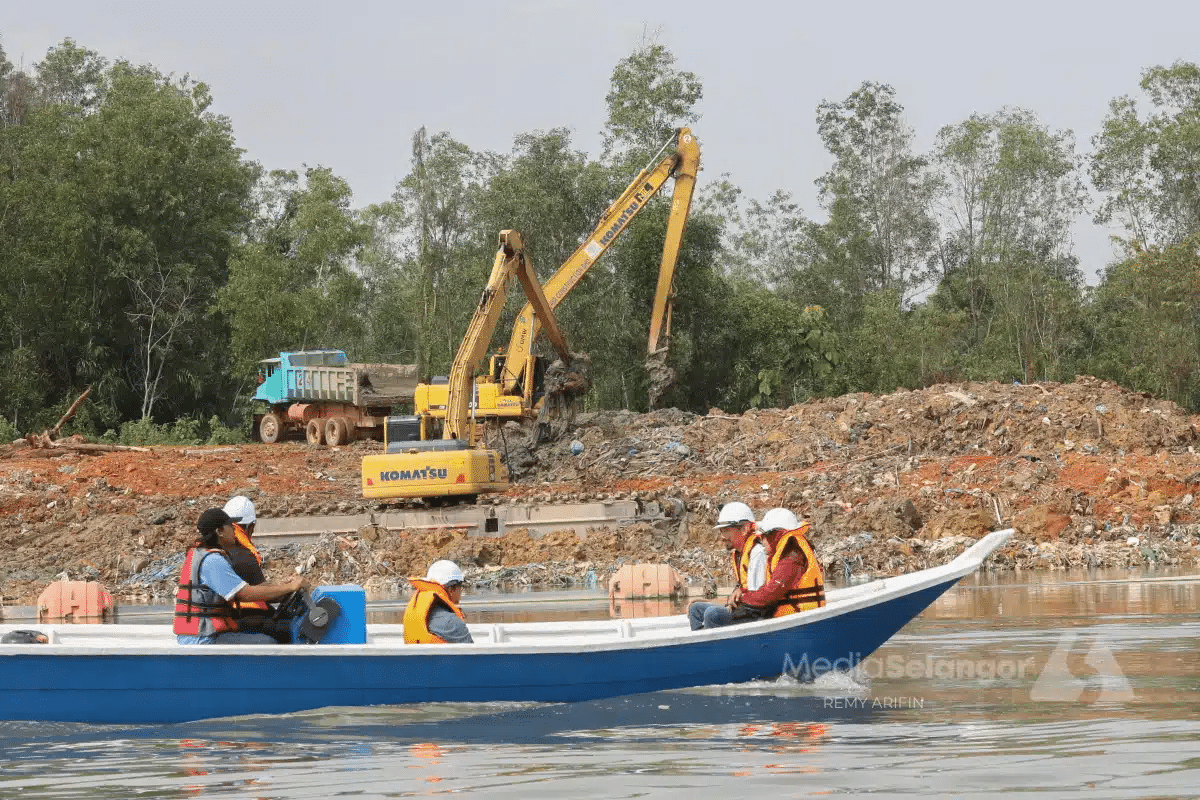
When asked about the dredging and river-deepening under the Selangor Maritime Gateway (SMG) in Sungai Klang, he said the initiative has increased the river’s capacity by about 20 per cent, contributing to less severe floods in several areas.
“As a result of these works, we have increased Sungai Klang’s capacity by 20 per cent. That is why flooding in areas such as Bukit Lanchong is no longer, and in Kampung Lombong, it is less severe than before,” he said.
Despite the progress, Amirudin acknowledged that flood mitigation remains an ongoing challenge that requires consistent improvements and broader ecosystem-based solutions.