
BEIJING/SINGAPORE, April 27 — The Chinese government has ordered United States (US) tech giant Meta to unwind its US$2 billion-plus (over RM7.90 billion) acquisition of artificial intelligence (AI) startup Manus on Monday, as Beijing tightens scrutiny of US investment in domestic startups in frontier technologies.
The National Development and Reform Commission's (NDRC) move highlights China's commitment to stopping US firms from acquiring AI talent and intellectual property (IP), as Washington tries to cut off Chinese tech firms' access to advanced US chips.
Its office for reviewing the security of foreign investments said it would "prohibit foreign investment in Manus in accordance with laws and regulations, and requires the parties involved to withdraw the acquisition transaction".
It did not name Meta or other overseas investors in Manus.
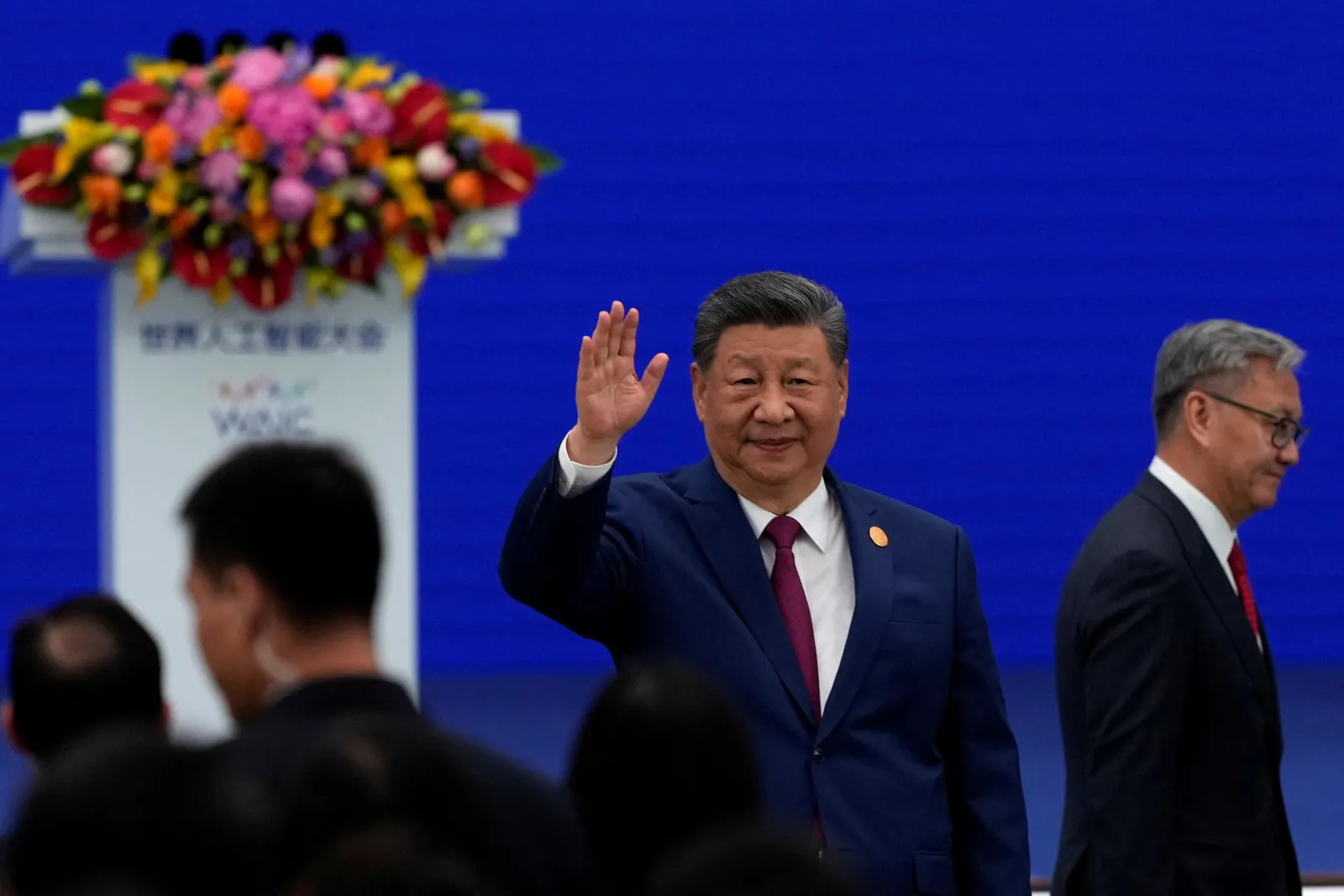
The sudden move comes weeks before a planned mid-May summit between US President Donald Trump and his Chinese counterpart Xi Jinping in Beijing. China's Commerce Ministry had announced an investigation into the sale in January, days after California-based Meta completed its December 2025 acquisition of the startup.
Three sources familiar with the matter said that Manus investors exited the company following Facebook owner Meta's takeover. China rarely orders corporate deals to be unwound after completion, in a sign of heightened regulatory scrutiny amid US-China tech competition.
According to five sources familiar with the matter, Manus' two co-founders, chief executive officer Xiao Hong and chief scientist Ji Yichao, were summoned to Beijing for talks with regulators in March and subsequently barred from leaving the country. Both men not respond to Reuters' requests for comment.
After raising US$75 million (RM296.4 million) in a May 2025 fundraising round led by US venture firm Benchmark, Manus shut down its China offices in July, laying off dozens of employees.
People familiar with the matter said that it then moved its operations to Singapore without seeking approval from Chinese regulators.
This allowed Manus' parent company, Butterfly Effect, to re-incorporate in Singapore and bypass US investment restrictions on Chinese AI firms, as well as Chinese regulatory constraints on domestic AI firms transferring their IP and capital overseas.
Two sources familiar with the matter said that Manus' staff have already moved into Meta's Singapore offices, with projects going ahead despite the exit bans on Xiao and Yi.
China's request to unwind the Manus deal is the latest high-profile case of it blocking a cross-border transaction.
Last year, China criticised Li Ka-shing's CK Hutchison for agreeing to a US$23 billion (RM90.91 billion) sale of dozens of ports worldwide to a consortium led by US asset manager BlackRock. The deal was welcomed by US President Donald Trump.
Warning case
The NDRC move is a stark warning to other Chinese startups — particularly in sensitive, strategic sectors like tech — that wish to move their operations to Singapore to access foreign capital, a practice known as "Singapore washing".
"I would not say this ends Chinese companies moving to Singapore. Rather, it raises the compliance threshold.
"Companies may need to show a genuine operational shift: where management sits, where IP is owned, where research and development is conducted, where data is stored, and whether Chinese regulatory approvals are needed," said Singapore University of Social Sciences' lecturer Ben Chester Cheong.
Meta acquired Manus to boost its capabilities in AI agents, tools that can execute more complex tasks than chatbots with minimal human intervention.
Manus was hailed early last year by state media and commentators as China's next DeepSeek after releasing what it said was the world's first general AI agent. It does not produce its own AI model, but an agent framework that operates on top of existing Western large-language models.
Ankura China Advisors managing director Alfredo Montufar-Helu said that AI has become central to strategic competition between the world's two largest economies, with controls that were once focused on semiconductors now extending into AI.
"China is saying we will prevent foreign acquisition of assets we consider important for national security — and AI is now clearly one of them," he said, noting that it also signals to firms that relocating overseas will not prevent scrutiny.