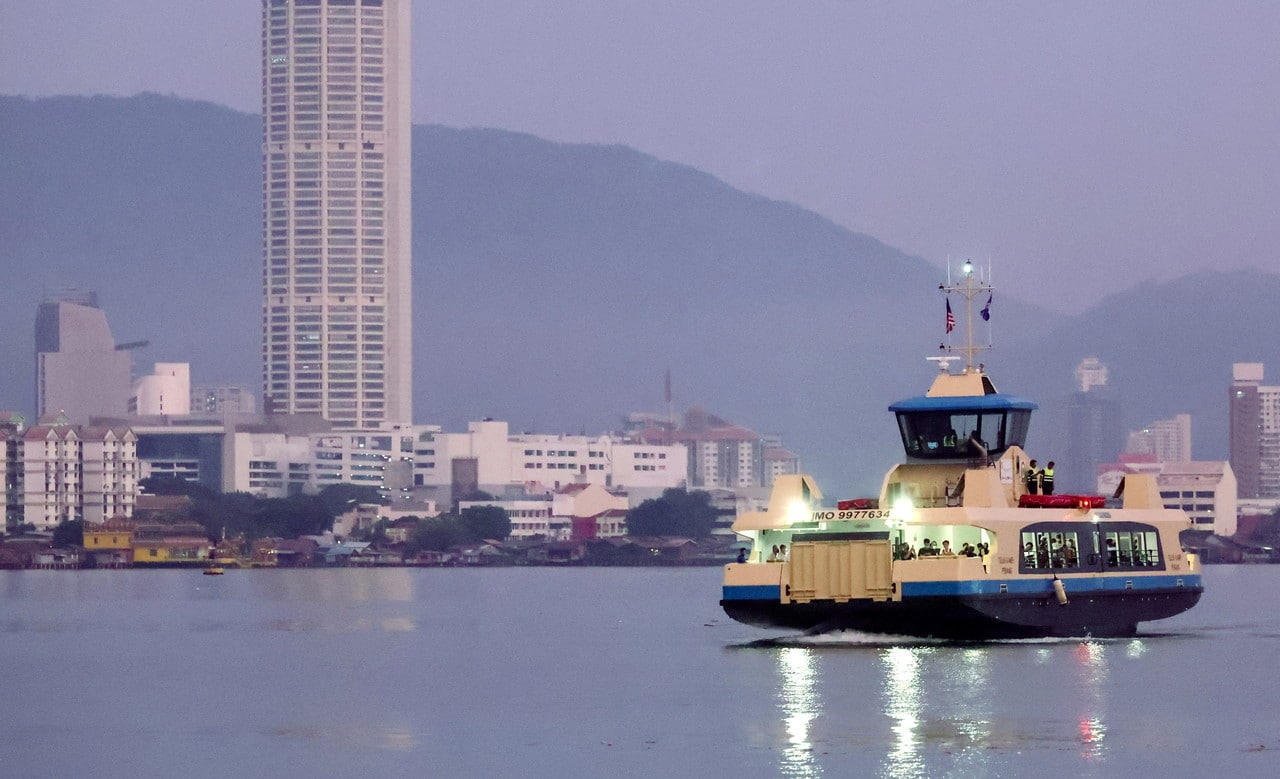
PUTRAJAYA, April 17 — The government has agreed to implement a targeted bunker fuel surcharge, effective April 20, as a temporary measure to offset rising operating costs in the maritime transport sector without affecting the people's access to maritime public transport services.
The Transport Ministry (MOT) said that geopolitical tensions in West Asia have destabilised global energy markets and logistics chains, leading to a sharp increase in marine diesel prices and placing significant pressure on the domestic maritime transport sector's operating costs.
“In this regard, the MOT acknowledges the challenges faced by passenger ferry and roll-on roll-off operators in maintaining sustainable, efficient, and resilient services for the public.
“This surcharge adopts a limited ‘pass-through cost’ approach, where only a small portion of the increased fuel costs is transferred to consumers, while the remainder is absorbed through government subsidies, operational efficiencies and internal cost management,” it said in a statement today.
Under the structure, no surcharge will be imposed when fuel prices are at or below RM4 per litre.
The MOT added that a five per cent surcharge applies to prices between RM4.01 and RM5 per litre, increasing progressively to eight per cent (RM5.01-RM6), 12 per cent (RM6.01-RM7), 15 per cent (RM7.01-RM8), and is capped at 18 per cent for prices exceeding RM8 per litre.
The surcharge will apply to public users and tourists, both domestic and international, while local residents and daily commuters will be exempt.
It said the structure preserves existing fare control principles, with the 18 per cent cap determined based on technical considerations, consumer sensitivity and the need to manage inflation.
“The surcharge rate will be reviewed monthly to ensure it remains aligned with fluctuations in fuel prices, government subsidy levels and the actual impact on consumers,” the MOT said.
It emphasised that the measure is not intended to increase operators’ profits, but to ensure continuity of ferry services and prevent disruptions.
The approach is also designed to maintain accessibility to maritime transport, particularly for island communities, while protecting the public from rising living costs.
“It also reflects the values of philanthropy and social justice by ensuring that those who are fully dependent on ferry services are not unduly burdened.
“Any adjustments will be made cautiously and based on current data, including the possibility of reducing or abolishing the surcharge when conditions improve,” the MOT said.