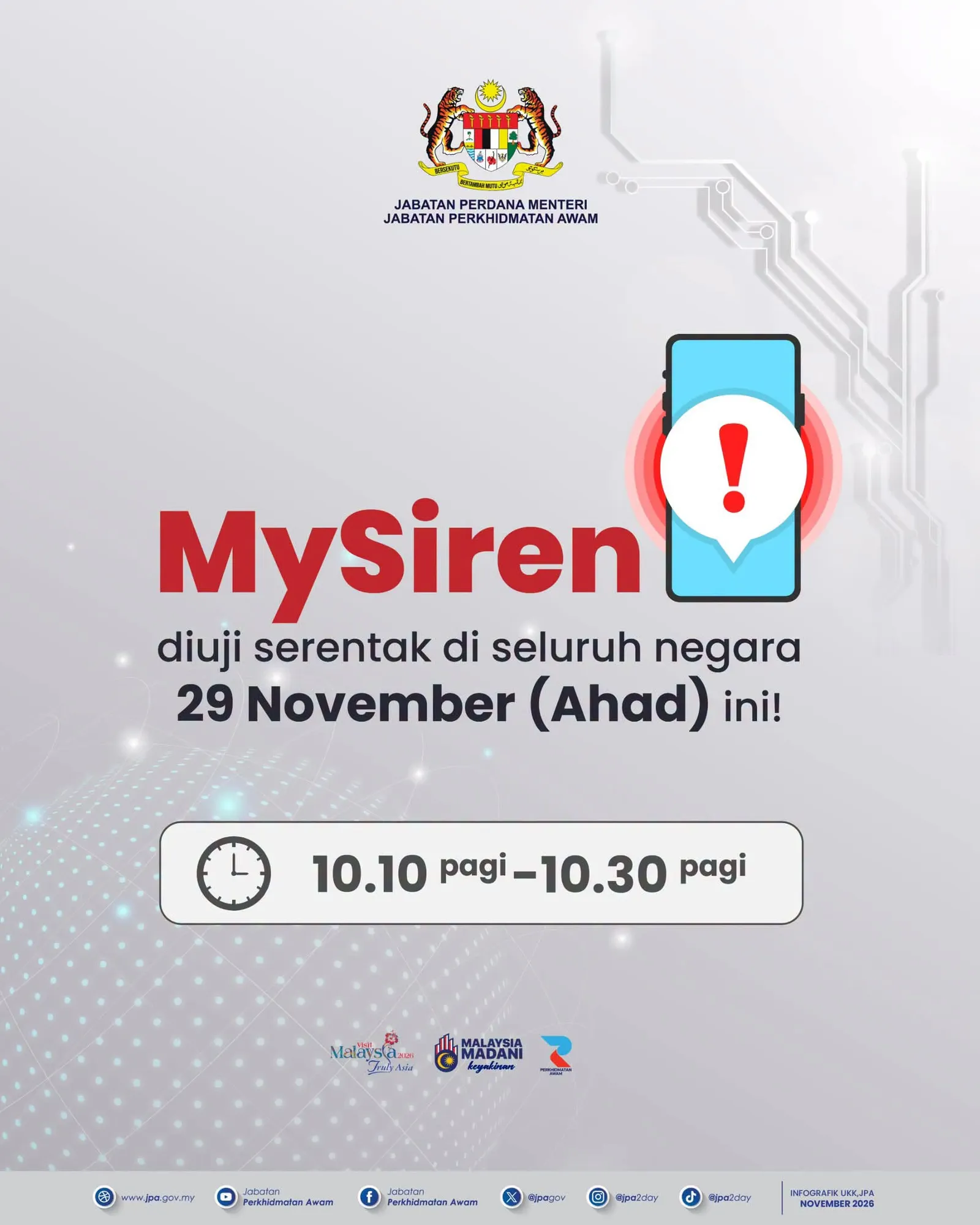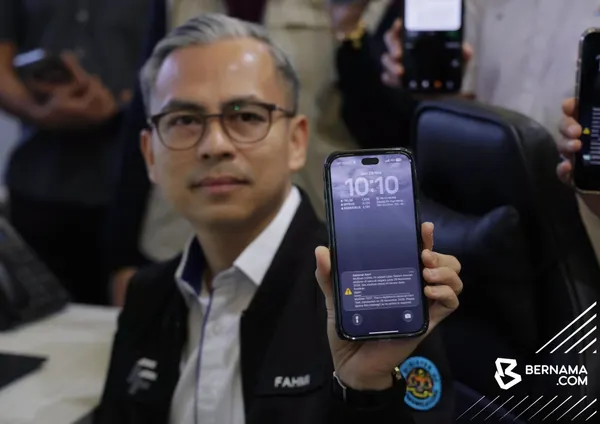
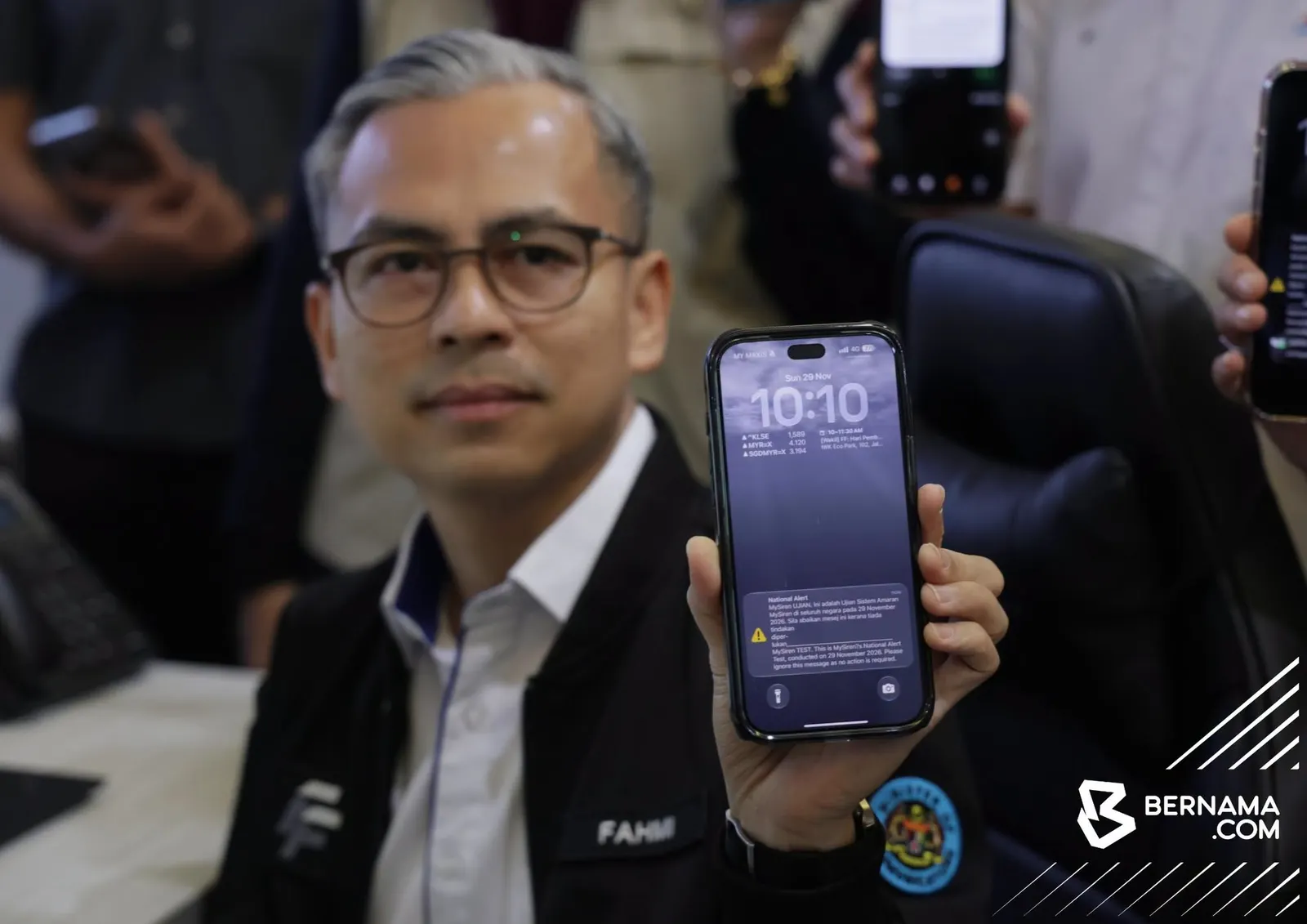
PUCHONG, Nov 29 — Test alerts from the National Early Warning System (MySiren) reached mobile phones almost simultaneously in locations that reported back, including Padang Besar in Perlis and Pulau Sebatik and Tawau in Sabah, Communications Minister Datuk Seri Fahmi Fadzil said.
Fahmi said the National Information Dissemination Centre (NADI) and the Information Department provided live feedback on when the alerts arrived during this morning’s nationwide test.
“After I pressed ‘confirm’ to send the test message, people across the country received the same alert almost simultaneously,” he told reporters after the MySiren test at the Special Malaysia Disaster Assistance and Rescue Team (SMART) headquarters here today.
Fahmi said the test alerts were broadcast in Malay and English, adding that the system could also send warnings in other languages if there were proposals to do so.
He said MySiren uses Cell Broadcast System (CBS) technology to send alerts directly to compatible mobile phones within a transmitter’s coverage area without using SMS or collecting user information.
Fahmi said MySiren operates around the clock and one of its immediate uses during the northeast monsoon is to warn people living near rivers when water levels rise above the danger mark.
“Disasters can strike at any time,” he said, explaining that the loud alert tone was designed to get people’s attention, including at night.
He advised people to keep their mobile phone software up to date to help ensure their devices can receive MySiren alerts.
“There’s no need to download a MySiren app. There is no app,” he said.
Fahmi said MySiren began operating on November 19 and was tested with Members of Parliament on November 23 ahead of today’s nationwide test.
Members of the public who received emergency notifications during the MySiren National Early Warning System test this morning said the initiative helped them respond more quickly.
In Selangor, cleaner Kamsiah Mat Ali, 59, said MySiren could alert and inform the public of potential disaster risks through a loud and clear siren that could be heard in surrounding areas.
“Previously, when floods occurred, we would usually receive notifications via short messages. But the use of sirens may be something new to the community,” she told Bernama.
Universiti Pendidikan Sultan Idris (UPSI) student Aisyah Halim, 20, described the government's initiative to implement the warning system as a positive step towards ensuring the public receives early information on potential disaster risks.
However, she suggested the government specify the disaster levels or categories that would trigger the siren and provide guidance on what the public should do to avoid confusion and panic, particularly among those encountering the warning system for the first time.