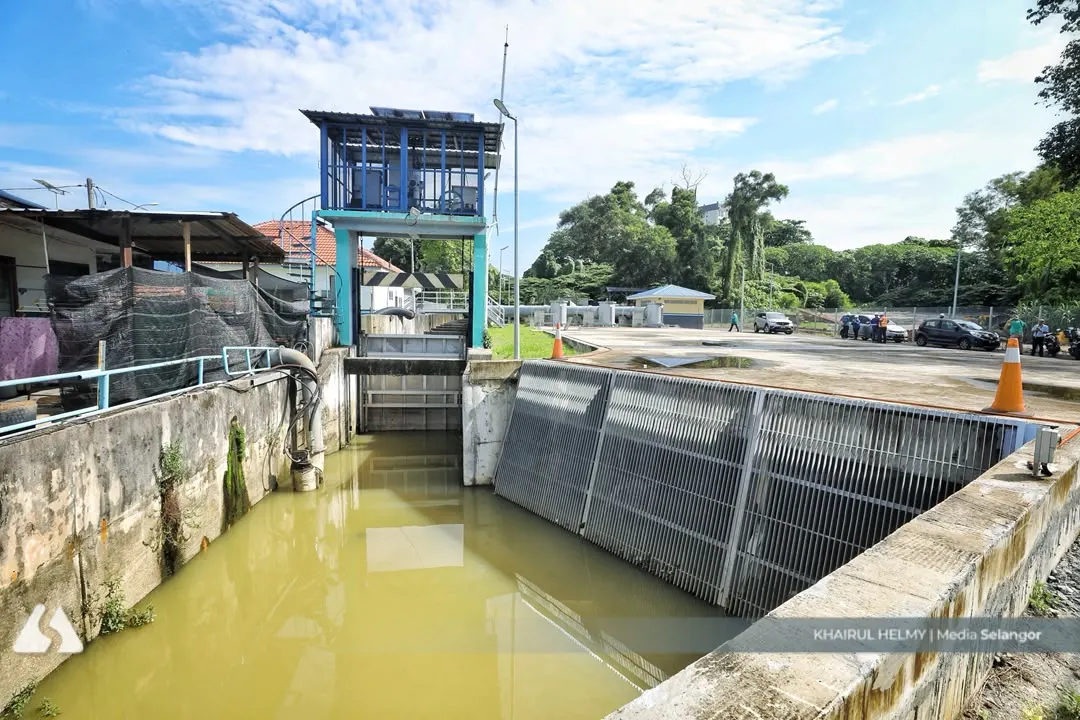


SHAH ALAM, Nov 19 — The state government is considering a range of measures to address Selangor’s longstanding flooding problems, including lowering water levels at dams and storage ponds ahead of the monsoon season to create additional capacity for rainwater.
State executive councillor for infrastructure and agriculture Dato’ Izham Hashim said they began lowering dam water levels by 15 per cent ahead of last year’s monsoon, but believes some dams might require reductions of up to 30 per cent as they tend to fill up quickly during prolonged rainfall.
The state government is also looking to integrate over 600 existing retention ponds with 185 larger ponds under the Selangor Off-River Storage (SOS) programme, alongside other water storage facilities, to serve multiple purposes such as flood mitigation, recreation, and water supply.
"Previously, ponds were designed for a single purpose. If they were recreational ponds, they were used only for recreation, if they were flood retention ponds, they were used only for flood retention, and if they were for water supply, they were used only for that purpose.
"We can no longer continue with that approach. We need to look at multifunctional ponds…if we integrate all these facilities, we can use them to store water during dry periods.
“When we anticipate the monsoon season, we can lower or reduce the water levels in these ponds so they can absorb some of the incoming rainwater," he said in his winding-up speech on the 2027 Selangor Budget during the State Legislative Assembly sitting today.
Izham added that the state government is also exploring nature-based solutions, including the Netherlands-inspired "Room for Rivers" concept, which allows excess river water to flow into designated areas during periods of heavy rainfall.
However, implementing the concept would require land acquisition to create suitable retention areas along rivers.
Similarly, the state government is also considering introducing on-site detention (OSD) systems and "sponge city" approaches in residential developments to prevent rainwater from flowing into drainage systems all at once.
"We need to look at how we can manage our green spaces so they can actually absorb rainwater. Having green areas alone is not enough if the land is not properly managed,” he said.

Izham noted that the state government is also mulling making OSDs or sponge-based systems a requirement for planning approvals, allowing rainwater to be temporarily retained within developments before being released into drains.
Maintenance works
Meanwhile, Selangor has approved RM100 million to be used for retention pond maintenance, including cleaning, dredging, and removing accumulated sediment.
The councillor also requested that the scope be expanded to cover river dredging, while the Irrigation and Drainage Department (JPS) will audit existing flood mitigation projects to assess their effectiveness.
To improve coordination, he proposed a special unit and a dedicated operations room to monitor flood mitigation projects involving various agencies and local authorities, while an existing dashboard tracking long-term projects is also being expanded to include quick-win and medium-term initiatives.
“The dashboard should reflect what is happening on the ground, that is its purpose. Monitoring is part of our responsibility to ensure projects are completed, as we do not want them to be delayed; we want to speed up implementation, not slow it down,” he said.
The Selangor Public Works Department has also been instructed to inspect 92 flood-prone roads during and after rainfall and take immediate action to address blocked or poorly positioned scupper drains.
Meanwhile, Izham the physical works for the Sungai Buloh flood mitigation project, estimated to cost more than RM800 million, have yet to receive approval.
“I have raised how urgent this project is and asked for its implementation to be expedited.”