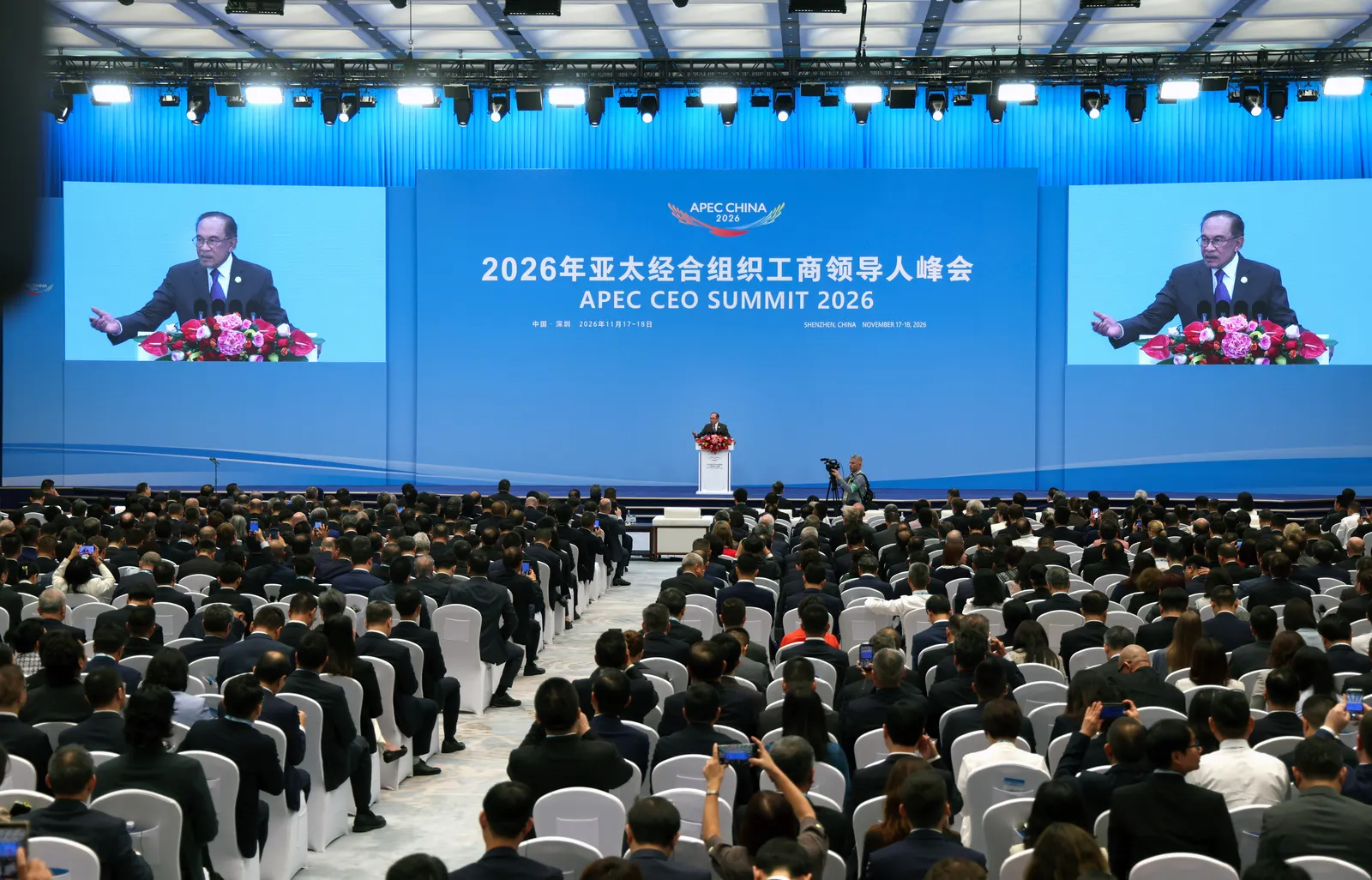
SHENZHEN, Nov 18 — Asia-Pacific nations must defend cooperation across geopolitical divides amid mounting pressure to retreat into rival blocs, Prime Minister Datuk Seri Anwar Ibrahim said.
He said decades of experience had demonstrated that nations in the Asia-Pacific could pursue their respective interests while contributing to broader regional cooperation.
"We should have the confidence and the resolve to preserve that tradition, particularly when the pressures to retreat into rival blocs become more pronounced," he said in his keynote address at the APEC CEO Summit 2026 here today.
Anwar, who is also finance minister, said the credibility of the Putrajaya Vision 2040, adopted during Malaysia's chairmanship, would ultimately be judged by member economies' willingness to translate its aspirations into tangible outcomes.
He said the vision embodied the aspiration for an open, dynamic, resilient and peaceful Asia-Pacific community.
"This means building supply chains that are more resilient while keeping markets open to participation.
"It means expanding access to advanced technologies, investing in human capabilities, and ensuring that developing economies can become innovators and producers in their own right," he said.
"It also means pursuing the transition to cleaner energy in ways that recognise different national circumstances and provide genuine opportunities for growth and industrial development," he added.
For Malaysia, Anwar said this conviction was reflected in its policy of active non-alignment.
"It is a deliberate exercise of sovereign judgement, grounded in the belief that every nation, regardless of size or economic weight, has the right to determine its own course and contribute to shaping the international order.
"We seek constructive relations with all partners, guided by our principles, our national interests, and our enduring commitment to peace and cooperation," he said.
Turning to the business community, Anwar said it had an indispensable role in shaping the future of the Asia-Pacific.
"The investments you undertake, the technologies you develop, and the partnerships you forge will help determine the economic landscape of our region for decades to come.
"With this influence comes a responsibility to ensure that the opportunities created by economic transformation extend beyond established centres of wealth and technological advancement," he said.
Anwar said Malaysia welcomed investments and partnerships that strengthened domestic industries, nurtured local enterprises, developed human capital and enabled emerging economies to participate in higher-value activities.
He stressed his firm belief that commercial success and the broader aspirations of societies could, and indeed must, advance together.
The true measure of economic progress, he said, must ultimately be reflected in the opportunities it created and the lives it transformed.
"As we look to the future, we must recognise that the destiny of Asia-Pacific remains firmly in our own hands. The decisions we take today, individually and collectively, will determine whether our region continues to be a source of dynamism, stability, and opportunity in an increasingly uncertain world."
Anwar said Malaysia envisioned an Asia-Pacific where nations retained the freedom to chart their own destinies, technological advancement served humanity's progress, and the benefits of economic integration were shared more equitably among its people.
"It is a vision grounded in the conviction that peace and prosperity must remain within the reach of every nation, regardless of its size, wealth, or political influence."
Realising this vision, he said, would require political courage, mutual trust and a renewed commitment to the principles that had sustained the region's remarkable progress.
"It will require us to look beyond immediate interests and recognise our shared responsibility for the world we leave behind. Let us therefore summon the wisdom, imagination, and resolve to shape an Asia-Pacific that future generations will be proud to inherit."