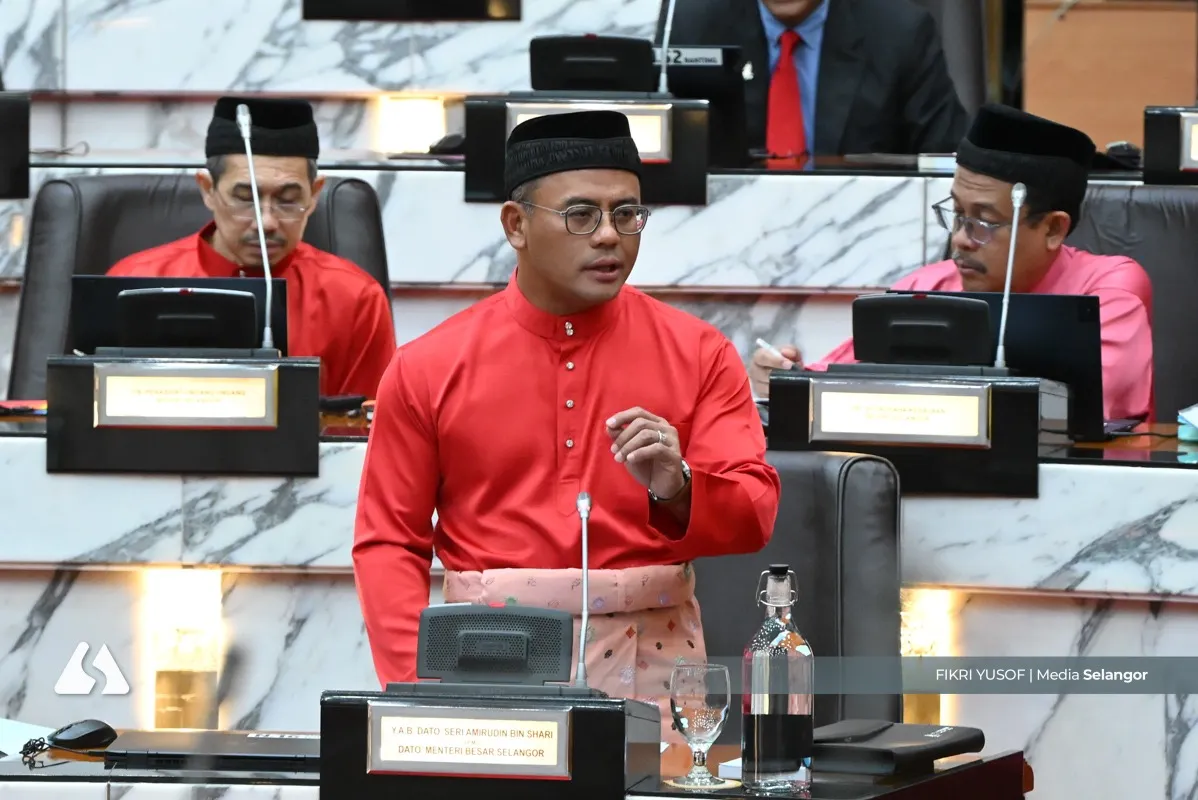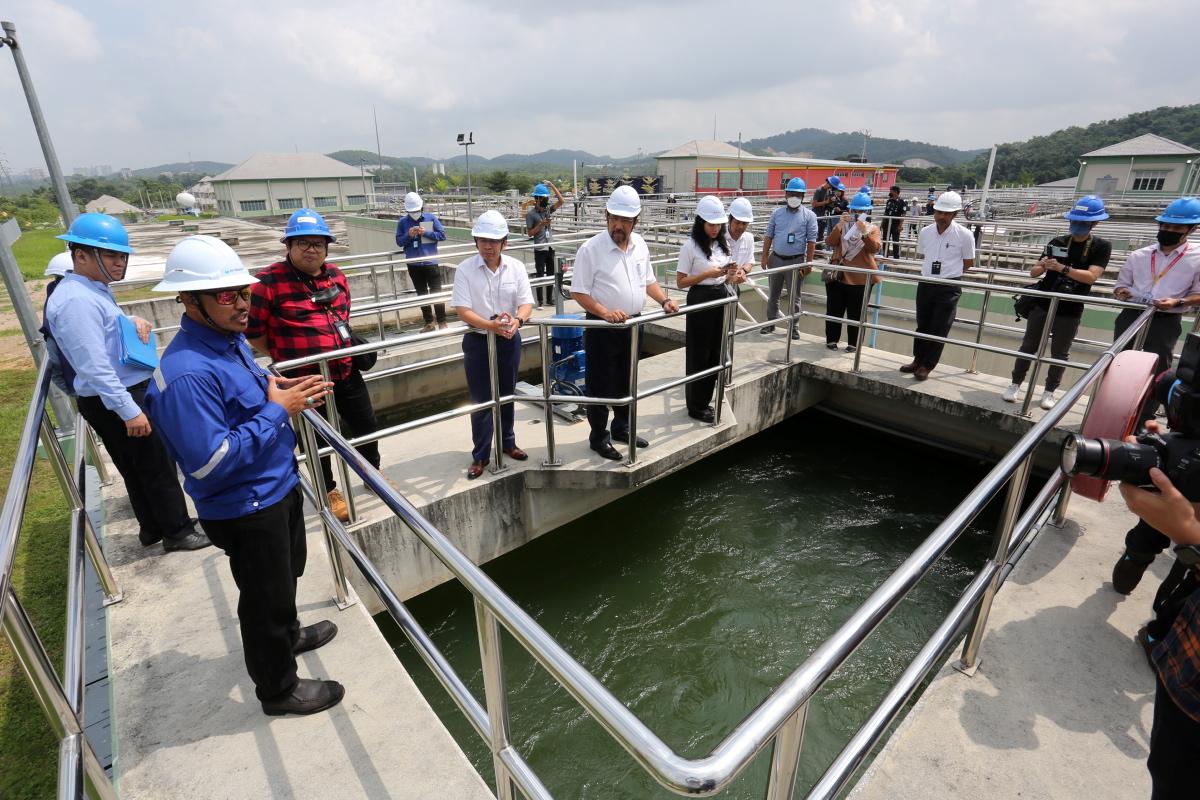

SHAH ALAM, Nov 13 — Selangor has allocated RM101 million under the 2027 Selangor Budget to secure its clean water supply, Menteri Besar Dato’ Seri Amirudin Shari said.
He added that RM3.5 million has been allocated for the Selangor Water Master Plan study, which is set to be completed in 2028.
“This master plan will integrate the management of raw water, treated water, and wastewater with flood management.
“Climate resilience also entails ensuring water supply remains uninterrupted when sources are compromised or plant operations are disrupted.
“The Raw Water Guarantee Scheme (SJAM) is part of an initiative to safeguard plant operations against disruptions caused by pollution,” he said.
Amirudin added that the Selangor Water Management Authority (LUAS) has proposed an allocation of RM1 million for the development of off-river reservoirs, through the Selangor Off-River Storage Scheme (SORSS), as well as RM150,000 for an automated raw water sampling system.
“Alternative reservoirs provide a contingency option when primary sources are affected. Automated sampling, river telemetry, and SESAMS (Selangor Earth Surface Activity Monitoring Systems) satellite-based monitoring help agencies detect changes early and determine necessary courses of action,” he said.
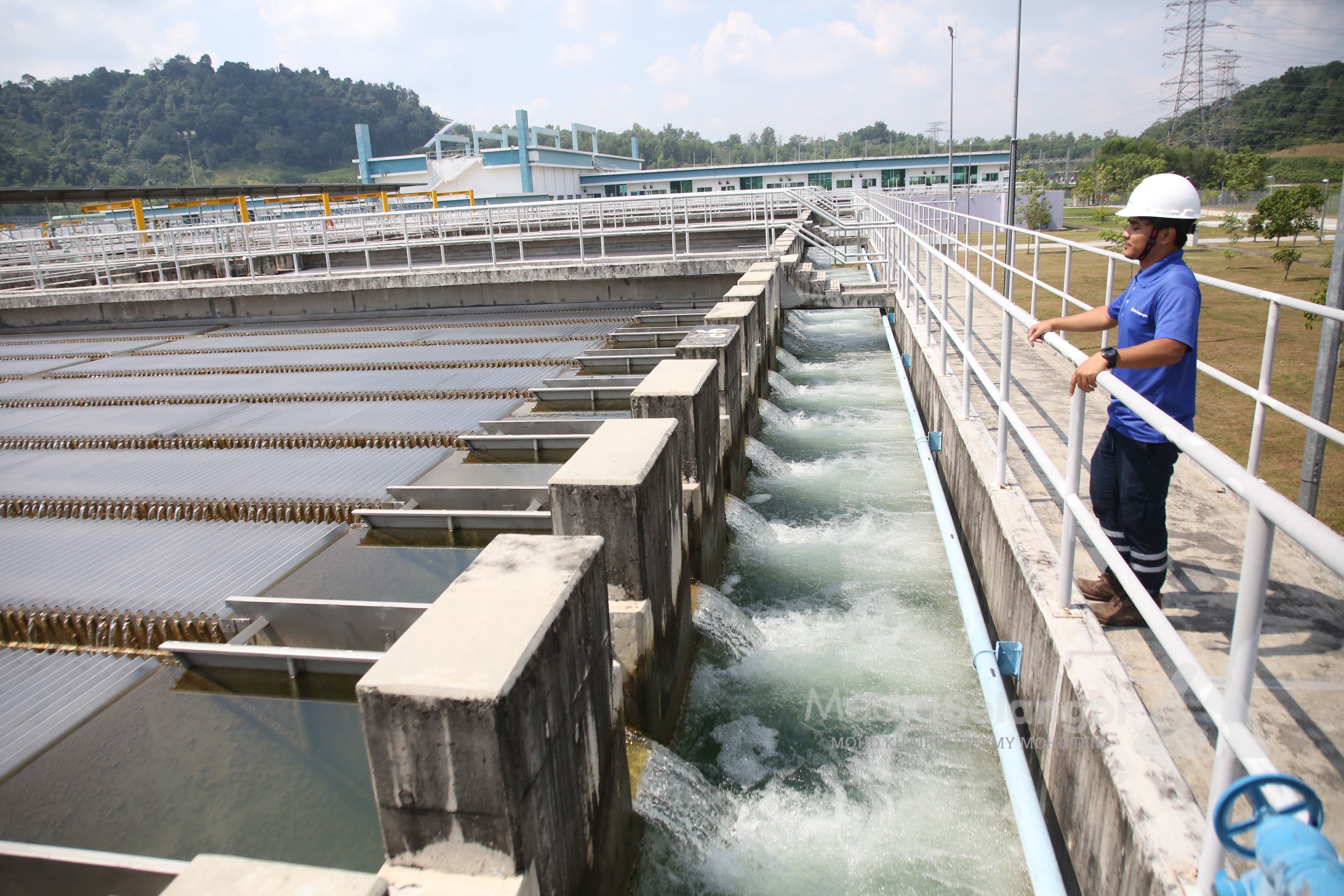
Under the Second Selangor Plan (RS-2), the Rasau, Langat 2, and Labohan Dagang projects will expand water treatment capacities, he explained, with Rasau Phase 2 to add a capacity of 700 million litres per day (MLD) and Labohan Dagang Phase 2 to add 200MLD.
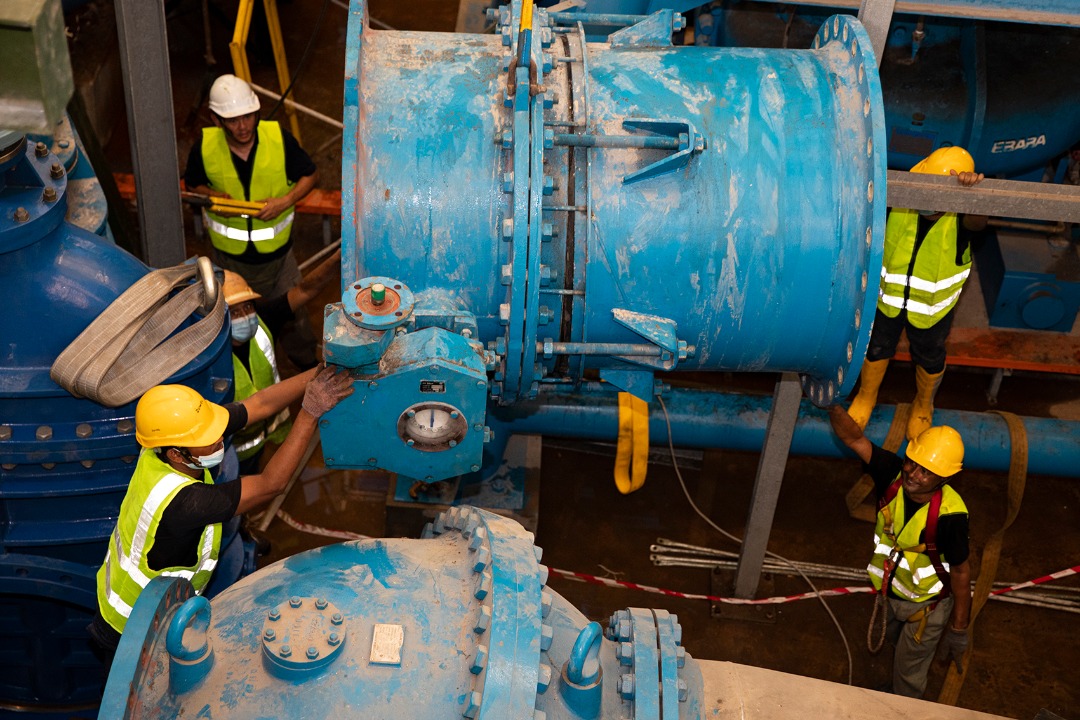
“Treatment capacity must be supported by a resilient distribution network… The replacement of ageing pipes, the upgrading of treatment plants, and the interconnectivity of the water grid must move in tandem,” he said.
The targets outlined in the budget, Amirudin added, include reducing the non-revenue water rate from 26.3 per cent to 25.8 per cent, as well as connecting 36 reservoir terminals by the end of 2028, as a more interlinked network provides greater flexibility to reroute supply when one part of the system experiences a disruption.
Amirudin also said RM6.45 million has been allocated for 14 coastal development projects, including the embankment reinforcements in areas at risk of erosion, with the districts requiring attention being Sabak Bernam, Kuala Selangor, Kuala Langat, Sepang, and Klang.
He added that the state government is developing carbon and biodiversity credit projects with an allocation of RM2 million, in line with the RS-2 target to have at least 31 per cent of state-owned land gazetted as forest reserves by 2030.
Transition to low-carbon economy
Amirudin said the Selangor government will continue its efforts to transition towards a low-carbon economy through the Selangor Agenda for Green Economy (SAGE), with the Batang Kali Green Hydrogen Hub, under the Selangor Hydrogen-Oriented Resources (SHORE) project, is targeted for completion by next year.
“Regarding SEL-Hydro, three small hydropower plants located at Kerling Atas, Kerling Bawah, and Batang Kali, are expected to provide a total energy capacity of 11.6MW by 2027,” he said, adding that RS-2 also outlined a greenhouse gas inventory and improved energy efficiency in state-owned buildings, allowing the administration to measure emissions and assess impacts.
He said that to achieve these objectives, Heliosel Sdn Bhd, a wholly owned subsidiary of Menteri Besar Selangor (Incorporation), or MBI, will maintain the Renewable Energy for Water (RENEW) programme in collaboration with Pengurusan Air Selangor Sdn Bhd next year.
“A total of 20.9MW of new floating solar capacity, paired with a 48MWh Battery Energy Storage System (BESS), is expected to commence operations by the end of 2027 at the Labohan Dagang Water Treatment Plant under the net-zero scheme,” he added.

As of September, Amirudin said, 41 solar power plants operating under Air Selangor averted 19,411 tonnes of carbon emissions this year.
“An additional four solar power plants have been built and are set to start operating soon.
“The net-zero facility at the Sungai Labu Water Treatment Plant is the first water treatment plant in Malaysia capable of operating entirely on renewable energy,” he said.
For the transport sector, Amirudin said the government is aiming to set up 4,000 electric vehicle (EV) charging bays by 2030, to facilitate the state’s transition towards low-carbon mobility.
And in waste management, Amirudin said the Selangor Recycling (SELKitar) initiatives now covers 380,000 households statewide and has overseen the collection of more than 6,300 tonnes of recyclables, with a network of material recovery hubs having been proposed as part of the state’s circular economy roadmap.