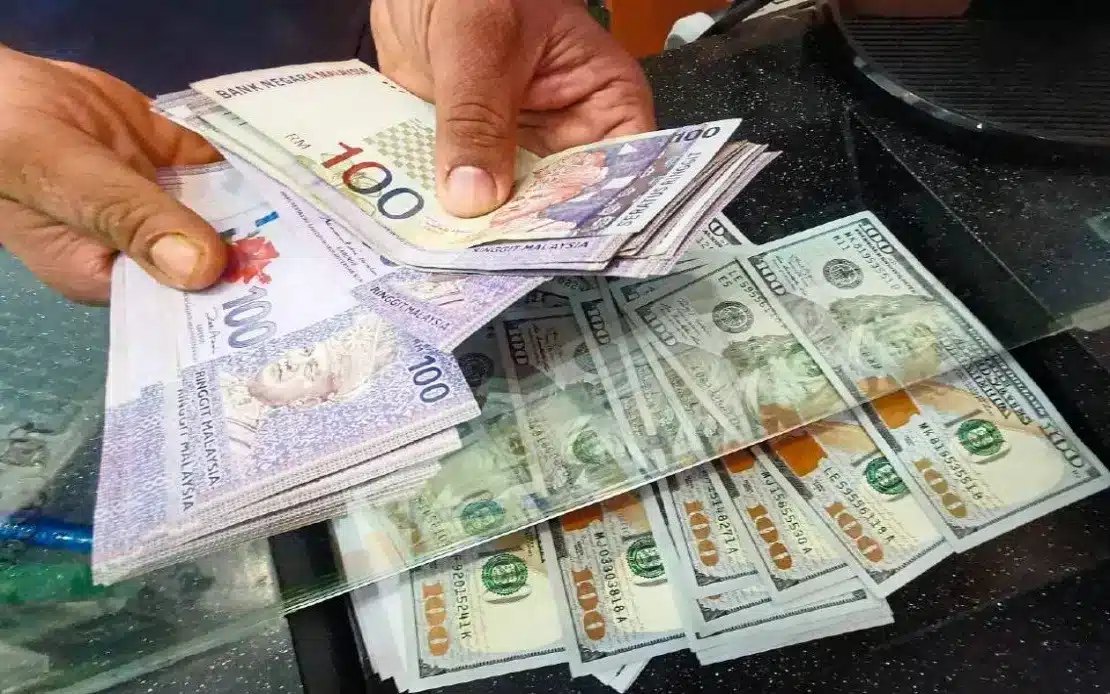

KUALA LUMPUR, Nov 11 — The country’s investment cycle and external surplus are expected to give the ringgit room to strengthen next year, supported by strong economic growth.
Juwai IQI global chief economist Shan Saeed said policy consistency could sustain investor confidence despite volatile capital flows around the region.
“Semiconductor investment, data-centre expansion, and resilient domestic demand underpin this outlook. My base-case trading range for 2027 is RM3.90 to RM4.11,” he told Bernama today.
Shan added that a softer dollar and lower United States (US) yields would bring RM3.90 into view.
He also projected real gross domestic product growth of between 5.3 per cent and 6.5 per cent next year, above the Organisation for Economic Co-operation and Development’s 4.8 per cent forecast and the government’s projected range of between 4.2 per cent and 5.2 per cent.
At the open today, the ringgit traded near RM4.05 against the US dollar.
Shan noted that Malaysia grew six per cent in the second quarter of 2026, recorded a RM10.8 billion current-account surplus and held RM537 billion in international reserves at end-June.
“Brent at US$95 to US$110 per barrel would strengthen energy export earnings, but the net fiscal dividend depends on subsidy rationalisation.
“Elevated fuel-subsidy costs underscore the importance of targeted support in preserving fiscal space and containing expenditure pressures,” he said.
Within ASEAN, he expects a two- to three-per-cent nominal ringgit appreciation against each of the Indonesian rupiah, Philippine peso, Thai baht, and Vietnamese dong between end-2026 and end-2027.
“This proprietary relative-value forecast reflects Malaysia’s external resilience, investment momentum, and policy predictability,” Shan said.
As for the overnight policy rate (OPR), he sees the possibility of a 25-basis-point hike in the first quarter of 2027, conditional on persistent underlying inflation.
Current inflation conditions do not necessitate immediate tightening, as a credible, inflation-responsive hike could strengthen the local currency.
During its last meeting on Thursday (November 5), Bank Negara Malaysia maintained the OPR at 2.75 per cent.