
İKIZKÖY, Nov 8 — Local official Nejla Isik is among the villagers living beside a coal mine who demand that world leaders gathering in Turkiye for COP31 climate talks leave the conference venue to inspect the devastation decades of lignite extraction have caused.
Beginning Monday, the transition to cleaner energy will be among the themes at the United Nations (UN) conference, which continues until November 20 in Antalya on Turkiye's Mediterranean coast.
Isik, an elected official for her community, says the government leaders and UN officials need to head a few hundred kilometres west to Ikizköy, near the Akbelen forest in Turkiye's southwestern Muğla province, and see for themselves the impact of coal on nature and on people's lives.
Villagers who have protested against coal mining for years have been fined and arrested.
"They should come here, those heads of state. They should come not to Antalya but to Akbelen, to Ikizköy," she said.
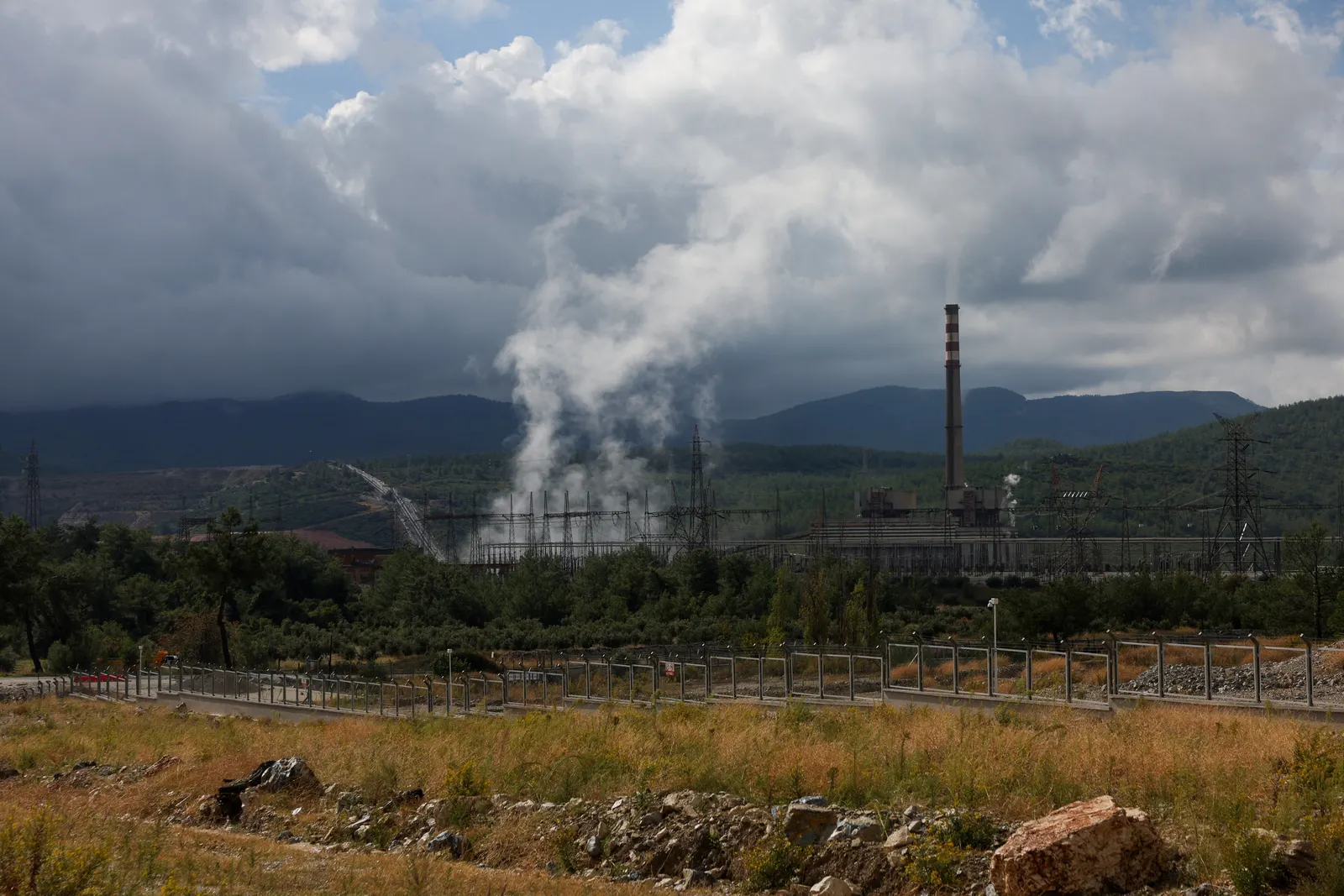
Her home in Ikizköy is only a few hundred metres behind a lignite mine that has crept nearer over decades of expansion. Lignite is the lowest grade of coal, meaning burning it releases more carbon dioxide than more energy-dense coal.
Electrification, but will it be green?
So far, one of the prominent aims of COP31 is to agree on a voluntary goal on increasing electrification, proposed by host country Turkiye, but unless the electricity is low-carbon, it will not curb planet-warming emissions.
According to energy think tank Ember, last year, coal was Turkiye's largest electricity source, generating 34 per cent of the country's power, making it Europe's biggest coal-fired electricity generator.
The mines in the Akbelen area provide coal for plants that generate just over two per cent of Turkiye's power, according to the operator's website.
Villagers and environmental campaigners like Isik, who oppose the expansion of lignite mining, say it has destroyed forest and threatens olive groves, farmland, and communities.
The fight against coal has had harsh consequences. Isik's 26-year-old daughter Esra spent 42 days in pretrial detention after a protest against the planned expropriation of land for mining.
A court in July sentenced her to two years in prison for resisting public officials. She is free pending an appeal decision.
"This punishment was not just handed to me. It was an attempt to punish everyone in this country who stands up for their rights, their land, and their village," Esra Isik said.
Her mother has for years protested against the expansion of coal mining around her village.
“For 40 years, we have been living with coal breathing down our necks. I try to live here with the breath of coal, with the dirt of coal,” Nejla Isik said.
The coal supplies the nearby Yeniköy and Kemerköy power plants, operated by Yeniköy-Kemerköy Energy, a joint venture involving Limak and IC İçtaş.
Limak declined to comment for this story. IC Ictas did not respond to a request for comment.
At a meeting with foreign media on Thursday, Energy Minister Alparslan Bayraktar said Turkiye is working on a just transition to cleaner energy, but noted the difficulty as the mines employ thousands of people.
He said nuclear energy offers the most viable alternative, and Ankara is aiming for 10 gigawatts of nuclear generation capacity by 2040. According to Reuters calculations, that would equate roughly to current coal-powered production.
Restrictions on protests in Turkiye
Rights groups have raised concerns about restrictions on protests in Turkiye, including blanket bans on demonstrations, mass detentions, and what they say is the disproportionate use of force.
In an October report, Human Rights Watch said that Turkish authorities had arbitrarily arrested and prosecuted environmental protesters in Akbelen and other parts of the country. Security forces forcibly dispersed non-violent demonstrations, and protesters, lawyers, and journalists faced charges such as illegal assembly, obstructing public officials, trespass, and spreading false information.
“With Turkiye about to host the annual UN climate change summit, its environmental crackdown is a salient reminder of its intolerance of dissent,” said Human Rights Watch's Europe and Central Asia assistant researcher Deniz Bayram.
The government says that the police intervene when demonstrations are unlawful or threaten public order. The Interior Ministry and Justice Ministry did not comment for this story.
The dispute around Akbelen intensified in 2023 when tree-felling resumed. Villagers say security forces used water cannon and pepper spray on demonstrators seeking to enter the forest and that other punishments followed.
“We were subjected to water cannon, pepper gas, detention, everything. Afterwards, because we did not abandon this area, this village, there were fines, and a year later cases were opened against us," Nejla Isik said.
Fellow resident Hasan Yorulmaz said protesters marched to stop pine trees being cut down when soldiers blocked their path.
“They used pepper spray on women and men, young and old. Despite that, we continued the resistance.
"I was at the front, and they took me away and detained me,” he said.