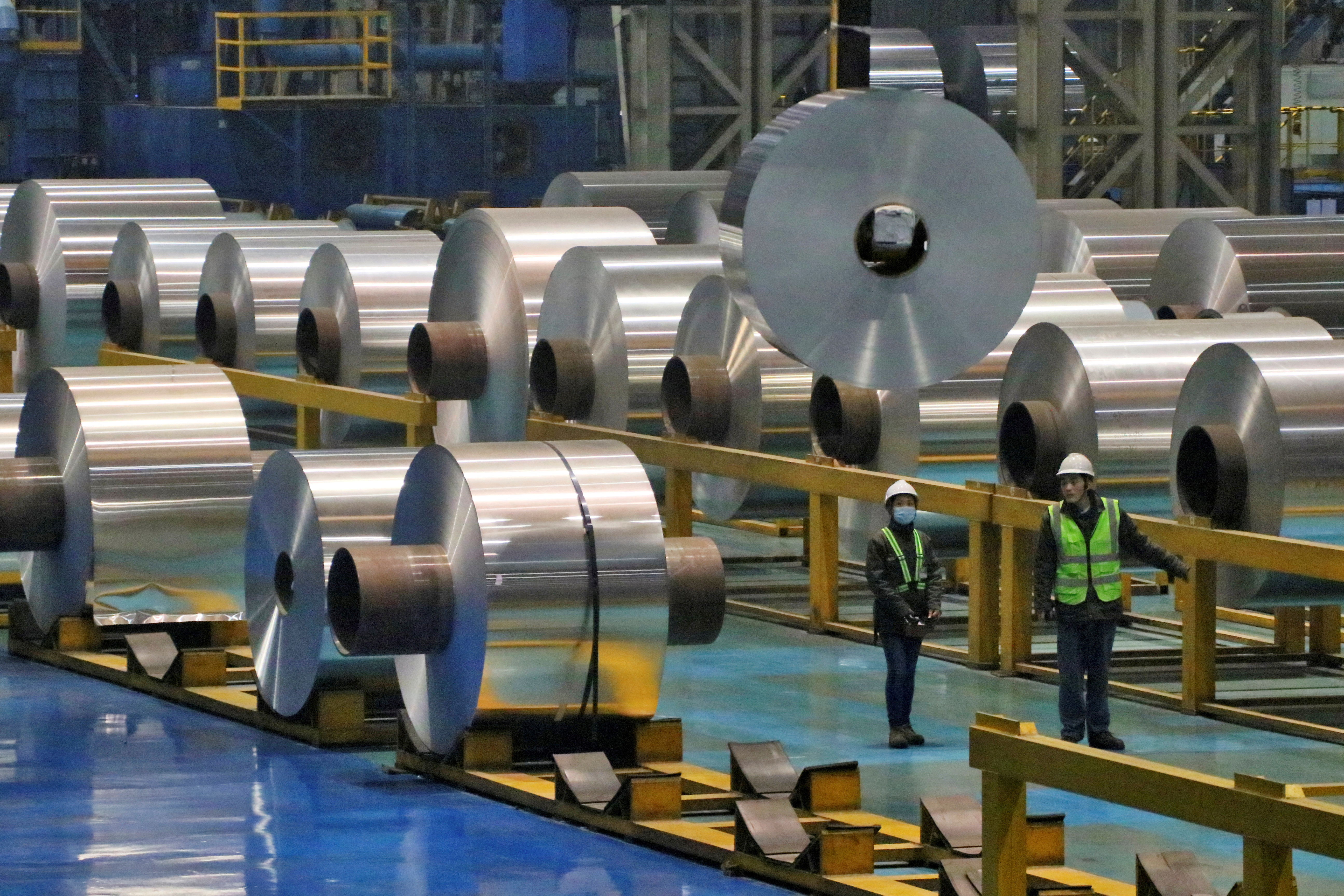
BEIJING, Oct 31 — China's factory activity dropped in October, its third contraction in four months, hurt by soft demand for goods at home as well as signs of weakness in exports.
Economists called on the government to do more to support growth after figures published in a government survey today highlighted that exports, which have powered growth for much of this year, may not be strong enough to offset long-stagnant consumer spending.
"Insufficient demand is increasing downward pressure on the economy," said the China Federation of Logistics and Purchasing's analyst Zhang Liqun.
The National Bureau of Statistics data revealed that the official manufacturing Purchasing Managers' Index (PMI) fell to 49.3 from 50.1 in September. That missed a forecast of 50.0 from a Reuters poll, though the first month of a quarter is typically the weakest.
China's trade surplus with the world is on track to top last year's US$1.2 trillion (RM4.87 trillion) due to strength in exports. But in October, factory activity weakened as overseas Christmas-related orders, which were front-loaded in September, cooled.
It was also hurt when consumer spending, which climbed during China's long National Day holiday in the first week of October, fizzled out afterwards.
Sub-indexes for new orders overall and for new export orders both stayed in contraction territory in October. Production and purchasing activity also slipped into contraction from expansion.

More subsidies could help
Pinpoint Asset Management chief economist Zhang Zhiwei said that if external demand weakens in 2027, "China will need more significant policy support to boost domestic demand."
Soochow Securities chief economist Lu Zhe called for expanding subsidies for mortgage interest payments "to shore up household confidence and anchor sentiment."
He added that extending subsidies for loan interest payments to investment projects would help alleviate the current shortage of viable fixed-asset investments.
The non-manufacturing PMI, which covers services and construction, also dropped to 49.7 from 50.2 in September.
The readings are compiled from purchasing managers' reports on whether conditions improved, worsened, or remained unchanged in areas such as new orders, output, and employment compared with the previous month. A reading above 50 signals expansion, while one below 50 indicates contraction.
Some manufacturing sectors were doing well.
The survey showed that production and new orders sub-indexes for railway, shipbuilding, aerospace equipment, and computer, communications, and electronics manufacturing were all at or above 53.0.
Artificial intelligence (AI)-related firms in particular have reported strong earnings growth, such as high-speed optical module maker Zhongji Innolight, whose products connect servers and switches in AI data centres. It posted a near tripling in third-quarter net profit.
But the lacklustre domestic market and rising costs have weighed on many old-school manufacturers and property-linked firms. One example is custom furniture maker Oppein Home, which saw net profit plunge 80 per cent during the quarter.
Nonetheless, China's economy is expected to meet the country's 4.5 per cent to 5.0 per cent annual growth target without additional stimulus measures after third-quarter growth rebounded to 4.5 per cent from 4.3 per cent in April-June.