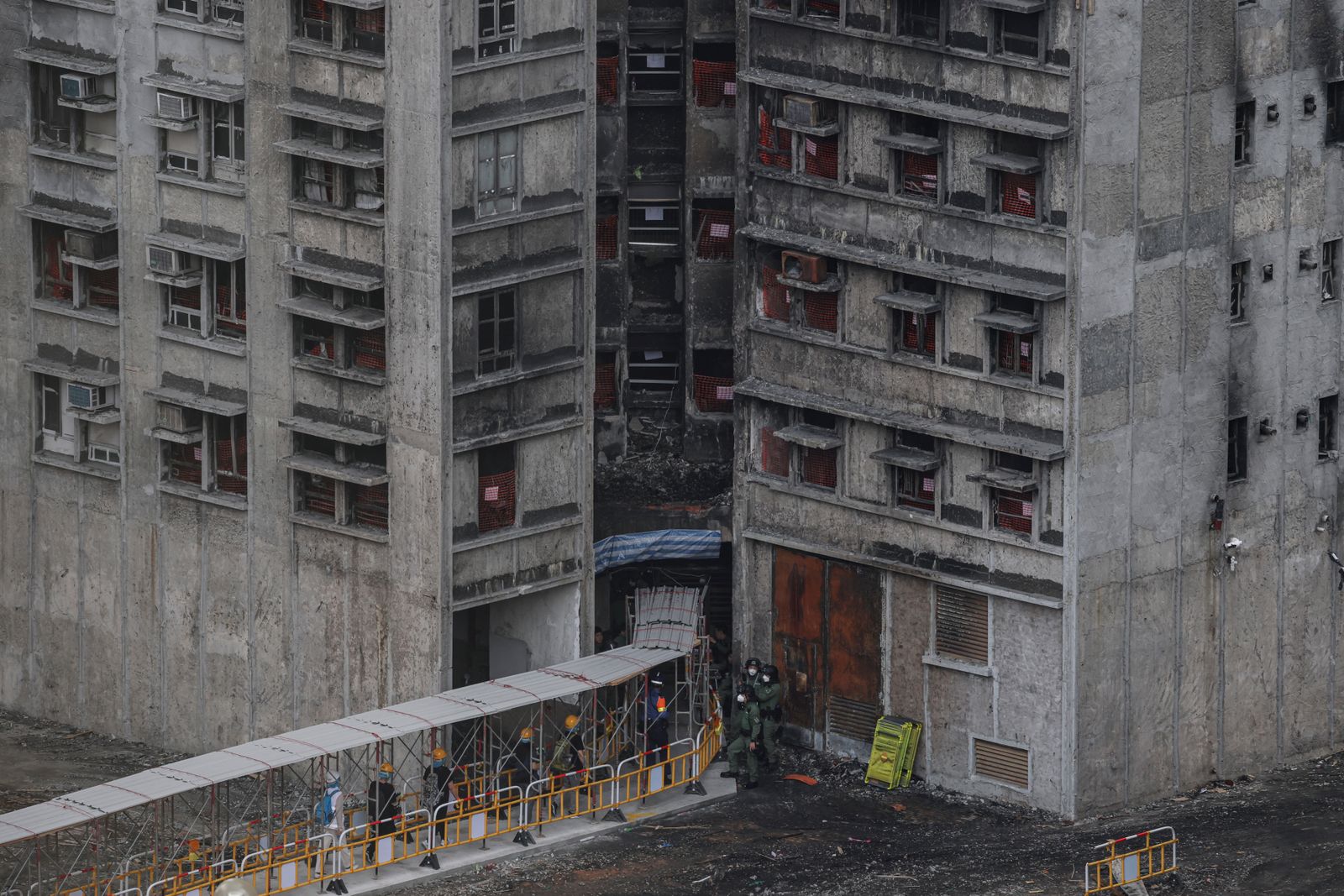
HONG KONG, Oct 30 — A deadly fire at a Hong Kong housing estate has exposed how bid-rigging networks linked to criminal gangs exploited weaknesses in the city’s lucrative building renovation industry to influence contracts worth hundreds of millions of dollars.
Organised crime groups known as triads were mentioned more than 40 times in the report on the government-subsidised Wang Fuk Court inferno, which killed 168 people and displaced thousands of residents.
In response to the report’s findings, the government proposed to make bid-rigging in building renovation a criminal offence, punishable by up to 10 years in prison and a HK$10 million (RM5.17 million) fine. Laws against triads will also be tightened.
“After all these years, the syndicates are so sophisticated that they make use of all the legal loopholes,” said Chiu Yan Loy, founder and spokesperson of the All-Hong Kong Owners’ Anti-Corruption and Anti-Bid-Rigging Alliance.
Some networks delay distributing profits for months and use channels including cryptocurrencies, making money flows difficult to trace, he added.
Lawyers and law enforcement officers say the new offence will only work if it helps investigators gather hard evidence.
“We’re talking about offences that exist in a kind of twilight world. There aren’t always transactions between offenders, bribery or a paper trail to prove collusive behaviour or a cartel,” said one law enforcement officer, who declined to be identified due to the sensitivity of the issue.
Loose regulatory framework
Triad gangs — fraternal brotherhoods whose members swear blood oaths of loyalty and secrecy — have for decades been linked to extortion, prostitution, drug trafficking and loan-sharking.
Less prominent than in the 1980s and 1990s, they remain active and operate more complex white-collar scams, police and academics say.
The report explained that loose regulation and lax enforcement around vetting and hiring contractors let them enter the construction ecosystem.
Industry experts say bid rigging worsened when the government introduced hundreds of millions in subsidies in 2012 alongside a scheme requiring owners to repair buildings more than 30 years old, creating a lucrative market for contractors.
Tommy Leung, an associate professor at Wake Forest University, said his research showed renovation prices rose about 40 per cent after the scheme began.
Bid-rigging at play
The Wang Fuk Court renovation, whose cost rose from an initial HK$152 million estimate to more than HK$330 million, provides a window into alleged methods used to manipulate projects.
According to the report, the alleged scheme began with gaining influence over the consultant who helps owners select contractors.
Will Power Architects secured that role with a HK$220,000 bid, well below an estimated HK$500,000 market rate, then issued misleading tender assessments, including giving main contractor Prestige Construction full marks for safety compliance despite previous convictions.
Authorities have brought at least 25 criminal charges related to Wang Fuk Court, which housed more than 5,000 people in eight 31-storey towers, against Prestige, Will Power and seven individuals. The report did not say whether the firms had triad links.
Prestige and Will Power could not be reached for comment.
Security Secretary Chris Tang, who is also a former police chief, today said the government would “dismantle the criminal networks behind such activities”.
Hong Kong now plans to give law enforcement greater investigative powers, set up a joint task force involving police, the Independent Commission Against Corruption and Competition Commission, and a new bureau overseeing renovation work.
Some former Wang Fuk Court residents were unconvinced.
“It’s just a slogan. They’ll say ‘we’ll crack down on bid-rigging’, but ultimately, nothing gets done,” said Betty, who declined to give her full name.