

KUALA LUMPUR, Oct 6 — Piping and cabling works for the Littoral Combat Ship (LCS) 1 and LCS 2 projects remain behind schedule, potentially affecting subsequent construction activities and the physical handover (PHO) target for LCS 1.
According to the Auditor-General’s Report (LKAN) 2/2026, as of June 25, piping works for LCS 1 and LCS 2 had reached only 87.70 per cent and 74.73 per cent respectively, against the 100 per cent target, representing delays of 12.30 per cent and 25.27 per cent.
The delays involved 4,113 pipe spools following design changes that required rework, including pipe rerouting to meet performance targets and resolve clashing issues.
Meanwhile, cabling works for LCS 1 and LCS 2 had reached 51.41 per cent and 43.49 per cent respectively, against the 100 per cent target, representing delays of 48.59 per cent and 56.51 per cent.
According to the LKAN, the cabling delays were partly due to rework following design revisions involving 95 changes to cable trays and 85 changes to penetrations.
The report said delays in piping and cabling works, which form part of the shipbuilding process, risk affecting subsequent activities and the achievement of the PHO target for LCS 1.
Based on feedback from the Defence Ministry (MINDEF) on July 20 and August 13, piping works for LCS 1 and LCS 2 used a combination of pipe spools based on the original and revised designs, while LCS 3 to LCS 5 used the revised design entirely.
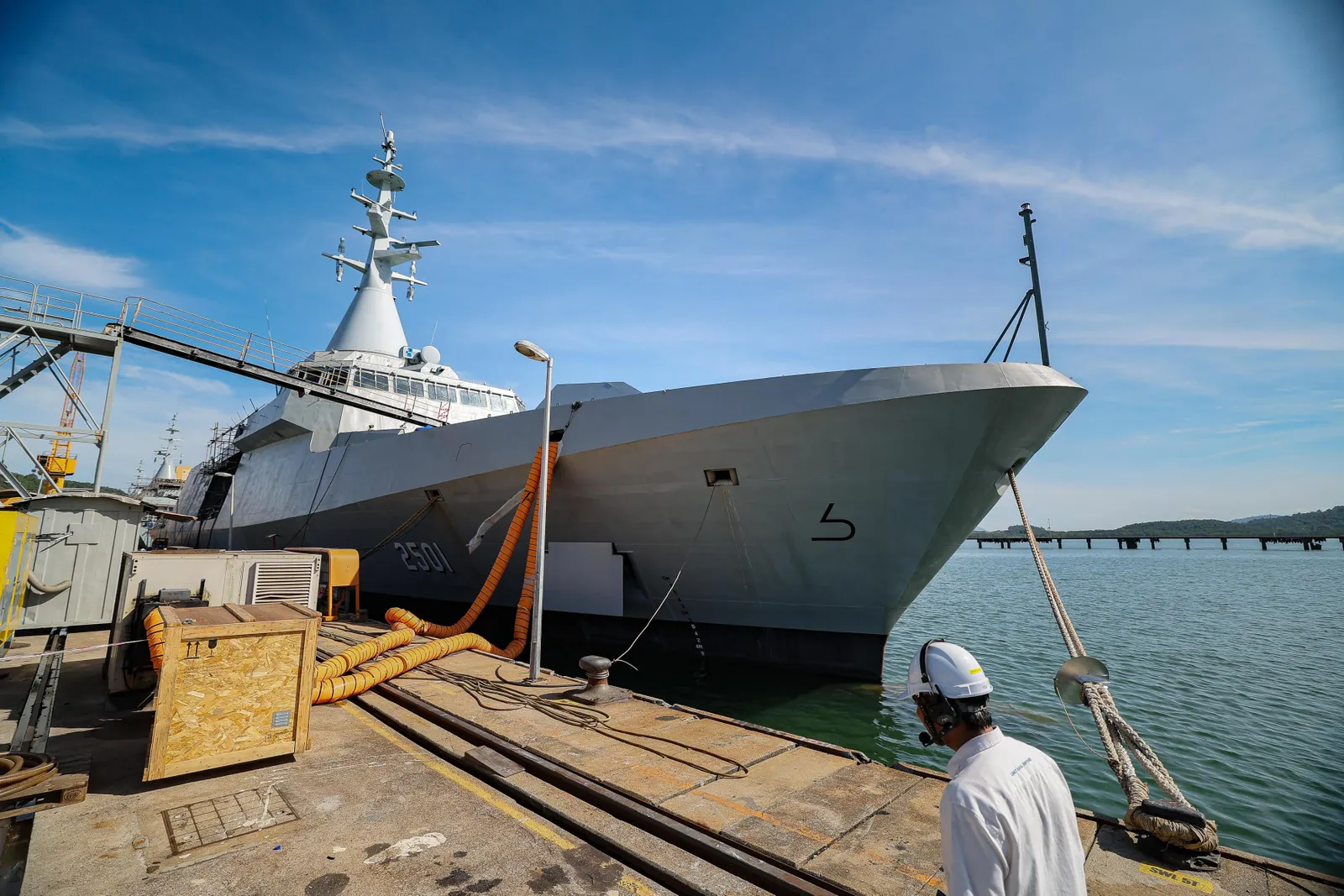
The delays were first identified in November 2025 following observations by the Design Authority-Naval Group. As of July 2026, piping works for LCS 1 had reached 100 per cent, while LCS 2 had reached 96 per cent.
MINDEF said the improved progress was partly due to the contractor’s initiative to introduce three work shifts to accelerate the completion of the vessels from January 23, 2024.
However, the LCS Project Management Team (PPLCS) was unable to verify the reported progress of the piping and cabling works because, as of July 2026, the contractor had yet to submit reports or evidence showing that the works had been carried out in line with the reported progress.
PPLCS will only review and verify progress formally submitted by the contractor, with only work that has been physically verified and supported by complete documentation recognised as confirmed progress.
PPLCS was also informed that actual physical progress for certain activities was higher than the verified progress. However, it stressed that progress records were based solely on work that had been verified and confirmed, while work that had yet to undergo the verification process would not be taken into account.