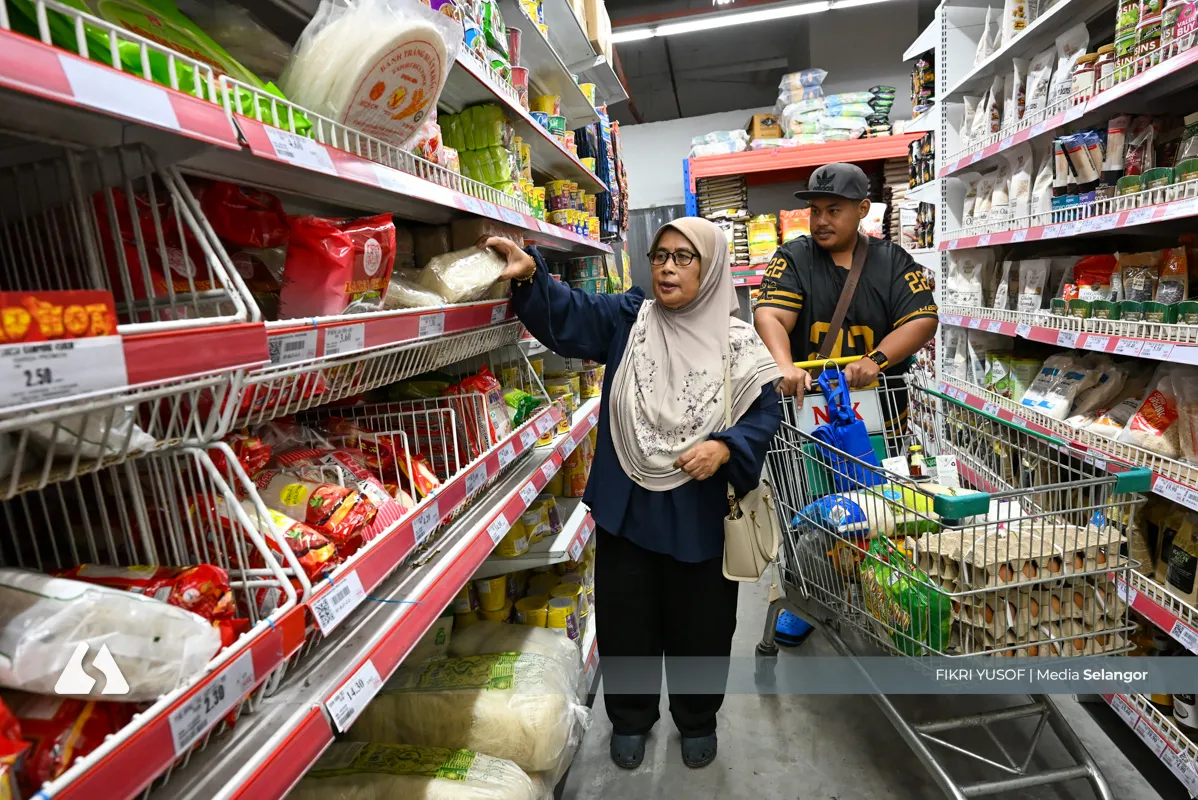

SHAH ALAM, Oct 9 — The way Malaysians shop is changing, with consumers moving between online platforms and brick-and-mortar stores depending on what offers them the most convenience, value and confidence.
For smaller retailers, however, the shift online is bringing tougher price competitions as consumers compare products and deals within minutes.
Malaysian Retail Chain Association (MRCA) retail division head Marcus Chew said Malaysian consumers have become increasingly “channel neutral”, with shoppers moving between online and physical stores as part of the purchasing process.
“Five years ago, we tended to separate consumers into online shoppers and physical-store shoppers. Today, the same customer moves between both channels very naturally.
“They may discover a product on social media, compare prices on an e-commerce platform, visit a physical store to experience it, and eventually purchase through whichever channel gives them the best combination of convenience, value and confidence,” he told Media Selangor.
According to the Statistics Department (DOSM), online shopping has grown significantly, with business-to-consumer (B2C) e-commerce income reaching RM374.7 billion in 2024, an 11.3 per cent increase from the previous year.
However, Chew said the growth of online shopping does not mean physical retail is disappearing, as consumers are just becoming more intentional about visiting stores and expecting more than just products on shelves.
“A physical store needs to provide experience, service, trust, discovery and human interaction,” he said, adding that the future of retail is therefore not about choosing between online and offline channels, but integrating both effectively.

Purchasing power, marketing budgets
Meanwhile, SME Association of Malaysia president Chin Chee Seong said frequent promotions, vouchers, discounts and free delivery have further pressured prices as smaller SMEs often lack the purchasing power and marketing budget of larger brands and established online sellers.
“Smaller SMEs may not have the same economies of scale, purchasing power or marketing budgets as larger companies and established online sellers.
“Their margins are already relatively tight, so they cannot continuously compete by lowering prices,” he told Media Selangor.
Chin added that another challenge is the increasing cost of online marketing and digital advertising, as having an online store or being listed on an e-commerce platform does not automatically mean customers will find you.
“SMEs still need to invest in marketing to create visibility, build their brand and, importantly, gain consumers’ confidence in their platform and products.
“Of course, there are also lower-cost ways of reaching consumers through social media platforms such as TikTok, Facebook and Instagram. SMEs should make good use of these channels.
“However, creating content, running campaigns and consistently building an online presence still require time, manpower, skills and, in many cases, marketing expenditure,” he said.
“This is why I believe SMEs should not compete purely on price. They need to differentiate themselves through product quality, service, reliability, specialisation and customer experience, while using digital marketing in a practical and cost-effective manner,” he said.

Convenience the main decider
When asked about the main reasons consumers prioritise online shopping over visiting a physical store, Chew said convenience is the strongest factor driving consumers towards online shopping, followed by easy price comparisons, promotions and wider access to products.
“Consumers can compare products, check reviews, find promotions and complete a purchase within minutes without travelling, finding parking or waiting in a queue.
“Price transparency is another major factor because online platforms make it extremely easy to compare prices across different sellers,” he said.
He added consumers are also becoming increasingly conscious of the time factor, particularly when buying routine and low-risk products.
“If a purchase is routine and low-risk, consumers will naturally ask themselves: Why should I spend one or two hours going out when I can complete this purchase in a few minutes?
“This means physical retailers must give customers a stronger reason to make that trip,” Chew explained.