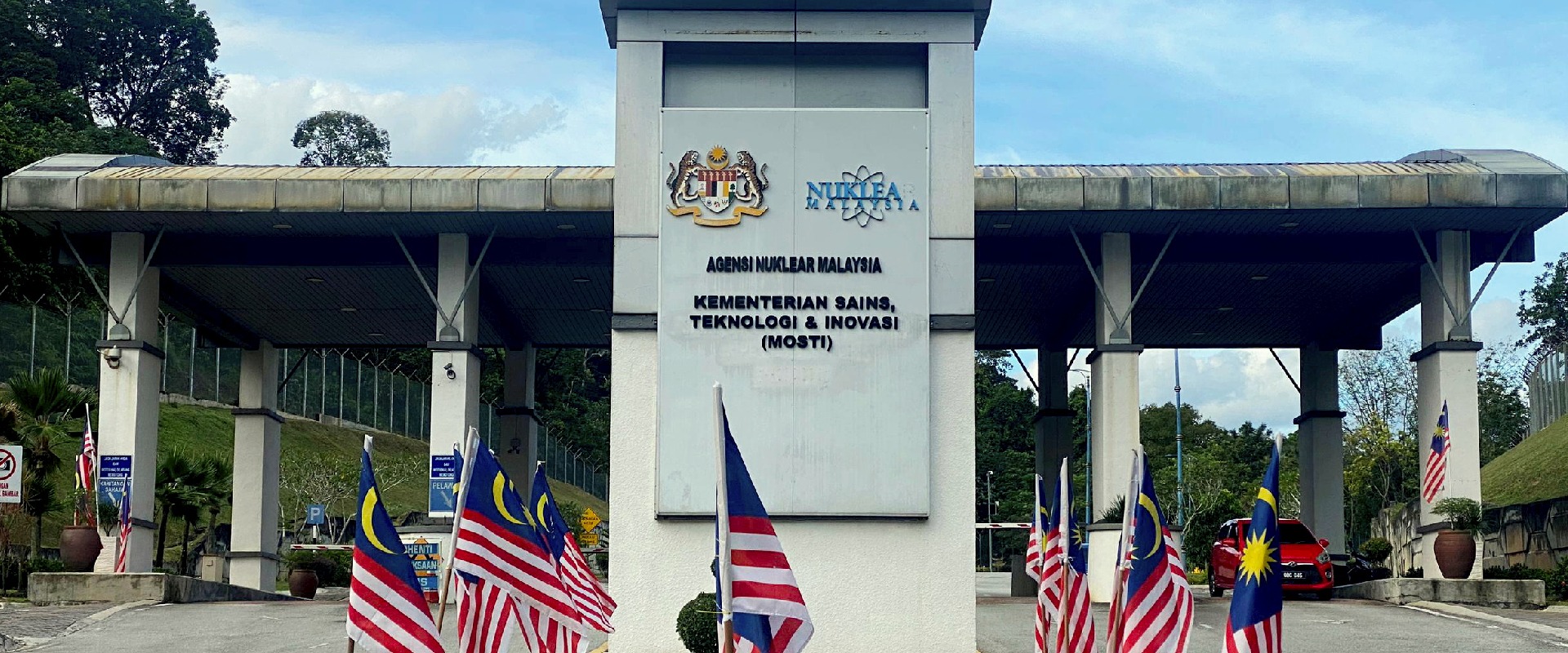
KUALA LUMPUR, Sept 23 — The Nuclear Agency (Nuklear Malaysia) plans to develop a larger research reactor to explore new areas, including semiconductor materials and advanced technologies, in line with future needs.
Its director-general Muhammad Rawi Mohamed Zin said the facility would complement the existing capabilities of the 44-year-old TRIGA PUSPATI Reactor (RTP), while opening up new avenues for research into more advanced nuclear technologies.
He said the RTP currently produces neutrons for research purposes and is not used to generate electricity.
“Our reactor has a capacity of one megawatt thermal (MWt), which is not high. It is one of the smaller research reactors, and there are many reactors around the world that are as old as ours and use the same technology.
“However, many new technologies for research reactors have since been developed. That is why we intend to build a larger nuclear research reactor in the country when the need for such technology arises,” he said on Bernama’s Fokus 15 programme today.
Rawi said the RTP, which kicked off in Bangi on June 28, 1982, is not only a research facility but also an educational platform for the public to understand nuclear technology, science, and the engineering and regulatory aspects of the technology.
He said efforts to familiarise the public with nuclear technology have been boosted through the “Nuclear for the People” initiative, including via mass media.
He said Nuklear Malaysia has promoted nuclear technology in the country since the 1970s, with efforts continuing as the technology is still perceived as unfamiliar and dangerous.
“Not everything about nuclear technology is dangerous, and there are actually many applications that can benefit society.
“This time, however, we want to bring nuclear technology closer to the public, so people can overcome their fears and understand its role in developing society,” he said.
Rawi said the use of nuclear technology in Malaysia is subject to regulatory controls and international standards, including monitoring by the International Atomic Energy Agency (IAEA).
He added that Malaysia is also committed to the Treaty on the Non-Proliferation of Nuclear Weapons (NPT), which it signed in 1968.
“There is no need for concern in Malaysia or internationally, as all this is controlled through science, engineering and legislation.
“In future, we hope nuclear technology will become more familiar to the public and that people will experience its benefits, such as when electricity used to charge our phones is generated from nuclear energy,” Rawi said.