SAN FRANCISCO, Sept 23 — When Apple's new desktop computers start shipping today, the company's executives will make an unusual pitch to corporate buyers: they are cheaper than renting data centres.
Apple's upgraded Mac Minis and Mac Studios, which can cost nearly US$20,000 (RM81,400) and handle AI tasks locally, will go head-to-head with new desktop machines being rolled out by Nvidia and PC makers that are expected to be the focus of a Microsoft Windows event in San Francisco next month.
The new Macs are aimed at more intensive AI tasks, such as writing code or carrying out complex business work, without paying for ‘tokens’ — the fundamental unit of AI computing — from cloud leaders such as OpenAI or Anthropic.
Apple hopes its experience squeezing performance out of battery-powered devices such as iPhones will help it take a bite out of Microsoft's home turf.
But it faces a steep challenge: Apple has about 4.6 per cent of the enterprise desktop market compared with 91.3 per cent for Windows, according to IDC's Linn Huang.
Apple co-founder Steve Jobs was famously ambivalent about enterprise computing because end users could not pick their favourite products. But Apple has found itself in a strong position for AI desktops, thanks in part to a longstanding obsession with saving power.
When Apple rolled out its first Apple Silicon chips in 2020, it took two components — computing and memory — that were separate in PCs and brought them together in a unified memory architecture for better battery life.
That close connection between computing and memory, which Nvidia and others have only recently shifted towards, had the side effect of making Macs well suited to AI.
Apple started selling out of Mac Minis as OpenClaw, an open-source agentic AI tool, took off in markets such as China.
While Mac Studios were initially aimed at content creators editing videos or music, Apple has quietly added advanced AI features, such as bespoke chip-to-chip networking called RDMA over Thunderbolt, over the past two years.
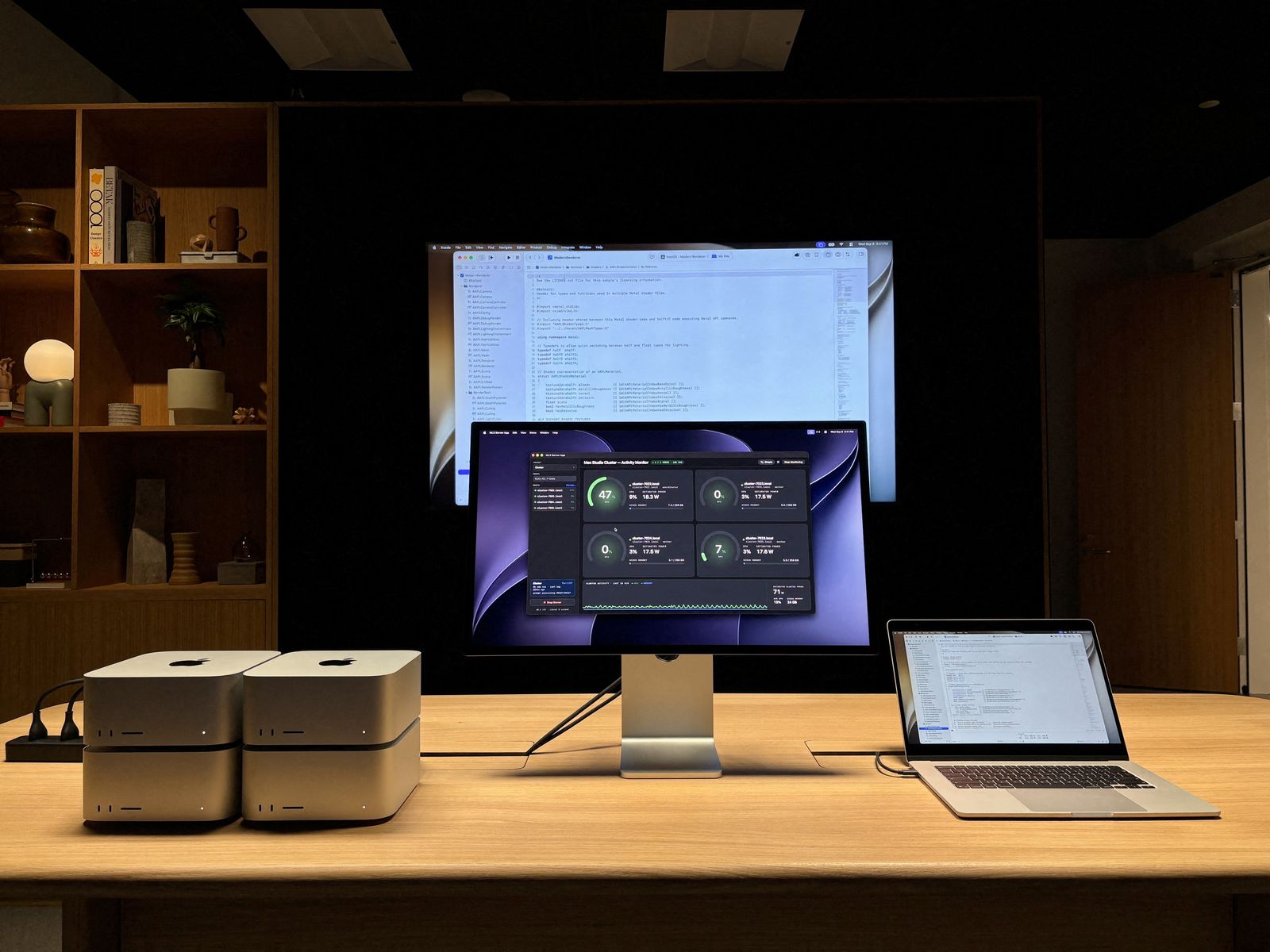
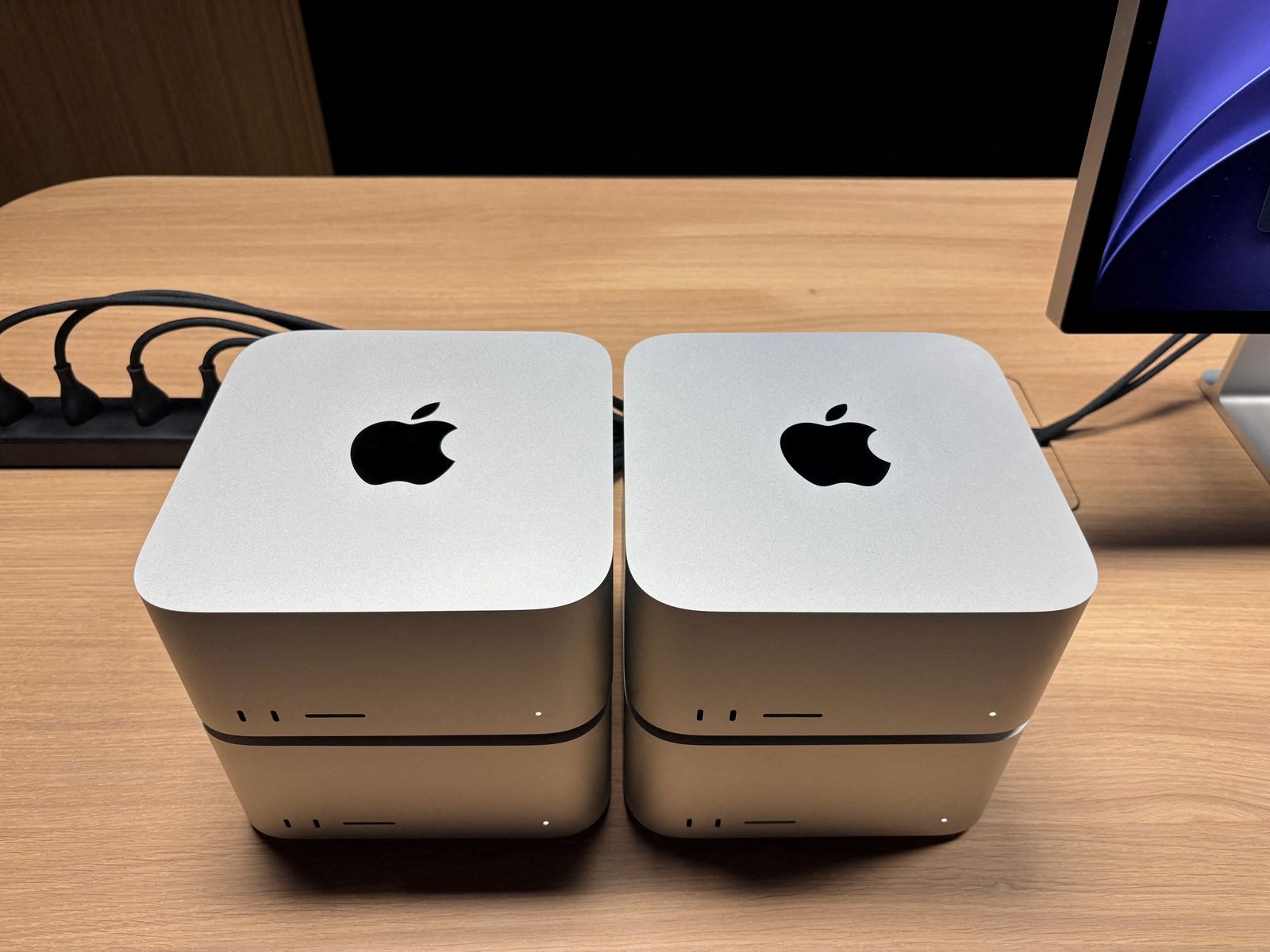
At its launch event this month, Apple showed four Mac Studios linked together to run an AI model with a trillion parameters — a measure of complexity — to find and fix a graphics coding bug.
Such tasks usually require a data centre, but the stack of Macs runs off a single wall outlet.
"Once you have the machine on your desk, you've paid for it. And I believe we provide absolutely great value, not only in terms of performance, but cost," said Johny Srouji, Apple's chief hardware officer.
"There's no cost per token. You're just using the machine again and again."
Microsoft is pursuing the same market for what chief executive Satya Nadella calls the "unmetered intelligence" of on-device AI. Nadella has also said Microsoft plans to roll many of its AI features into a "super app" for Windows.
But Microsoft's historic dominance of corporate computing has meant supporting hardware from a huge range of vendors, which can create more work for Windows developers seeking to get the most out of a given chip.
Reached for comment, Microsoft said it had been working with chip partners to streamline AI workloads with its Windows ML tools and that features such as RDMA were an active area of investment.
Nvidia declined to comment, but at the launch of its new PC chip this summer, chief executive Jensen Huang played down any intention to compete directly with Apple, saying Nvidia was focused on expanding what Windows PCs could accomplish.
Nvidia's stronghold remains the data centre.
Srouji said Apple was pitching corporate buyers on the idea that on-device AI models developed on its devices could scale up to its most expensive Mac Studios or down to its cheapest iPhones and iPads because their chips share common principles and designs.
"There is so much power you can pump into the data centre," Srouji said.
"We're offering a variety of products that customers can choose based on their own needs: Which computer, which product do I need?"