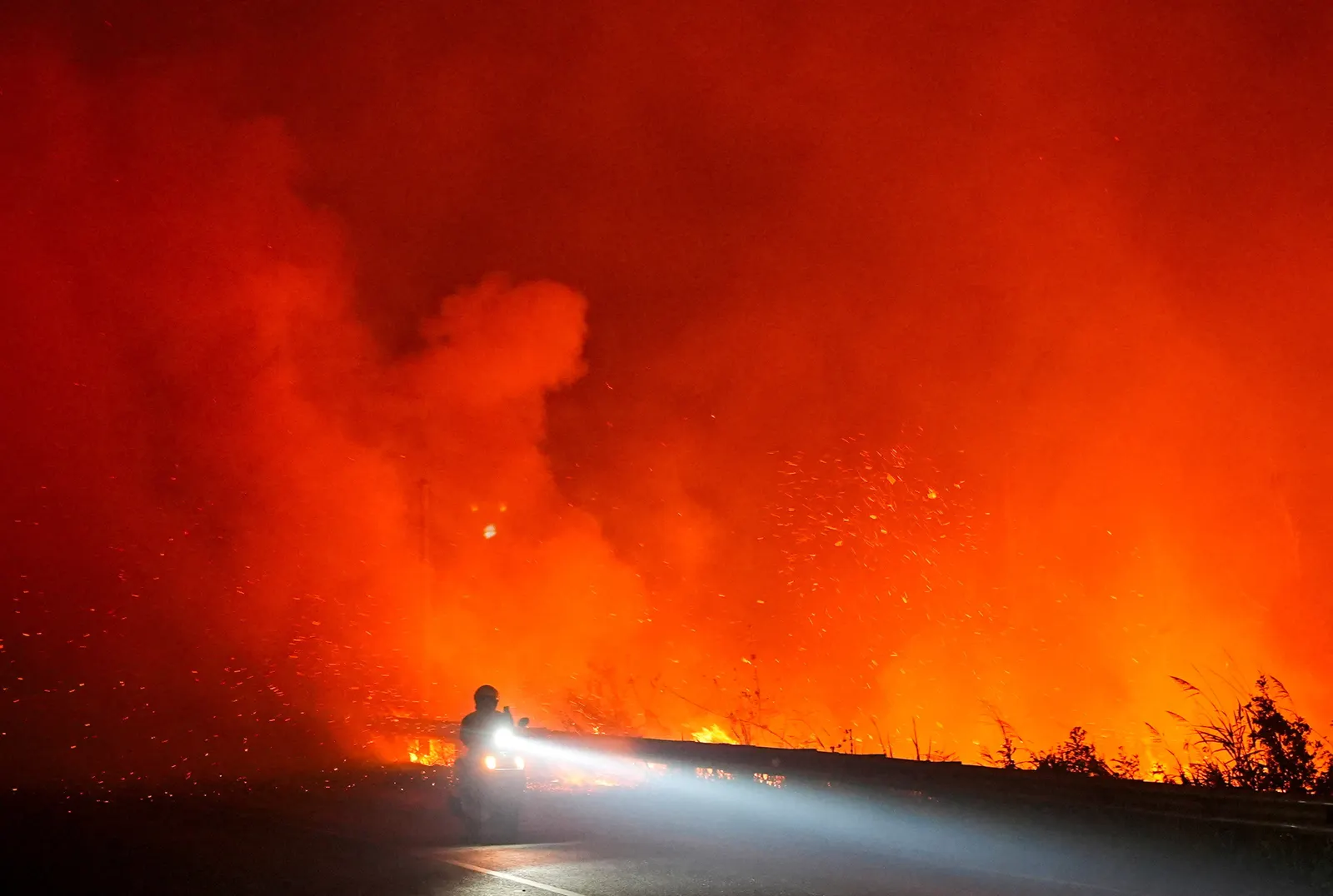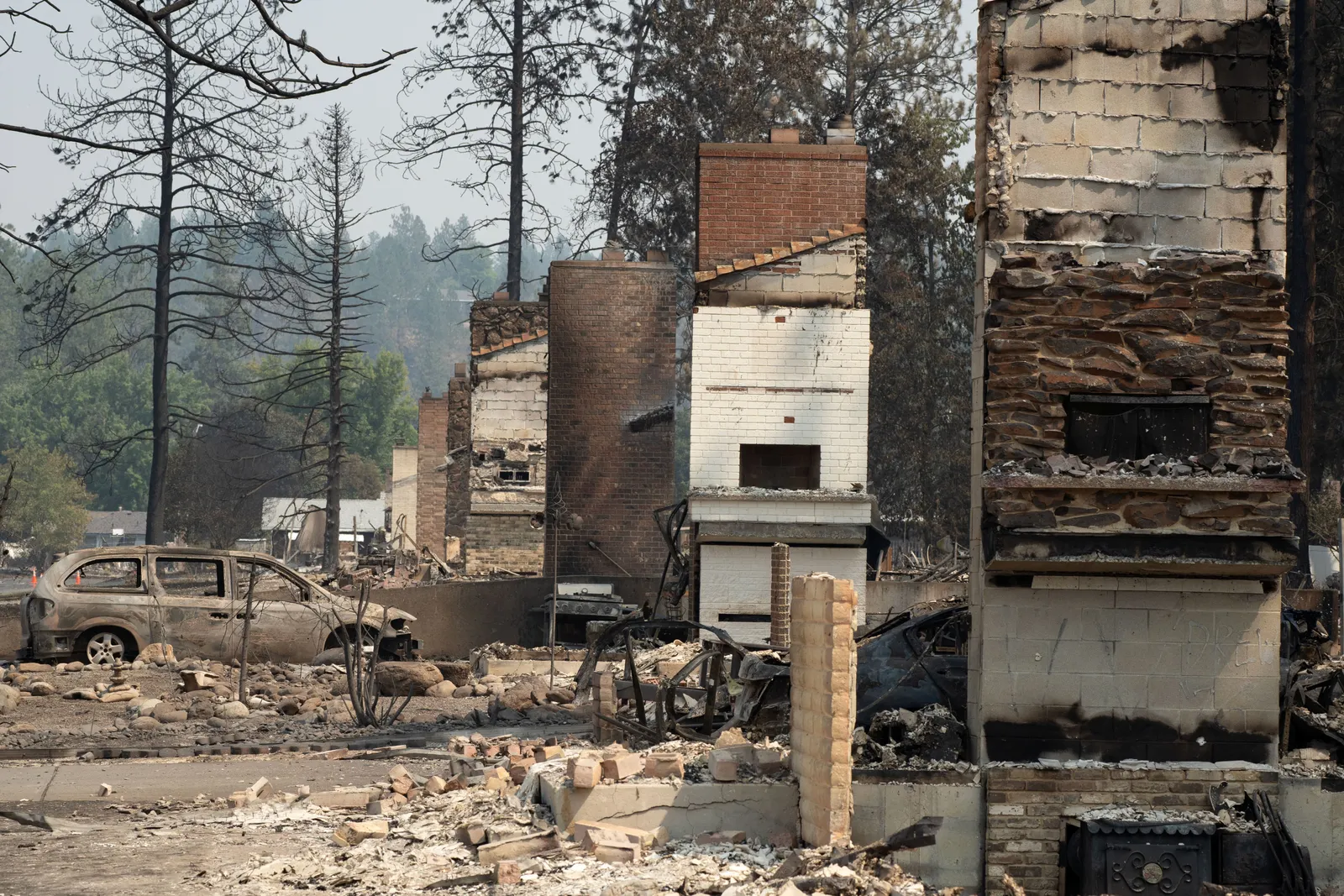
SPOKANE, Washington, Aug 5 — Wildfires burning on the outskirts of Spokane, Washington, for a third day have destroyed at least 700 buildings and forced tens of thousands of people to flee their homes in and around the state's second-largest city.
The cluster of three blazes has become the top firefighting priority in the US, including the drought-stricken Pacific Northwest, where dozens of major wildfires have been burning for weeks, worsening air quality across a wide region.
The Spokane-area fires have scorched more than 3,200 hectares since erupting on Saturday on the northern edge of the city, which has a population of about 230,000 and lies near the Idaho border west of the Rocky Mountain foothills.
Video footage from the fire zone showed a miles-long column of smoke drifting through treetops as aerial tankers dropped fire retardant over the flames.
Large plumes of smoke rose north of the city as the fires consumed forest land about 6 miles (10km) from downtown Spokane.
Residents flee as flames spread
Kami Fehlig, 58, was among hundreds of residents forced to flee before wind-driven flames engulfed their homes over the weekend.
Standing among the charred remains of her home while searching for keepsakes, Fehlig recalled how she and her husband watched in disbelief as the fire jumped the narrow Spokane River and swept towards their neighbourhood on Saturday.
"About 30 minutes before it jumped the river, my husband and I were seeing how bad it was, and we told the kids, 'We don't want to scare you, but we think you should start preparing to grab some things.'"
The couple and their two daughters, both in their 20s, packed their cars with the family dog and a handful of belongings, including a wedding album, pet supplies and baby books.
Moments later, the electricity failed and the family drove to safety.
"It was, 'Go now, go now,'" Fehlig said.
They later discovered their home and chicken coop had been destroyed, along with much of their surrounding community.
"This particular neighbourhood has been pretty wiped out," she said.

Thousands evacuated
By Monday, about 64,000 people were under mandatory evacuation orders, up from 4,000 a day earlier, according to incident command spokesperson Benjamin Cossel.
At least 700 structures, most of them homes, have been destroyed. Aerial infrared surveys also indicated that another 400 buildings may have been damaged or destroyed.
The cause of the fires remains under investigation.
Authorities fear fatalities
Although no injuries or deaths have been confirmed, Cossel warned that the situation could change as emergency crews gain access to devastated communities.
"There's a high probability that will change in the coming days," he told Reuters.
An unspecified number of people have also been reported missing as the fires spread from wooded areas into residential neighbourhoods and commercial districts.
Cossel described the disaster as having evolved "from a wildfire to an urban conflagration".

About 1,100 firefighters were battling the Spokane blazes on Monday, part of more than 29,200 personnel deployed to wildfires across the US, with the largest concentrations in Oregon, Washington and Idaho, according to the National Interagency Fire Center.
The agency said more than 100 large new wildfires erupted across 15 states on Sunday, stretching firefighting resources across the Pacific Northwest.
The Spokane fires are among 15 major wildfires burning in Washington state, where more than 250,000 acres (101,200 hectares) have been scorched.
"This is an extraordinary wildfire season in the Pacific Northwest," Washington Public Lands Commissioner Dave Upthegrove told reporters.
Across the border in Canada's British Columbia, wildfires continued to burn amid record drought conditions that officials described as fuelling "explosive" fire behaviour.
Fire officials hope cooler temperatures and lighter winds on Monday and Tuesday will allow crews to gain ground before extreme heat, low humidity and strong winds return later in the week.
As of Monday, firefighters had achieved zero containment on any of the three Spokane-area fires.
The National Interagency Fire Center has recorded 44,722 wildfires across the US so far this year, the highest number for this point in the year in at least a decade. Nearly 5.2 million acres (2.1 million hectares) have been burned, the largest area for the January-to-early August period since 2022.
Scientists say the worsening wildfire activity seen across North America, Europe and other regions in recent years has been driven largely by human-induced climate change, which has contributed to prolonged droughts and more frequent extreme heat.