



PUCHONG, Aug 2 — Food security and land use risk being lost if Malaysia does not comprehensively explore agrivoltaic technology in the development of the solar industry.
A lecturer from the Faculty of Engineering, Universiti Putra Malaysia (UPM) said the technology allows land to be used for two things simultaneously, namely solar energy generation and agricultural activities.
Associate Professor Mohammad Effendy Yaacob said the rapid development of the solar industry has caused investors to acquire agricultural land to develop large-scale solar farms.
He elaborated that the development of the industry is driven by the annual quota guarantee set by the government through the National Energy Transition Roadmap (NETR) document.
"The solar industry has money and investors, but the land is from agricultural areas. If this situation continues unmonitored, we will lose a lot of land for food production," he said.
Effendy explained that the target quota of 2,000 megawatts (MW) of solar projects per year under the NETR requires about 6,000 acres of land every year until 2050 and will have an impact on the agricultural landscape.
"The total amount could reach 300,000 acres of land. That is very large and will affect the country's agricultural sector," he said.
Effendy added that economic pressure, increased operating costs and the risk of disasters have caused some farmers to sell their land as a way out to improve their standard of living.
"Some farmers told me that they have been living in hardship for decades and want to feel more comfortable. When solar companies offer high prices, they sell.
"We do not reject the solar industry because it brings large investments to the country, but we want dual-functional land use so that the country's food security is not affected," he said.
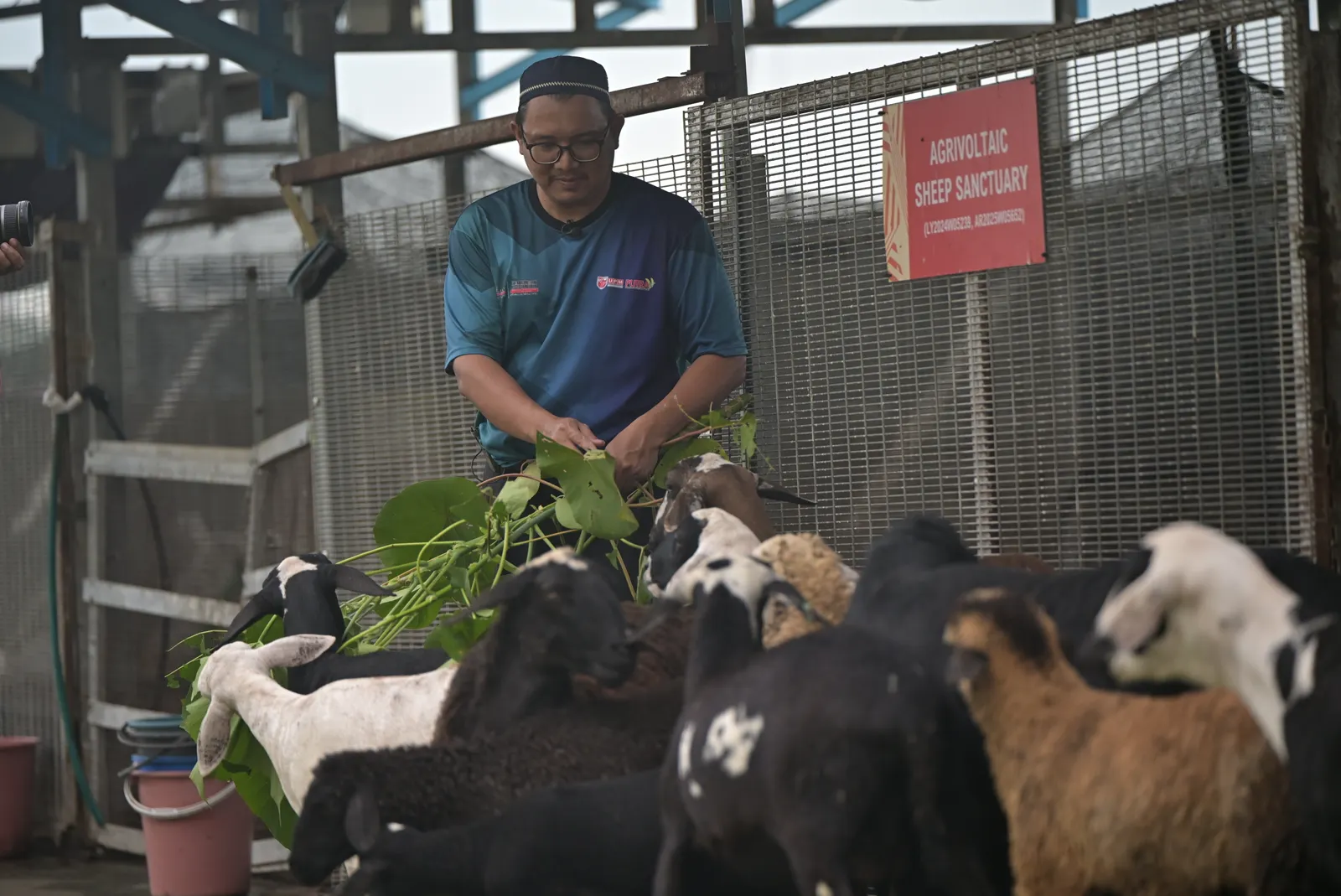
Therefore, Effendy said, the agrivoltaic approach can be a strategic solution by combining agriculture and livestock with solar energy in one land ecosystem simultaneously.
He said the model allows land to be leased to solar operators without sacrificing the original function of agricultural areas, thus helping to maintain the country's food production.
"If there is no government intervention and clear policies, this technology will remain at the research stage only. While we have proven that it can be implemented and benefits the solar industry and agriculture," he said.