KUALA LUMPUR, July 28 — The government has not introduced any price control mechanism for public electric vehicle (EV) charging services. Instead, charging rates are determined by charging station operators based on their respective commercial considerations.
The Investment, Trade, and Industry Ministry (MITI) said that this approach is intended to encourage private sector investment and foster healthy competition in the provision of EV charging services.
“This will, in turn, accelerate the expansion of the public EV charging network across the country,” it said in a written reply to the Dewan Negara, published on the Parliament website today.
MITI was responding to Senator Robert Lau Hui Yew's query on the number of public EV charging stations and whether the prices charged by EV charging station operators are subject to a regulatory framework, price control mechanism, licensing requirements, or government oversight.
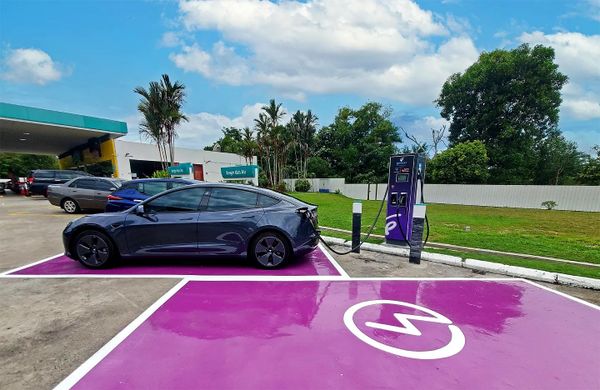
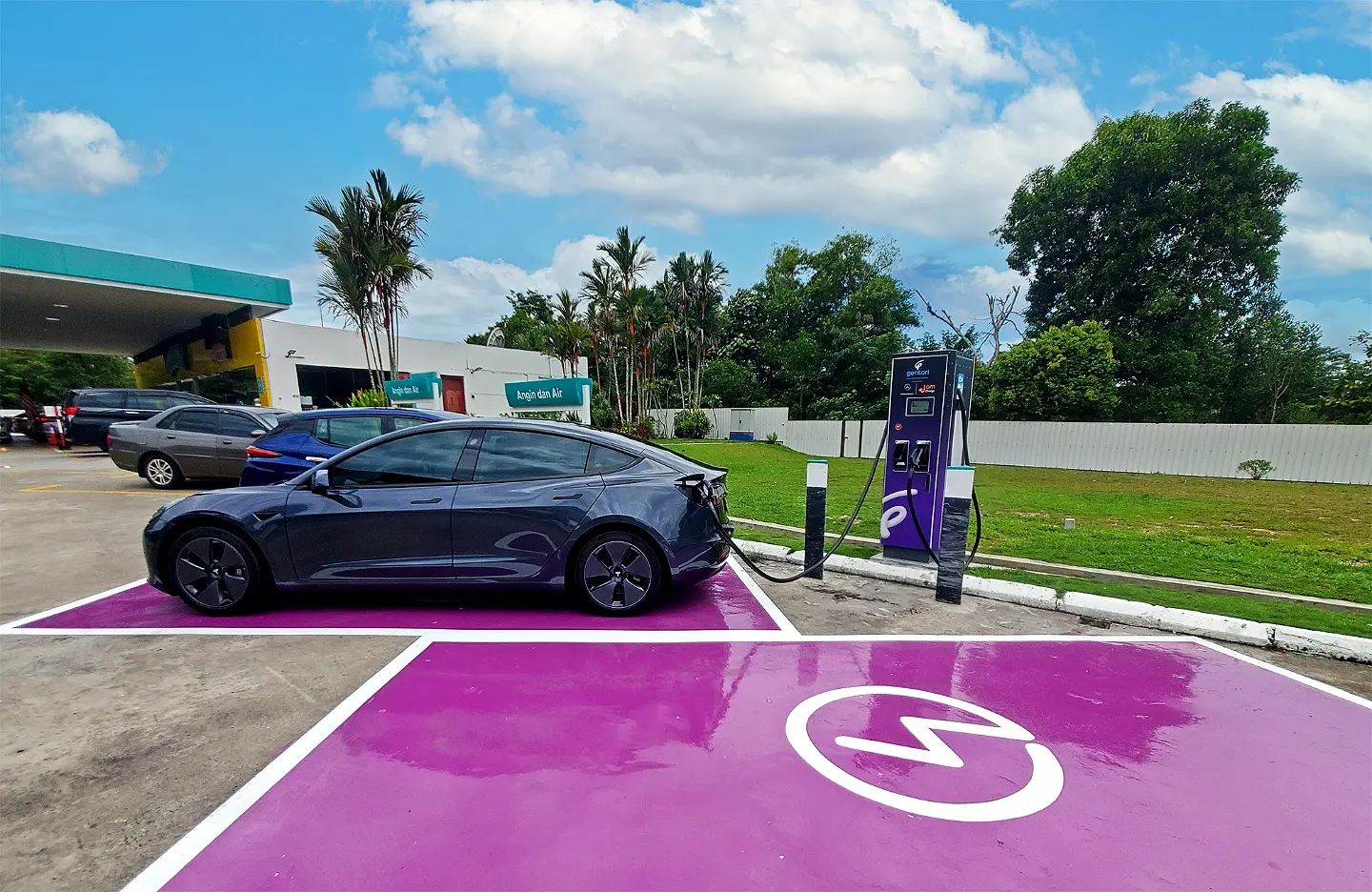
It added that 6,416 public EV chargers had been installed nationwide as of May 31. Of these, 2,143 units (33.4 per cent) are direct current fast chargers, while 4,273 units (66.6 per cent) are alternating current chargers.
Of the total 6,416 chargers, 6,176 units or 96 per cent are located in Peninsular Malaysia, while 208 units are in Sarawak and 32 units in Sabah.
MITI said that although EV charging service rates are not regulated by the government, the development and operation of EV charging facilities remain subject to various regulatory requirements, technical standards, and safety requirements enforced by relevant agencies, including itself, the Energy Commission (ST), and local authorities.
The government has established two key mechanisms to ensure the integrated development of the EV ecosystem.
“The National EV Task Force Meeting, chaired by MITI, and the National EV Steering Committee Meeting, chaired by the Deputy Prime Minister, who is also the Minister of Energy Transition and Water Transformation, are responsible for ensuring the integrated development of the local EV ecosystem,” it said.
Through these platforms, cross-ministerial and inter-agency issues — including regulatory matters, safety, project implementation, charging infrastructure development, and the growth of the EV industry — can be coordinated holistically with industry players and other stakeholders.
As such, the government will continue to ensure that the development of the EV charging network is carried out safely, systematically, and competitively through a comprehensive regulatory framework.
“This includes ongoing collaboration with relevant agencies such as the ST and Tenaga Nasional Bhd in developing a regulatory approach for EV charging fees. At the same time, a conducive market environment will be maintained to encourage private investment and expand consumers’ access to EV charging facilities nationwide,” MITI said.