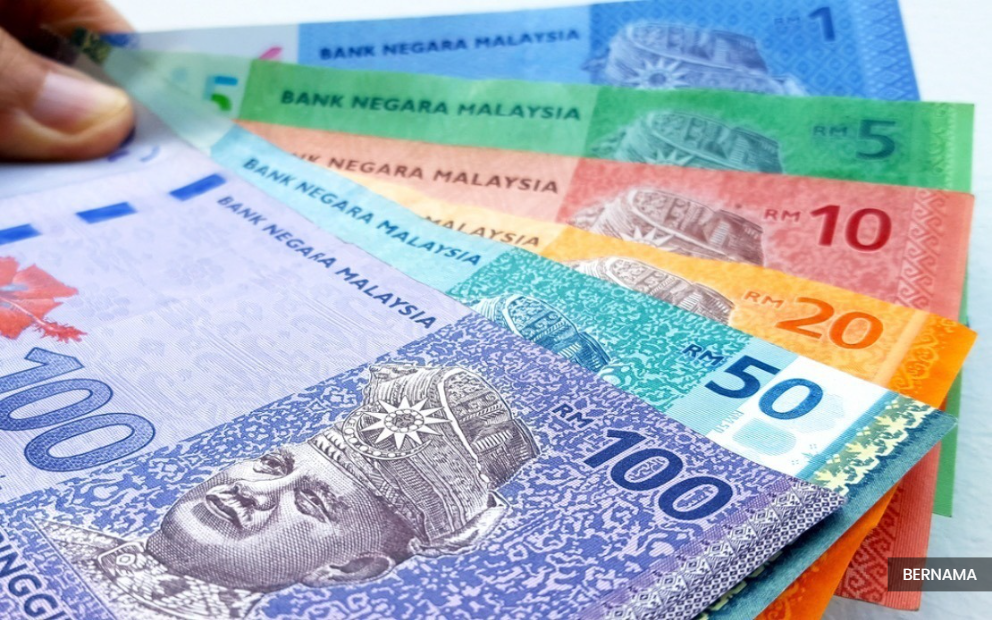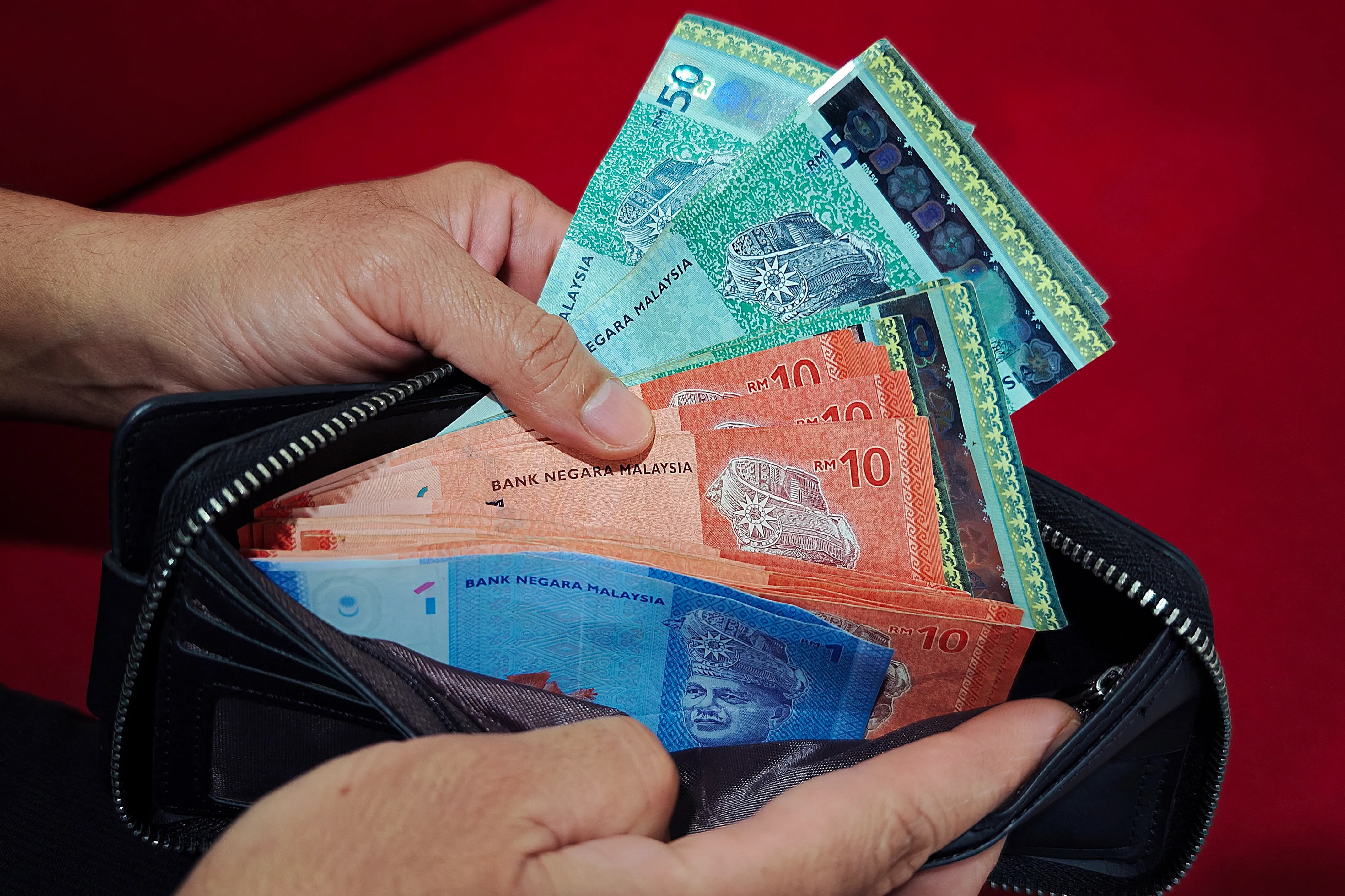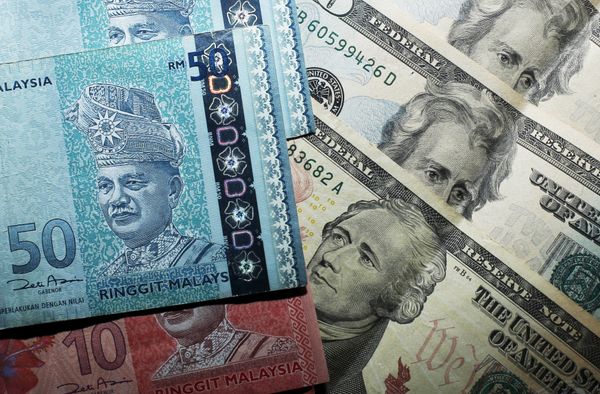
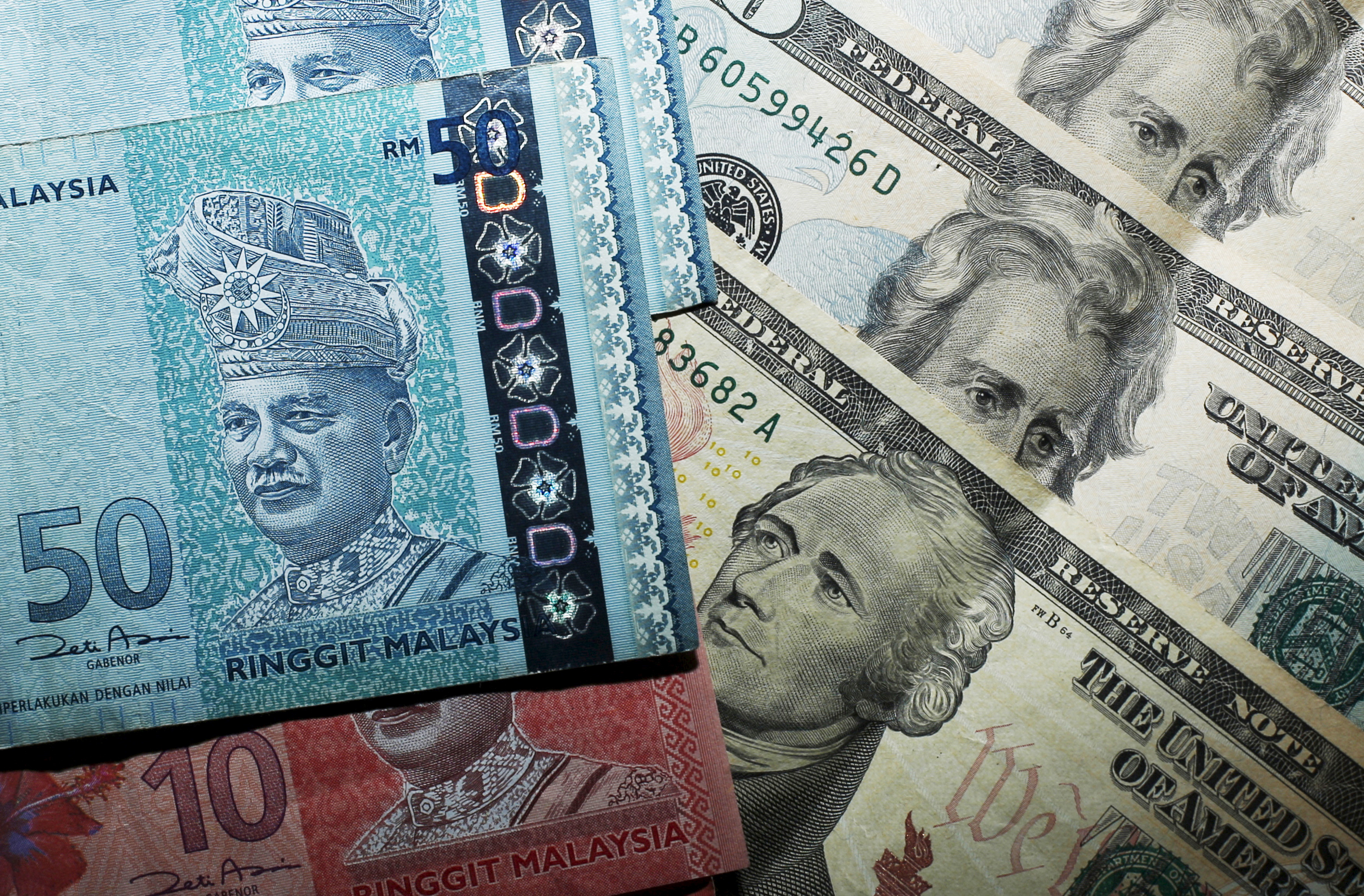
KUALA LUMPUR, July 25 — The ringgit is expected to trade within the RM4.08-RM4.10 range against the greenback next week on caution ahead of key domestic and external events, namely the United States (US) interest rate decision and the Negeri Sembilan state election.
Bank Muamalat Malaysia Bhd chief economist Mohd Afzanizam Abdul Rashid said the spotlight going forward will be on the interest rate decision by the US Federal Reserve (US Fed) and the upcoming state election in Negeri Sembilan on August 1.
“Most economists are expecting the US interest rates to be maintained at 3.5-3.75 per cent. Market participants will focus on the US Federal Open Market Committee statement, especially how committee members assess inflation dynamics going forward, as prevailing crude oil prices have risen substantially in July.
“Hence, next week, we foresee traders and investors being cautious,” he told Bernama.
SPI Asset Management managing partner Stephen Innes expects crude oil prices to be the key driver of the ringgit next week amid uncertainty over the direction of oil prices, while market consensus is that peace will eventually prevail and the US dollar will ease, but said the timing is difficult to predict.
A sustained rise could influence the US Fed’s policy decision if officials become concerned that energy inflation is spreading into other parts of the economy.
“However, Malaysia is an energy exporter, unlike many of its regional peers. This means the ringgit could still weaken against the US dollar in a higher oil price environment while outperforming other Asian currencies,” he said.
Therefore, Innes expects more of the same back-and-forth trading, with USD/MYR likely contained within the RM4.0800 to RM4.0950 range next week.
Kenanga Investment Bank Bhd expects the USD/MYR to trade within 4.09-4.10 next week, with risks skewed towards modest ringgit weakness as the market focus shifts to the US FOMC meeting. It also expects the US Fed to keep rates unchanged at 3.50 per cent-3.75 per cent.
“The markets will also monitor the Bank of England and Bank of Japan policy meetings, alongside the US second quarter advance gross domestic product and core personal consumption expenditures inflation for fresh signals on the US policy outlook.
“Separately, Malaysia retaining a 10 per cent US Section 301 tariff rate, alongside broad exemptions for key export sectors, should help cushion medium-term external trade risks,” Kenanga Investment said in a research note.
This week also saw Brent crude spiking over US$100 per barrel from US$71.57 on July 1, 2026.
On Wednesday (July 22), Deputy Finance Minister Liew Chin Tong said that every US$1 increase in oil prices per barrel is expected to generate an additional RM300 million in government revenue.
Yesterday, the Investment, Trade, and Industry Ministry said that it will continue to engage with the US over the 10 per cent forced labour-related tariff imposed on Malaysian exports effective today.
The new tariff took effect at 12.01am US time on July 24, immediately after the temporary tariff under Section 122 of the 1974 Trade Act expired.
Meanwhile, the Malaysian Statistics Department reported that national trade performance continued to strengthen in June 2026, growing by 44.7 per cent to RM340.9 billion from RM235.6 billion a year earlier, driven by sustained growth in both exports and imports.
Malaysia’s exports expanded 45.4 per cent to RM177.9 billion and imports rose 43.9 per cent to RM163.0 billion, with the trade surplus surging by 64.9 per cent to RM14.9 billion in the month reviewed.
For the week just ended, the ringgit traded mostly higher due to robust Malaysian economic data.
On a Friday-to-Friday basis, the ringgit strengthened to 4.0885/0935 against the US dollar from 4.0930/0990 a week earlier.
The local currency traded higher against a basket of major currencies during the week.
It appreciated against the Japanese yen to 2.4976/5008 from 2.5208/5246, rose vis-à-vis the euro to 4.6556/6613 from 4.6824/6893, and gained against the British pound to 5.4442/4509 from 5.5018/5099 previously.
The ringgit also traded higher against ASEAN currencies.
It went up against the Singapore dollar to 3.1667/1708 from 3.1709/1758, edged up against the Indonesian rupiah to 227.6/227.9 from 228.4/228.8, climbed against the Philippine peso to 6.61/6.62 from 6.64/6.66 and improved against the Thai baht to 12.1414/1606 from 12.1743/1965 last Friday.