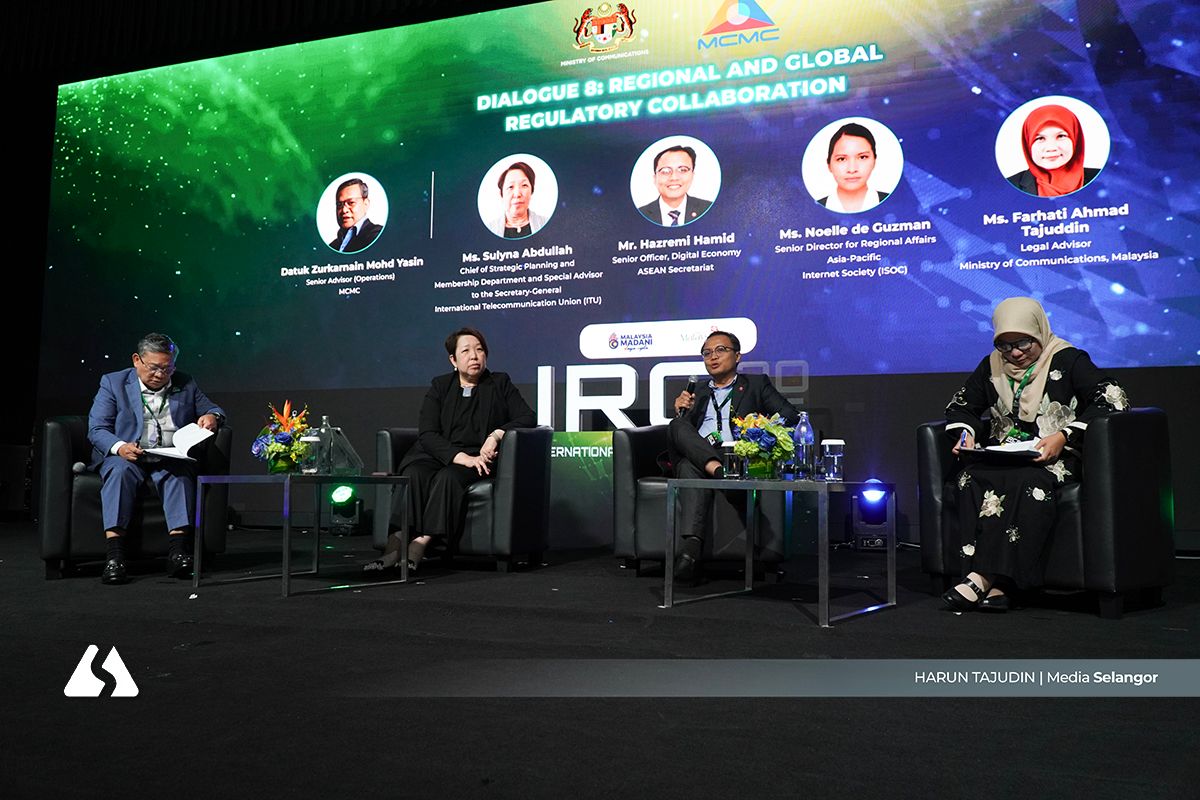
KUALA LUMPUR, July 25 — The Communications and Multimedia Act 1998 (CMA) remains relevant despite rapid technological advancements as it was deliberately designed as a technology-neutral law that evolves with future innovations, said Communications Ministry legal adviser Farhati Ahmad Tajuddin.
Speaking during a panel discussion at the Regional and Global Regulatory Collaboration Forum, Farhati said legislation should not be feared or viewed as static, as laws can always be updated to keep pace with technological developments.
“The act’s structure also supports future regulatory changes, with the main legislation providing the legal authority while details can be updated through subsidiary legislation,” she said at the forum, which was held in conjunction with the International Regulatory Conference (IRC), at Shangri-La Hotel Kuala Lumpur on Wednesday.
Farhati said broad legal definitions allow the law to accommodate future technologies and services, adding: “I think it is actually a living proof of a future-ready transition.”
Cross-border regulatory collaboration
Meanwhile, Asia-Pacific International Telecommunication Union (ITU) regional director Sulyna Abdullah said cross-border regulatory collaboration has become increasingly important with the rise of technologies like artificial intelligence (AI).
Sulyna said the global regulatory landscape has shifted from pursuing harmonisation towards regulatory coordination, allowing countries to align on common principles while maintaining regulations suited to their own national contexts.
“You cannot run away from collaboration, so you need it more than ever.
“Today we talk about regulatory interoperability… it’s not about harmonisation, it’s more about interoperability,” she said.
Meanwhile, Farhati stressed that there is no one-size-fits-all law, adding that the CMA is one of the most forward-looking technology laws she has encountered and that future regulations should be agile, adaptable, and anticipatory.
ASEAN moves towards binding digital deal
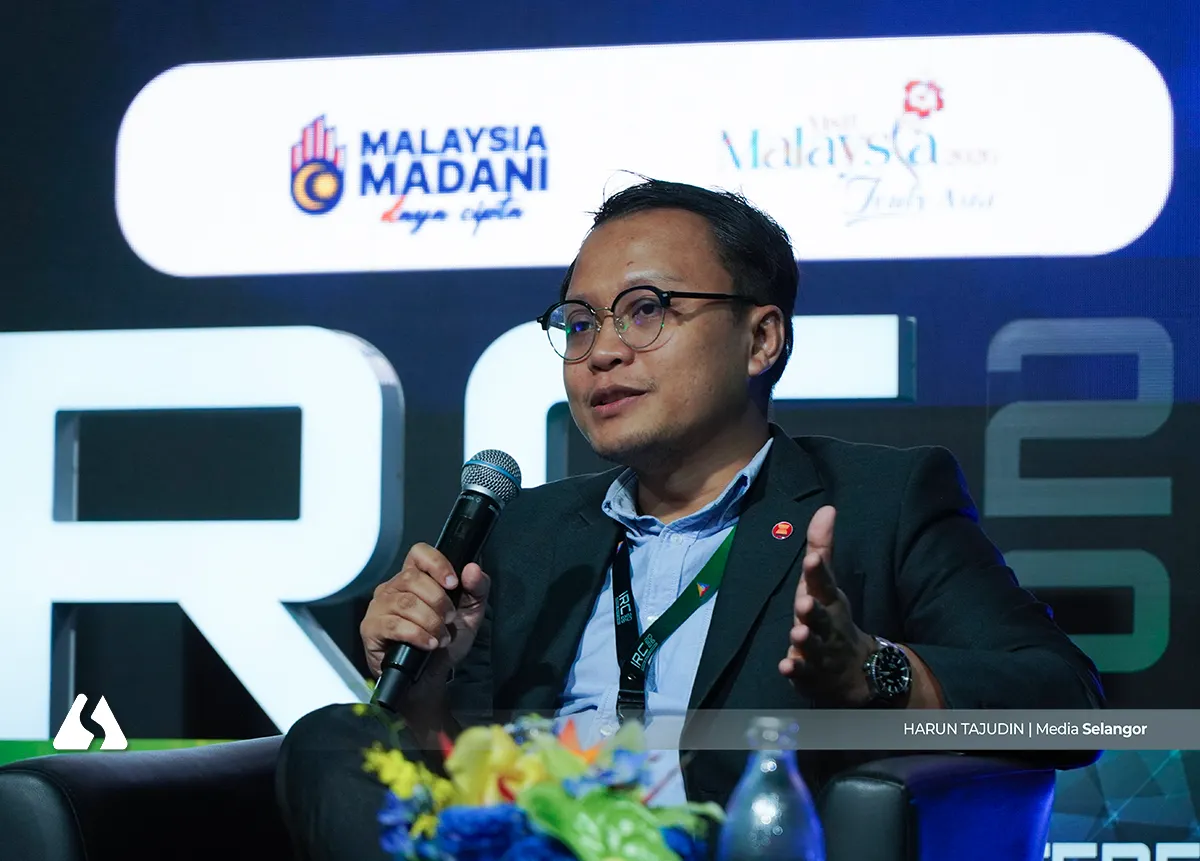
ASEAN Secretariat representative Hazremi Hamid meanwhile said the region is moving beyond voluntary digital cooperation with the conclusion of the ASEAN Digital Economy Framework Agreement (DEFA).
He said the agreement is expected to be signed at the ASEAN Summit in the Philippines in November, aimed at strengthening interoperability, mutual recognition of standards and regulatory cooperation while respecting national sovereignty.
“We move on from alignments, now we are talking about interoperability. DEFA aims to create a common framework for ASEAN members to collaborate and recognise each other’s standards.
“For the first time, we put it in an agreement by the government,” he said.
Hazremi added that ASEAN maintains its neutral stance amid growing geopolitical competition, and seeks to learn from all major global powers while pursuing a phased approach to digital governance, especially in AI.