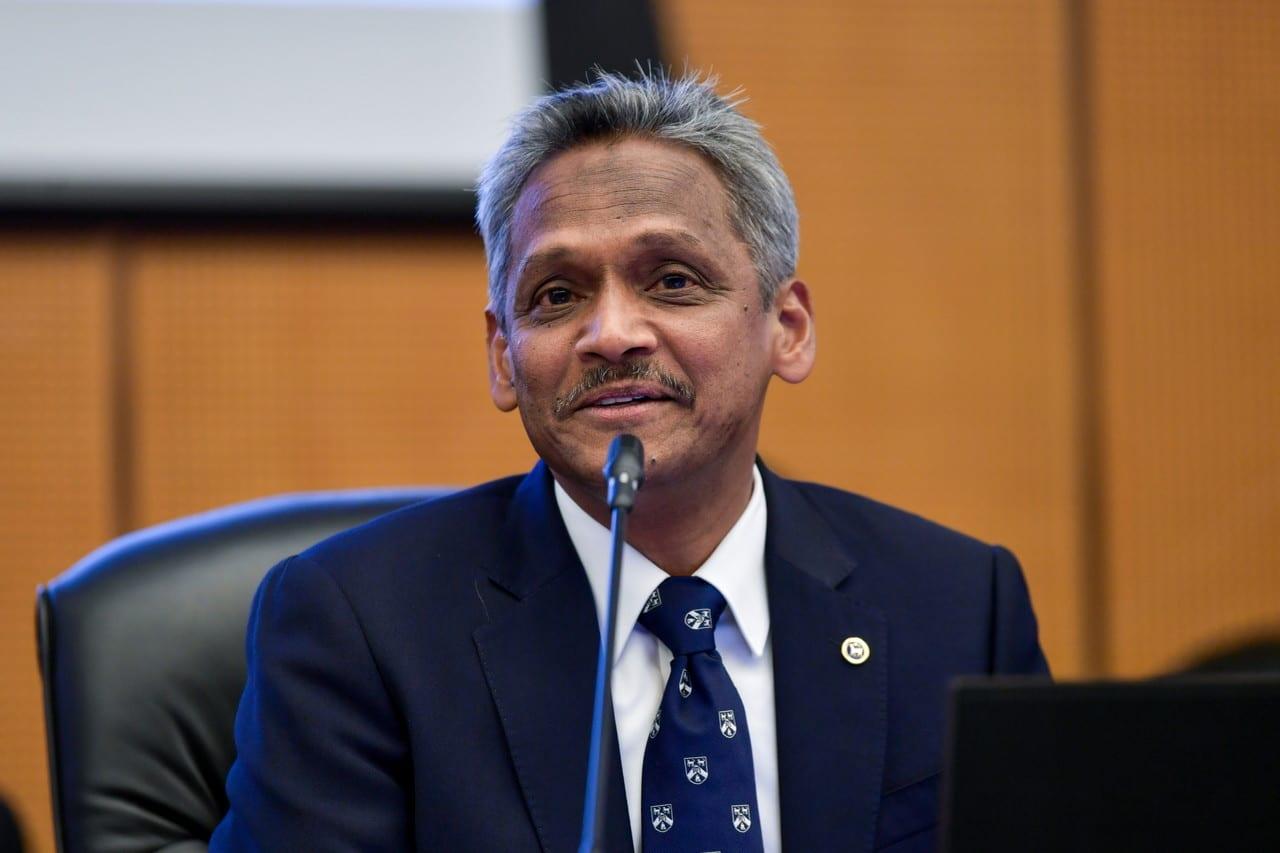
KUALA LUMPUR, July 10 — Malaysia’s economy continues to show resilient growth despite the ongoing conflict in West Asia, Bank Negara Malaysia (BNM) governor Datuk Seri Abdul Rasheed Ghaffour said.
The economy expanded by 5.4 per cent in the first quarter of the year.
In an interview with Bernama, Abdul Rasheed said high-frequency indicators point to some moderation in economic activity in the second quarter of 2026. Nevertheless, he assured that the economy continues to demonstrate resilience despite external uncertainties.
“We can expect growth to moderate, but it should still be good growth considering global developments,” he said, adding that the central bank remains confident that full-year growth will remain firmly within its forecast range of 4 to 5 per cent.
He did not rule out the possibility of full-year growth coming in at the upper end of that range.
“Growing at 4 to 5 per cent during this period of challenges is credible,” he said.
The International Monetary Fund (IMF), in its latest World Economic Outlook update, maintained Malaysia’s economic growth projection at 4.7 per cent for 2026.
According to the IMF, Malaysia is benefiting from data centre activities and the upturn in the global technology cycle.
Malaysia’s advance estimate for gross domestic product (GDP) growth in the second quarter of 2026 will be released on July 17, while the official GDP figures are scheduled for release in August.
Abdul Rasheed said BNM’s confidence in its forecast is underpinned by several factors, including the easing of tensions in West Asia from their earlier peak and the stabilisation of global supply conditions as businesses adapt by diversifying and sourcing alternative supplies.
“Energy supplies have stabilised. People do find ways to get supplies. Businesses have been agile, and that has helped stabilise prices,” he said.
Domestically, he said demand remains resilient, supported by a stable labour market, robust exports and sustained investment activity.
On the unemployment rate, Abdul Rasheed said it has remained at around 2.9 to 3 per cent, indicating near-full employment.
While some businesses have become more cautious about hiring amid the uncertain global environment, they continue to retain existing workers.
“Strong export growth should also provide some support to the labour market, and in turn, support private consumption,” he said.
He added that the economy’s growth drivers would continue to gain momentum, supported by demand linked to artificial intelligence and the electrical and electronics sector.
Investment inflows also remain strong, driven by ongoing and new projects, including data centres, as well as the continued implementation of approved investments.
“The rate of implementation of approved investments remains very high, translating into real economic activity,” Abdul Rasheed said.
He added that smaller projects undertaken by both the government and private sector are also helping to sustain economic activity.
“All these are the supportive factors for domestic growth,” he said.