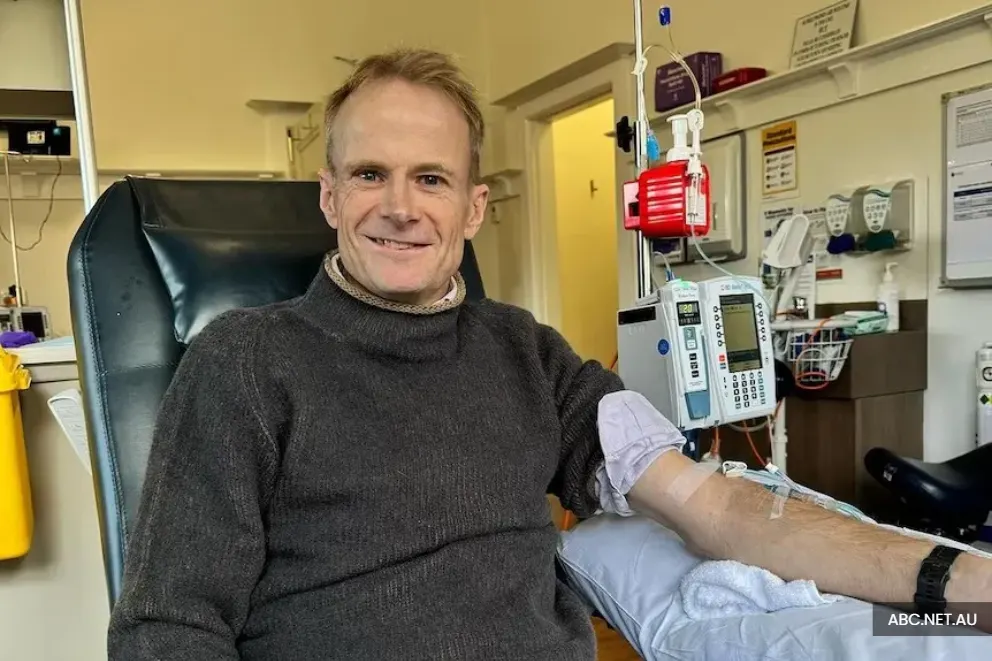
WELLINGTON, June 8 — Australian cancer specialist Richard Scolyer, who became a test case for an experimental treatment after being diagnosed with an aggressive brain tumour, has died at the age of 59, prompting tributes to a researcher whose work helped transform melanoma care.
Australian media reported that Scolyer died on last night.
A pathologist and co-medical director of the Melanoma Institute Australia, Scolyer was named joint Australian of the Year in 2024 alongside longtime collaborator Georgina Long for advances in immunotherapy that have helped make advanced melanoma a treatable disease for many patients.
Diagnosed in 2023 with glioblastoma, one of the deadliest forms of brain cancer, Scolyer agreed to a world-first treatment approach that applied lessons from melanoma therapy to his own tumour.
The treatment included immunotherapy before surgery, an approach designed by Long and a team of researchers seeking to trigger an immune response against the cancer. A clinical trial using the treatment began in the US earlier this year.
Scolyer publicly documented his illness and, in a letter released after his death, said he had spent his final years speaking openly about glioblastoma to help people understand what cancer patients and their families endure, while offering hope that researchers should continue pushing scientific boundaries.
“Having dedicated my 35-year working life to patient care, cancer research and improving lives, I wanted to keep contributing, even in my darkest hour,” he wrote.
Australian Prime Minister Anthony Albanese said the country had lost “one of our brightest lights and one of our biggest hearts”.
“Every day, this remarkable man — the cancer specialist who became his own subject — took us into his confidence, and he lifted us all in the process,” Albanese wrote on X, describing Scolyer’s public battle with illness as “an act of profound generosity”.
Albanese noted that the recently established Richard Scolyer Chair at Sydney cancer centre Chris O’Brien Lifehouse would continue his legacy.
“One day when a cure is found, Richard’s name will be spoken,” he said.
Scolyer is survived by his wife, Dr Katie Nicholl, and their children, Emily, Matthew and Lucy.