WASHINGTON, May 28 — A United States (US) judge has declined to immediately block President Donald Trump's executive order tightening rules on mail-in voting, but left the door open for the Democratic Party to challenge it again after the administration takes further steps to implement the measure.
On Wednesday, Washington-based US District Judge Carl Nichols wrote that the Democrats' request for a preliminary injunction blocking Trump's March 31 order, which directed his administration to compile a list of confirmed US citizens eligible to vote in each state, was premature. The decision did not address whether Trump's executive order was lawful.
Plaintiffs, including Senate Minority Leader Chuck Schumer of New York, argued that the executive order could disenfranchise millions of voters.
The ruling comes as Trump's Republicans are locked in a tight battle to keep control of both houses of the US Congress in the November midterm elections. For years, Trump has pushed the false claim that his 2020 election defeat was the result of widespread voter fraud and has criticised voting by mail.
Despite blasting mail-in ballots as "cheating," he cast his own vote by mail in March in a Florida special election and used an absentee ballot to vote in the 2018 midterms.
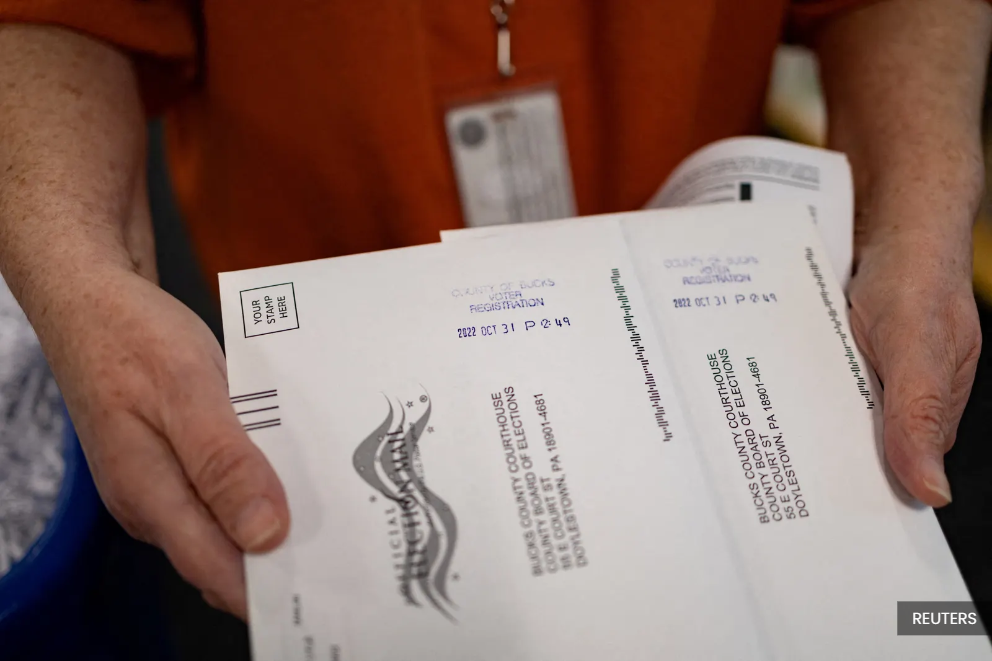
The order also directed the administration to use federal data to help state election officials verify who is eligible to vote, required the US Postal Service to deliver ballots only to voters on each state's approved mail-in ballot list, and required states to preserve election-related records for five years.
Judge Nichols noted that the government had not yet produced any flawed citizenship lists and the Postal Service had not yet implemented any new rules. The executive order gave the Postal Service 60 days to propose new rules to implement it.
"Given that the Executive Order does not command Plaintiffs to do anything, and that no agency has yet acted pursuant to the Order in a way that could harm Plaintiffs, they have not suffered any harm at present," wrote Nichols, who was appointed by Trump during his first term.

Hearing next week in parallel case
Democrats had argued that the order infringed on individual states' rights to regulate elections under the US Constitution. The Postal Service does not play an active role in administering elections.
They said the executive order's direction that agencies use Department of Homeland Security and Social Security Administration data to build "state citizenship lists" risked improperly excluding lawfully registered voters because the data sources can be out of date and may include errors.
The Justice Department countered that the litigation was premature.
A coalition of Democratic states brought a similar lawsuit challenging the executive order in federal court in Boston. US District Judge Indira Talwani, an appointee of Democratic President Barack Obama, is due to hear arguments in that case on June 2.
Mail-in voting is widely regarded as a secure and trustworthy way to cast ballots. Eight states allow elections to be conducted exclusively by mail and report among the nation’s best election-integrity metrics.