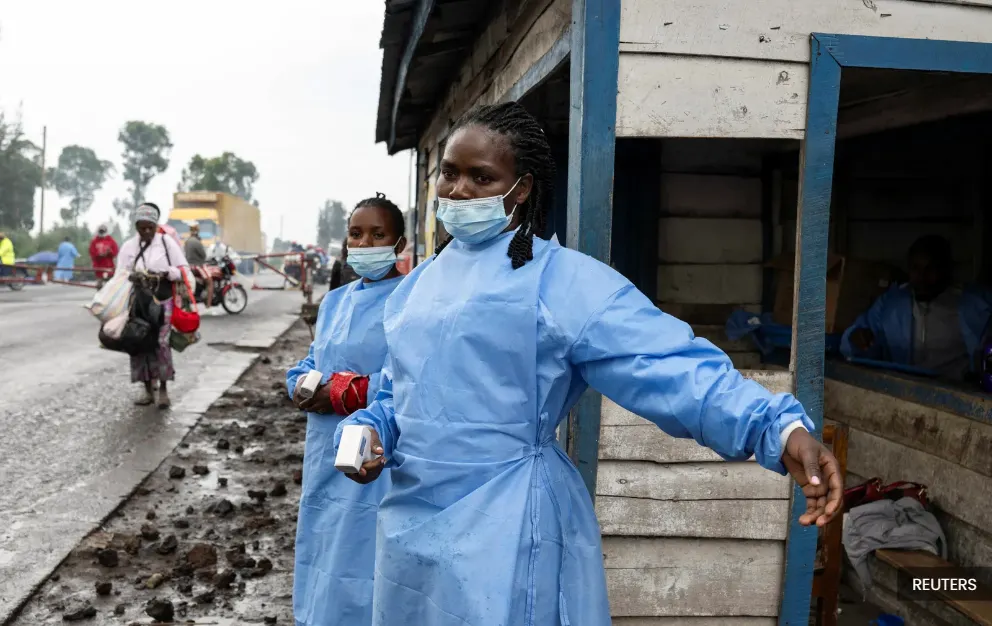
KUALA LUMPUR, May 27 — The World Health Organisation declared on May 17 that an Ebola outbreak in the Democratic Republic of Congo (DRC) was a Public Health Emergency of International Concern, saying there was a high risk it could spread to neighbouring countries.
The decision has prompted governments to step up travel-related containment measures. Here is a list of screening steps and travel restrictions announced by different countries.
United States (US)
Last week, Washington banned non-citizens who had travelled to the DRC, Uganda, or South Sudan in recent weeks from entering the US. On Friday, the Centres for Disease Control and Prevention (CDC) extended the ban to green card holders who have been in those countries in the past 21 days.
On Saturday, the CDC added the Hartsfield-Jackson Atlanta International Airport to its travel-funnelling list, alongside Washington Dulles. US passport holders returning from affected regions are escorted to designated screening areas for CDC-led temperature checks, travel history verification, and symptom tracking.
Canada
On Tuesday, Ottawa said that residents of the DRC, Uganda, and South Sudan will be banned from entering Canada for 90 days, starting Wednesday.
The Canadian Public Health Agency said that citizens, permanent residents, and other foreign nationals who have been in affected areas in recent weeks and are asymptomatic will have to quarantine for 21 days starting May 30.
The Bahamas
On Tuesday, the Bahamian government said that a ban on residents from the DRC, Uganda, and South Sudan will take effect immediately and remain in place for 30 days.
It also announced enhanced health screenings and possible quarantines for foreigners who had been present in those countries within 30 days of arriving in the Caribbean country.
India
New Delhi has launched screening and surveillance measures at airports and other entry points, issued advisories on precautions, and urged citizens to avoid non-essential travel to Congo, Uganda, and South Sudan.
Jordan
On May 19, Amman suspended the entry of travellers arriving from the DRC and Uganda, according to the Jordanian state agency.
Bahrain
On May 19, Manama announced that it was suspending for 30 days the entry of foreign travellers arriving from South Sudan, the DRC, and Uganda.
Cayman Islands
On May 20, the Cayman Islands government said that it would implement enhanced screening measures as a precaution after a flight landed carrying two passengers with recent travel history to the DRC.
Thailand
On Tuesday, the Public Health Ministry said that passengers arriving from the DRC and Uganda will only be allowed to enter the country through the Suvarnabhumi Airport, where they will undergo screening.
Travellers from or through those countries will be required to quarantine for at least 21 days if they do not have symptoms, and will be referred to isolation for at least 21 days if they have symptoms compatible with Ebola virus disease.
Kenya
On Monday, the Health Ministry said it has enhanced screening of travellers at high-risk points of entry, coordinated through the Kenya National Public Health Institute (KNPHI) under the fully activated National Incident Management System.
Isolation and holding facilities have been activated in designated border locations to support potential containment efforts.
European Union
On Friday, the Health Security Committee said that entry screenings were not necessary for passengers arriving from the DRC and Uganda, citing low risk to the population.
Mexico
Health Secretary David Kershenovich addressed the media on Monday, outlining tighter Ebola screening measures at airports, urging the public to avoid travel to Congo, and asking arrivals from the country to observe a 21-day quarantine.