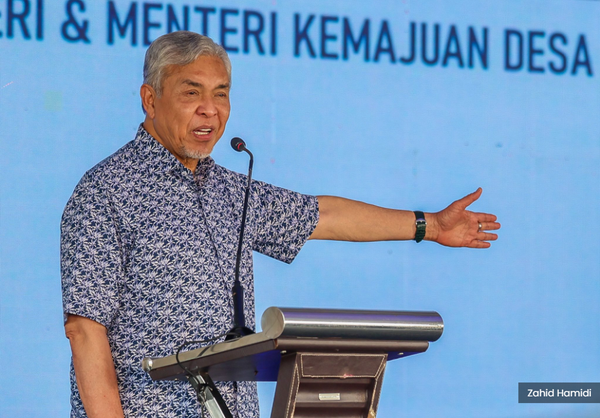

IPOH, May 16 — The government will restructure the technical and vocational education and training (TVET) curriculum, known as TVET 2.0, which is poised to strengthen the high-technology sector, says Deputy Prime Minister Datuk Seri Ahmad Zahid Hamidi.
He said TVET 2.0, set to be launched by Prime Minister Datuk Seri Anwar Ibrahim next month, will focus on high-technology subjects and high-impact skills to meet the needs of future industries.
“This means that while maintaining existing traditional courses, we will also reinforce areas such as robotics, the Internet of Things (IoT), artificial intelligence (AI), renewable energy, and other fields that are in high demand in the market.
“We are also looking at expanding opportunities for gig workers, particularly food and parcel delivery riders, as well as those in the film industry and other support sectors, including the arts and culture."
He said this to reporters after officiating the Perak Aim TVET Roadshow and the Aim TVET Skills Club at Bulatan Azlan Shah here today.
Also present were Deputy Education Minister Wong Kah Woh and Perak Education, Higher Education, Youth and Sports Committee chairman Datuk Khairudin Abu Hanipah.
Zahid said the government will also focus on high-potential areas, including animation, amid growing global industry demand.
“This is because many global animation companies have outsourced animation production to Malaysian firms.
“However, there is a shortage of talent in the animation sector, and we hope that with TVET 2.0, more people will be encouraged to enter this field.”
Zahid said the government is considering proposals to introduce a TVET Act and establish a TVET Commission to empower the country’s skills ecosystem.
He said the proposed act and commission have not yet been submitted to the Cabinet for policy approval, with engagement sessions currently underway involving 12 ministries coordinated under TVET Council.
“We will also engage with the states to gather feedback through these sessions, to identify how the act and commission can drive TVET development not only towards 2030, but beyond 2050.