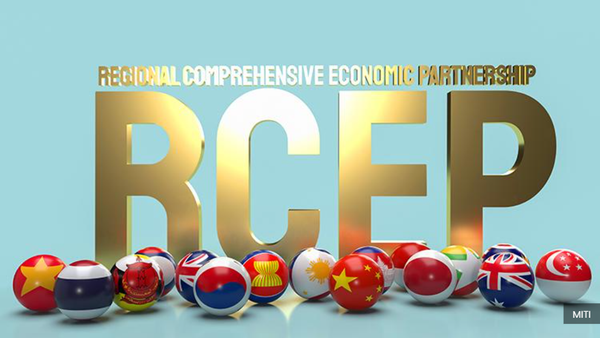
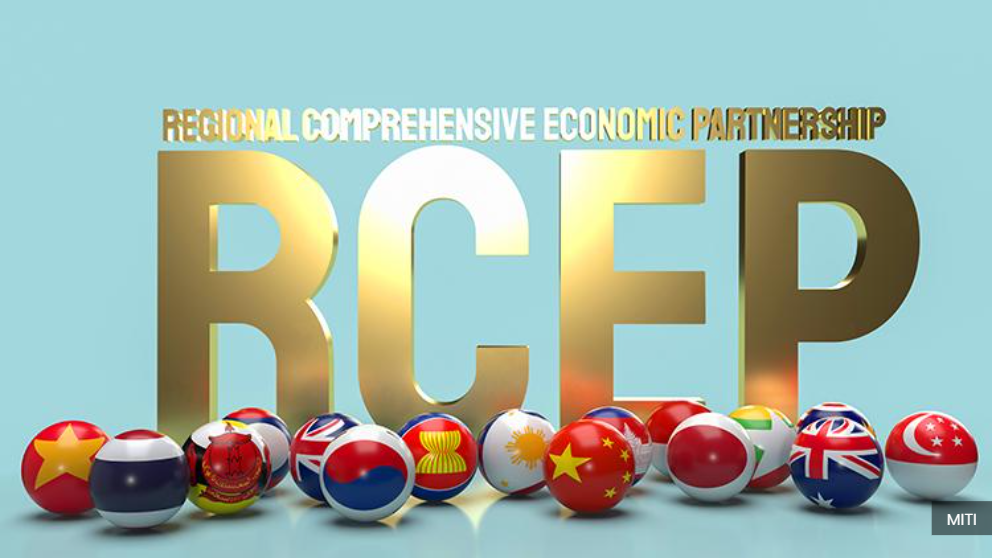
HAIKOU, May 12 — The Regional Comprehensive Economic Partnership (RCEP) must evolve beyond traditional tariff reductions and simple transhipment towards high-complexity trade and integrated supply chains.
The Embassy of Malaysia in China's Economic Affairs Minister Unny Sankar Ravi Sankar said today’s global landscape, marked by supply chain disruptions and geopolitical tensions, demands the creation of resilient hubs that prioritise digital and green economy integration.
“The RCEP cooperation now requires hubs to deliver more than traditional tariff reductions; we must think deeper about logistics efficiency. These hubs must serve as integrated platforms for rules of origin accumulation, supply chain diversification, digital, and sustainable growth,” he said.
Speaking at the 'Thematic Dialogue: Building a Strategic Hub for RCEP Regional Economic and Trade Cooperation' in conjunction with the 2026 RCEP Media and Think Tank Forum, Unny emphasised that RCEP member nations must focus on substantive transformation.
This is essential to fully utilise RCEP’s accumulation rules and move regional value chains beyond basic assembly.
He added that the Hainan Free Trade Port is a strategic ‘stress-testing ground’ for high-standard RCEP implementation, with the island-wide special customs operations launched in December 2025 serving as a vital catalyst for ASEAN-China integration.
“As China’s southernmost province and now the gateway to ASEAN, Hainan combines geographic proximity with bold policy innovation, including zero-tariff regimes, low taxes and simplified procedures.
“In short, it should not always be Chinese enterprises exploring the ASEAN market; we must show the world that ASEAN enterprises are also joining and enjoying the prosperity in this region. So that is something that we need to look into,” he said, stressing the need for inclusive growth for small and medium enterprises.
On bilateral ties, Unny noted that the Malaysia-China trade has reached RM753.26 billion (US$191.67 billion), driven largely by the electrical and electronics, palm oil, and energy sectors.
In this regard, he suggested that Malaysian components and Chinese intermediaries could undergo substantial transformation in Hainan to create a more flexible and cost-effective backup system.
“Hainan can serve as a regional processing and distribution centre for Malaysian palm oil and its derivatives by leveraging tax incentives for refining, packaging, and reprocessing before onward shipment to China or other RCEP markets. This adds value, ensures traceability, and supports sustainable growth,” Unny said.
The minister also reaffirmed Malaysia’s commitment to World Trade Organisation principles and multilateralism as a means to bolster economic efficiency.
Meanwhile, he said the COVID-19 pandemic acted as a catalyst for the region to embrace digitalisation and stronger supply chain links.
“The next move is to ensure our supply chains provide high value. We need to increase the economic complexity of our goods rather than just exporting raw materials and basic commodities.
“By enhancing production capabilities and increasing product complexity, Malaysian and ASEAN SMEs can broaden their market reach within the RCEP region,” Unny said.
The ASEAN-China Free Trade Area 3.0 Upgrade, signed last year, now serves as the benchmark for this new era of regional collaboration.
The 2026 RCEP Media and Think Tank Forum was organised by China Daily and the China Institute for Reform and Development to promote regional economic integration and the RCEP's high-level development amid global economic uncertainties.