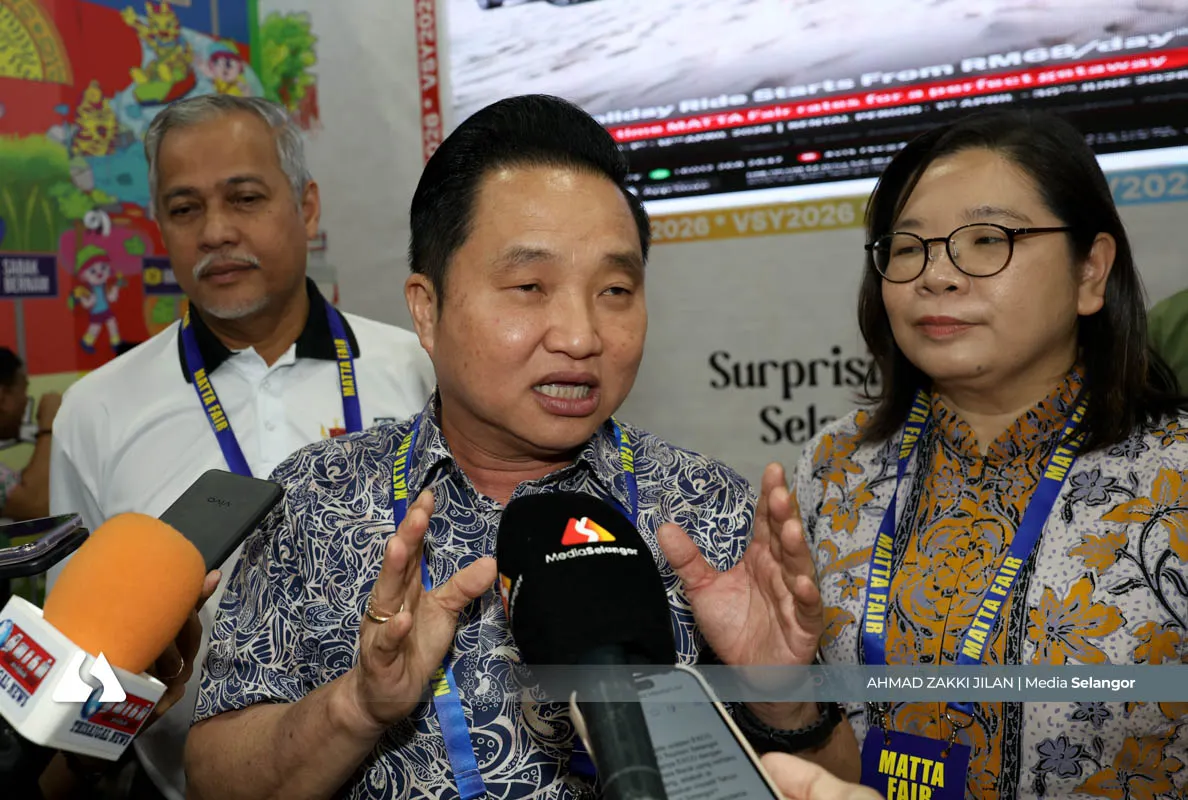
SHAH ALAM, April 28 — The state government is considering implementing its tourism sustainability fee in the form of vouchers to encourage more people to visit and spend in Selangor, said state executive councillor for local government and tourism Dato’ Ng Suee Lim.
He said this measure could draw more visitors to holiday in the state more frequently.
“The sustainability fee came into effect in January in phases, and for the first three months it was more towards education and adapting before it is fully implemented by year-end.
“The state government launched this fee to ensure reinvestment and the strengthening of the state’s tourism ecosystem. For this, we will consider a suggestion to collect the fee in the form of tourism vouchers,” he said in his wind-up speech on the motion of thanks for the Royal address, during the Selangor State Legislative Assembly sitting here today.
Previously, Ng said the tourism fee would be imposed on visitors from January 1 to ensure heritage and environmental sustainability in the state.
He added that the fee is collected by hotels and homestay operators, who channel the charges to local authorities, with a small amount going to the state government.
He explained that the state government is aiming to draw nine million tourists this year, which would drive Selangor’s economy.
“Last year, we welcomed 8.4 million tourists from China, Indonesia, Singapore, Japan and India, and that exceeded the target.
“We emphasise tourism trade participation by working with influencers. This would help with the rate of repeated visits and draw more tourists,” he explained.
In a separate development, Ng said the upcoming waste-to-energy (WTE) plant is an important component to reduce the state’s dependence on landfills.
“Solid waste management is being done in a structured manner under the state’s policy framework by focusing on reducing waste at the source, separation and recycling, material recovery, and circular economy, as well as the development of more modern and sustainable waste management facilities.
“WTE technology would strengthen the sustainability of the waste management system in the long term. Moving forward, a WTE facility started operating on April 1, with the processing capability of around 1,200 to 1,300 tonnes of solid waste per day.
“This would be a catalyst to the transformation of the state’s waste disposal system towards a more modern, efficient, and sustainable approach,” Ng said.