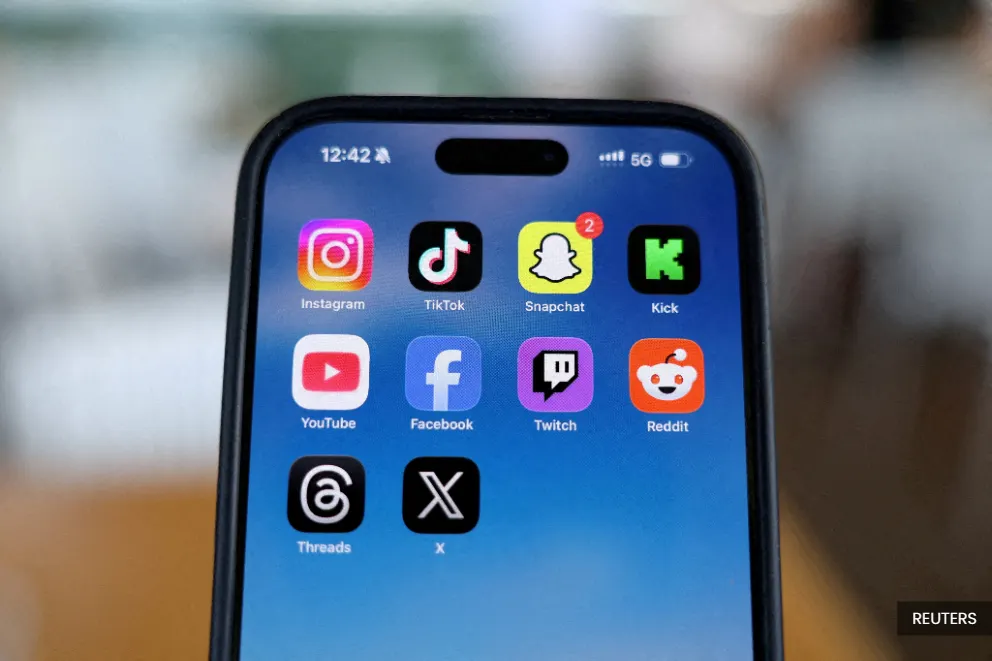
SYDNEY, April 22 — Problems enforcing Australia's teen social media ban reflect social media platforms' weak deployment of tools available to run age checks rather than the limits of the technology, according to an industry body representing the tech suppliers.
The comments come as regulators step up enforcement warnings against some of the world's largest technology companies over Australia's social media ban on users younger than 16, the world's first such measure since December 2025
"The issue is not capability, it is application," said the Age Verification Providers Association's (AVPA) executive director Iain Corby in a statement.
It added that early shortcomings showed a need for stronger expectations and enforcement; rather, age-assurance technology did not work.
Australia's eSafety Commissioner is investigating Meta's Facebook and Instagram, Google's YouTube, TikTok, and Snap over suspected breaches of the ban.
Platforms face fines of up to AU$49.5 million (RM140.1 million) for every breach, and the government says it is gathering evidence to support Federal Court action if compliance does not improve.
The AVPA noted in a report that the initial rollout showed age assurance products can operate accurately at scale, but platforms fail to apply them consistently or at key points, such as account sign-up.
TikTok and Snap declined to comment, while Meta and Google were not immediately available.
The findings push back against social media companies' assertions of inadequate age-checking, contending that continued underage access reflects how platforms are using, or not using, the tools available, rather than technical constraints.
Regulatory data shows millions of suspected underage accounts have been removed since the law came into force.
However, the Australian regulator eSafety has also flagged persistent gaps, such as failures to verify age at account setup, repeated attempts at age checks until users pass, and continued reliance on self-declared ages.
In its report, the AVPA said that independent testing and early live deployment suggested those weaknesses were driven mostly by platform behaviour, not technology shortcomings.
Key risks to effectiveness were over-reliance on internal age-inference models, which guess a person's age based on online activity, and limited re-verification of existing accounts.
Australia assessed AVPA members in a sweeping trial before the ban.